TL;DR
- Private offices are the profit engine of coworking spaces, offering stability, higher margins, and predictable recurring revenue
- Effective sales strategies include differentiating offices from hot desks, pricing competitively, leveraging SEO/ads, giving intentional tours, and addressing objections
- Retention and upselling matter most—with automation helping operators streamline sales, enhance member experience, and drive long-term profitability
Private offices are the profit engine of any coworking space. They provide stability, stronger margins, and recurring revenue that strengthens your bottom line.
Yet many operators still struggle to keep them consistently full. Too often, private offices are treated as an afterthought—just another product on the list—instead of a core driver of growth.
This guide will show you how to change that. You’ll learn how to sell private offices effectively in 2025 with strategies for positioning, pricing, marketing, tours, and retention. By applying these tactics, you can increase occupancy, boost profitability, and build long-term success for your coworking business.
- What’s driving the growth of private offices in coworking spaces?
- What is the ideal member for private offices?
- Do private offices or open coworking drive more revenue?
- How can you position your private offices to sell better?
- How to price your private offices in your coworking space
- What sales and marketing channels work for selling private offices?
- How to give a great tour of a private office in your coworking space
- How do I retain members in my private office?
- How can I use automation to better sell and manage my private offices?
- Why private offices are the backbone of coworking profitability in 2025
What’s driving the growth of private offices in coworking spaces?
The growth of private offices in coworking spaces is being driven largely by changes in how people work, including more hybrid and remote work and a greater desire for cost-effective solutions for small businesses.
In 2025, the office is less about showing up every day and more about having the right space at the right time. Committing to a five- or ten-year contract, furnishing the space, and managing utilities no longer aligns with the pace of modern business.
Instead, companies are choosing coworking private offices because they are:
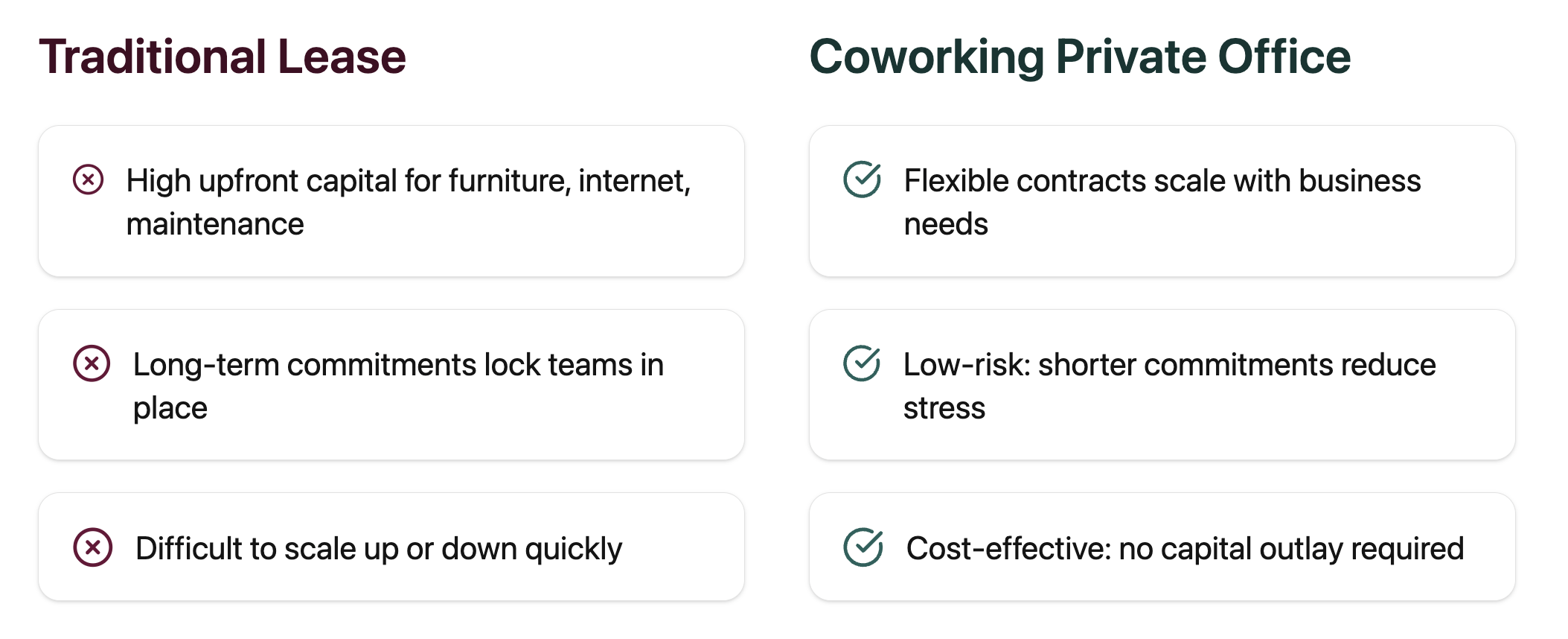
- Flexible: contracts can scale up or down with business needs
- Cost-effective: no capital outlay for furniture, internet, or maintenance
- Low-risk: shorter commitments reduce stress if the team shrinks or pivots
For many businesses, coworking has become a smarter, more agile alternative to the corporate lease, with private offices at the center of that appeal.
What is the ideal member for private offices?
The ideal members for private offices are small hybrid or remote teams, remote workers, and entrepreneurs and solopreneurs looking for a quiet place to work.
So no, not every coworking member is looking for a private office—and that’s a strength.
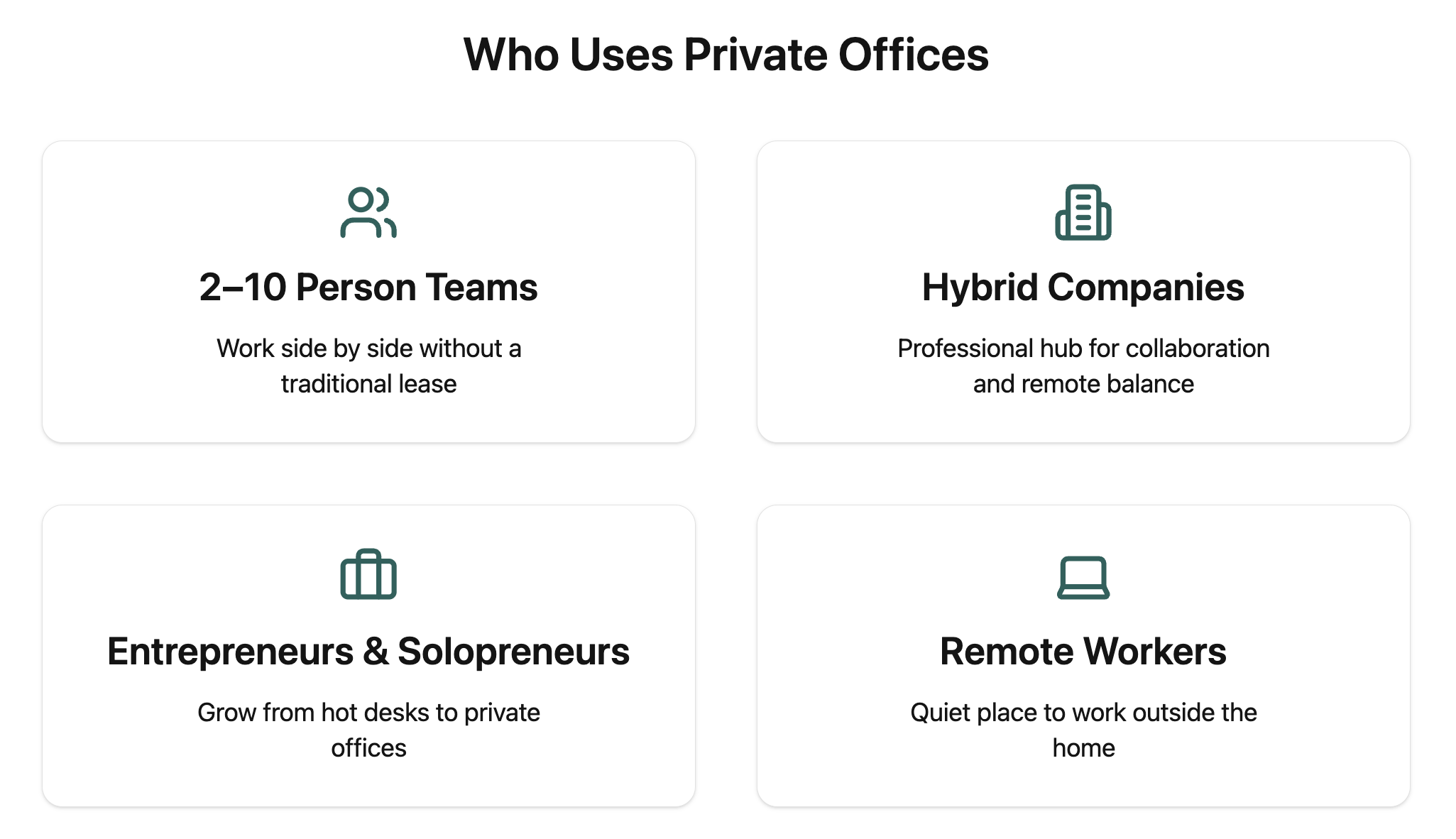
- 2–10 person teams: want to work side by side but don’t need or can’t justify a traditional office lease
- Hybrid companies: need a professional hub for in-person collaboration while employees work remotely the rest of the week
- Entrepreneurs and solopreneurs: moving from hot desks into private offices as their client work or subcontractor teams grow
- Remote workers: want a quiet place to work that isn’t necessarily their home
These groups value the mix of independence and support a coworking space provides. A private office gives them credibility, stability, and a sense of belonging.
Do private offices or open coworking drive more revenue?
Although open coworking typically has a higher revenue potential, private offices drive more revenue for coworking spaces because they are predictable.
Open coworking memberships are valuable for building community, creating energy, and attracting new people through the door. But when it comes to profitability, private offices deliver stronger results.
The difference comes down to stability. A hot desk member might stay a few months, but private office leases often last six to twelve months—or longer. That consistency creates predictable, recurring revenue you can count on.
How can you position your private offices to sell better?
Private offices sell best when you differentiate them from standard coworking memberships, lean into key selling points, and bundle perks that make your offer irresistible.
Differentiate from standard coworking memberships
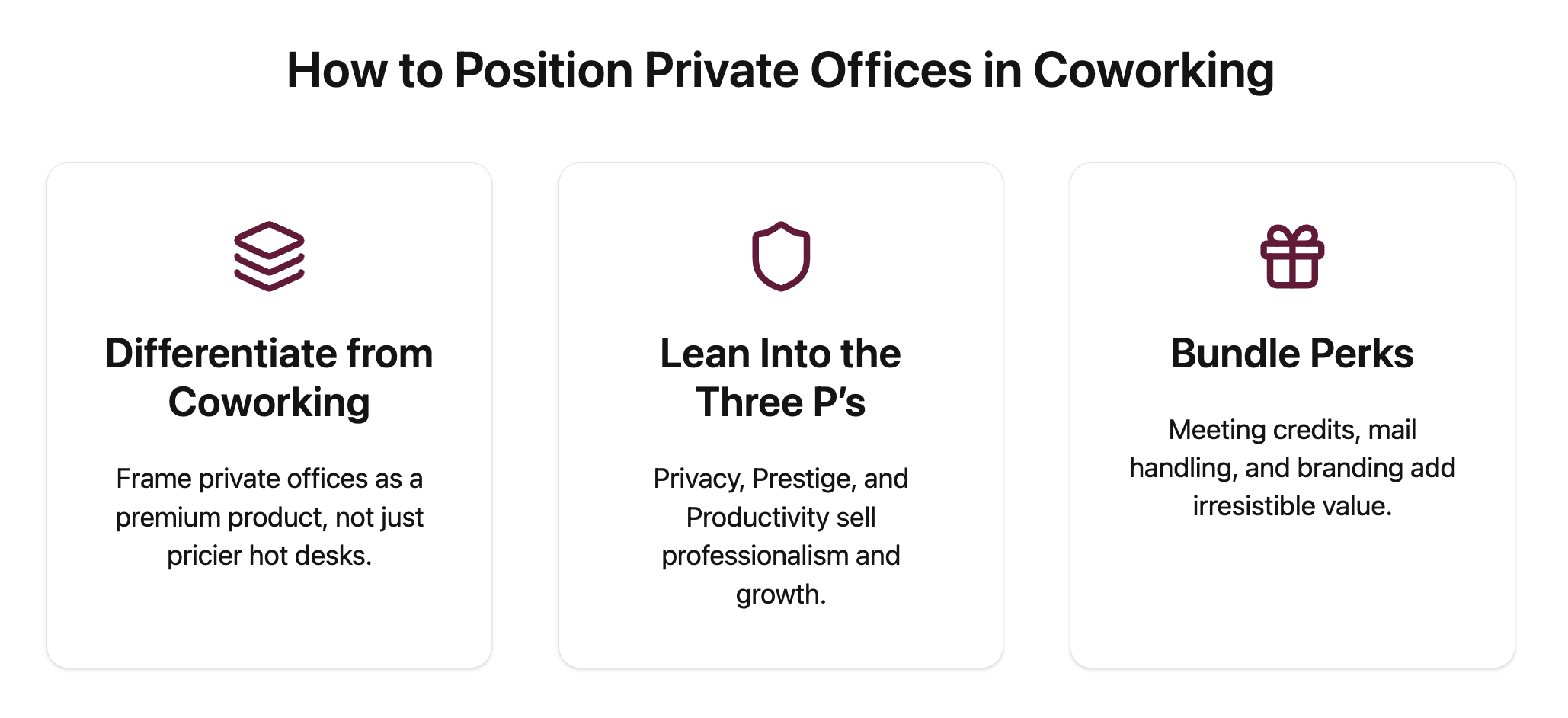
One of the biggest mistakes operators make is treating private offices as just another version of hot desks.
Private offices are a premium product, and the way you position them should reflect that. Instead of listing them on your pricing page as simply “more expensive coworking,” frame them as a distinct solution: the choice for businesses that need privacy, consistency, and credibility.
Hot desks sell community. Private offices sell professionalism. That distinction matters.
Lean into key selling points: privacy, prestige, and productivity
When marketing private offices, lean into the three P’s:
- Privacy: enclosed space for confidential conversations, focus, and team collaboration
- Prestige: a professional image that helps businesses impress clients, recruit talent, and elevate their brand
- Productivity: a distraction-free environment where teams can hit deadlines without losing the energy of being part of a coworking community
When positioned this way, private offices become a tool for business growth rather than another rental.
Bundle perks that make your offer irresistible
What makes a private office feel like an easy “yes”? The value you wrap around it. Consider bundling:
- Meeting room credits: so teams don’t feel nickel-and-dimed for collaboration
- Mail handling and package delivery: to make your space their true business address
- Custom branding options: signage, frosted glass, or company logos on doors for an added sense of ownership
Positioned well, they justify premium pricing. Hint: you can automatically add these perks to Private Office membership with Optix Automations.

How to price your private offices in your coworking space
One of the best ways to price private offices in your coworking space is by evaluating other local competitors in your market. When it comes to selling private office space, price is one of the most important tools you have.
And the best way to research this? By looking at your competitors.
- Start by looking outward: what are other coworking operators and serviced office providers charging in your market?
- In 2025, data is more accessible than ever. Online marketplaces, Google Business Profiles, and competitor websites often list rates publicly.
- Go beyond headline numbers: compare what’s included, such as internet, furniture, meeting room credits, and printing, so you’re not undercutting yourself.
Understand the landscape and position your offices strategically, rather than going with the lowest price. You can confidently charge more if you offer greater value or operate in a niche location where supply is limited.
When and how to use discounts or promotions to sell private offices
Discounts can be powerful when used sparingly. The goal is to fill vacancies quickly without eroding brand value.
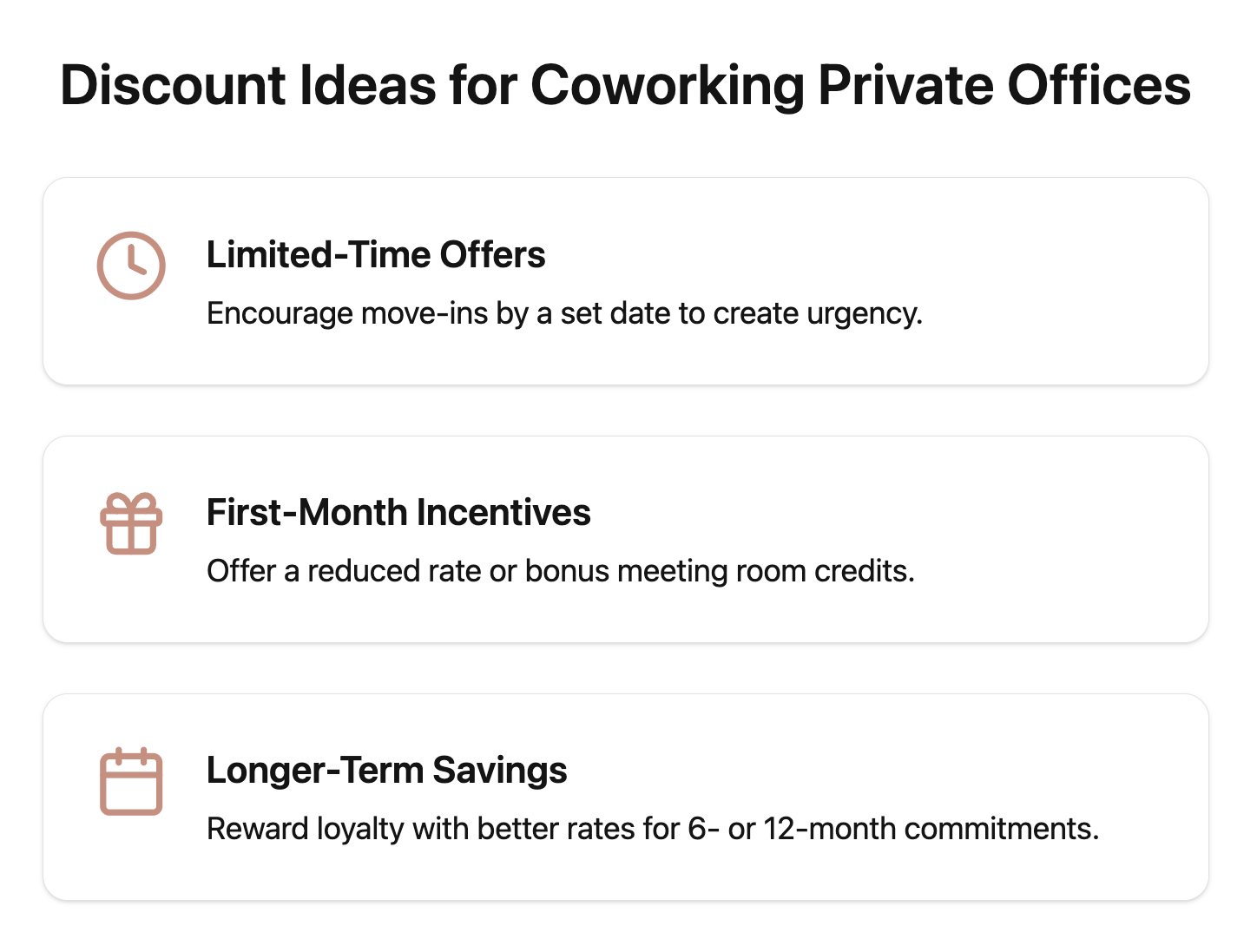
Proven approaches include:
- Limited-time offers: encourage move-ins by a set date to create urgency
- First-month incentives: offer a reduced rate or additional meeting room credits
- Longer-term savings: provide better rates for 6- or 12-month commitments, boosting retention and rewarding loyalty
Frame promotions as opportunities, not price cuts. Done well, they spark action without creating an expectation of ongoing discounts.
What sales and marketing channels work for selling private offices?
In 2025, most private office searches begin online. Here are the channels that are working best, based on our conversations with operators.
SEO and Google ads
If your space doesn’t appear when someone types “office space near me” into Google, you’re missing out on valuable leads for your coworking space. To show up where it matters most, follow the tips below:
- Fully optimize your Google Business Profile with photos of your offices, detailed service descriptions, and updated pricing or availability. This boosts your chances of ranking in local search and maps results
- Layer on local SEO by creating website content tailored to private office prospects—for example, landing pages optimized for “private offices in [city]” or blog posts that answer common questions about flexible office space.
Run targeted Google Ads aimed at your ideal audience. Even a modest spend can generate qualified leads if your ads point to a well-designed landing page with a clear call-to-action to book a tour.
AI SEO for coworking
AI SEO, or optimizing for LLMs (ChatGPT, Perplexity, Gemini, etc.) is all the rage right now. For the most part, traditional SEO tactics will support ranking in LLMs. Focus on being an authority in your market, optimizing your website, and being present in as many places online as you can to drive more traffic to your site, both from traditional search engines and from LLMs.
Marketplaces and broker partnerships
Third-party platforms can be powerful, especially for private offices. Marketplaces like LiquidSpace, Deskpass, and Instant Offices are go-to tools for companies searching for flexible space. Listing your private offices there expands your reach beyond your own website and ads.
Brokers are another valuable channel. For a commission, they’ll bring you companies actively seeking office space. This option is especially effective for larger offices or multi-office deals.
While commissions reduce margins, the longer-term contracts they produce often offset the cost.
How to give a great tour of a private office in your coworking space
A private office tour is your chance to stage what life would be like in your space. Structure the tour intentionally:
- Start with community areas: highlight energy and connection
- Move into private offices: show the contrast—quiet, secure, and professional
- Finish with amenities: feature meeting rooms, kitchens, and phone booths to round out the value
At Vancouver-based coworking space Suite Genius, Community Manager Chris Pereira gives tours to all of their prospective members, private office prospects included. He uses this time as an opportunity to understand who this person is, what they need, and what they’re most likely to benefit from the space.
Tips for handling objections
Every tour comes with hesitations. Some of the most common include:
- Price: position private offices as an investment. Emphasize included amenities like Wi-Fi, furniture, cleaning, and meeting credits compared to the hidden costs of a traditional lease
- Noise: acknowledge concerns directly and explain soundproofing, quiet policies, or access to additional private meeting rooms
- Lease length: highlight your flexibility compared to conventional landlords. Shorter terms, easy scaling up, and clear exit options make coworking offices more appealing than rigid contracts
The key is to anticipate objections and address them before they become roadblocks. Confidence builds trust.
How do I retain members in my private office?
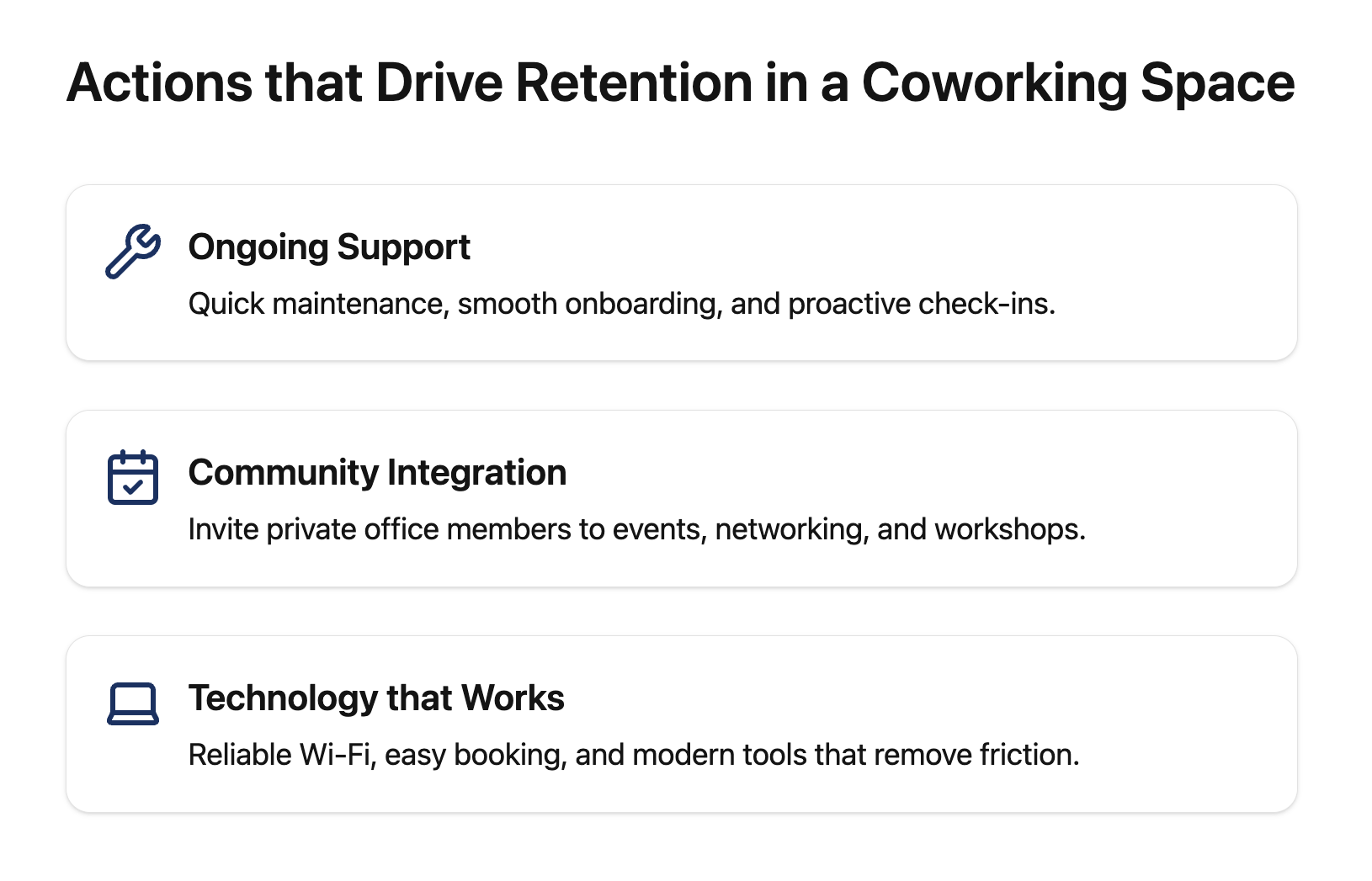
Selling a private office is only half the battle. Real profit comes from keeping members long term, which means delivering more than four walls and a door. Consistent, thoughtful service makes the difference.
- Ongoing support: quick responses to maintenance requests, smooth onboarding for new team members, and regular check-ins to confirm satisfaction
- Community integration: invite private office members to events, networking, and workshops so they stay connected to the broader coworking community
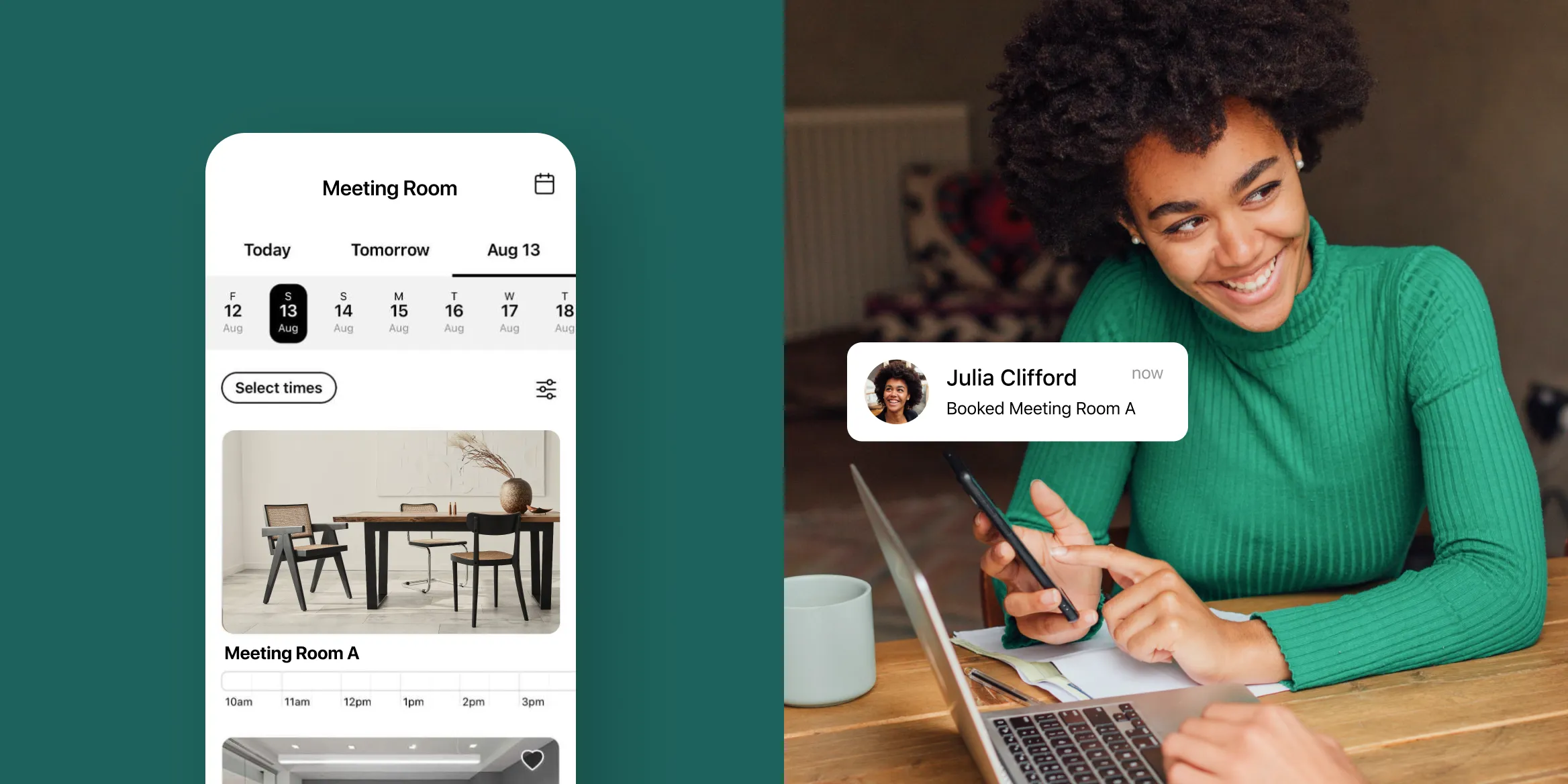
- Technology that works: reliable Wi-Fi, easy-to-use booking systems, and modern tools that remove friction from daily operations
When members feel supported and connected, renewals become the default.
Upselling into bigger or multiple offices
As teams grow, their space needs change, and there may be opportunities for upselling. A three-person startup may soon need room for eight. Position yourself as the flexible partner who can grow with them.
- Proactively track usage: monitor team size and office fit so you can start the conversation early
- Make the next step obvious: if a member’s office looks cramped, offer options before pain sets in ie. “Congrats on the growth! Want to look at the larger suite we have opening soon?”
Upselling increases revenue and deepens loyalty by anticipating needs and helping members avoid the hassle of moving elsewhere.
How can I use automation to better sell and manage my private offices?
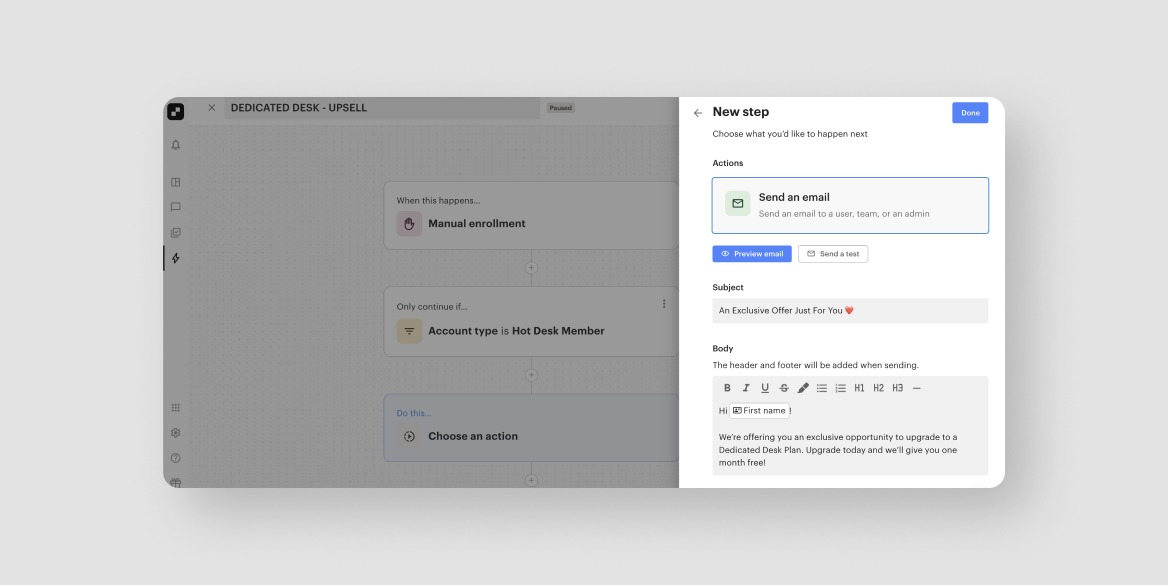
Automation tools like Optix coworking software, can help coworking space operators better sell and manage their private offices by automating the sales process, enhancing the member experience, and driving retention and upselling.
Automating the sales process
Filling private offices often involves multiple touchpoints: website inquiries, follow-up emails, tours, and contract negotiations. With Optix Automations, you can streamline this entire journey:
- Instant lead follow-up: when someone inquires about a private office, trigger an automated email or SMS to thank them, share office availability, and prompt them to book a tour
- Tour confirmations and reminders: reduce no-shows by sending automated reminders before scheduled tours
- Post-tour follow-up: automatically send a personalized thank-you message with next steps, FAQs, or even a limited-time promotion
This ensures no lead slips through the cracks and every prospect gets a consistent, professional experience.
Enhancing the member experience
Once a private office is sold, automations help you deliver value from day one and keep members happy long term:
- Onboarding workflows: send automated welcome emails, space guidelines, and introductions to community managers or other members
- Perks delivery: automate the addition of meeting room credits, mail-handling services, or custom perks that are bundled with private office memberships
- Contract and allowance management: With Automations, you can automatically add allowances, adjust billing items, or trigger workflows when a member consumes their benefits
This makes private office members feel supported without requiring constant manual oversight from your team.
Driving retention and upsells
Automation also helps you retain members and grow revenue by anticipating their needs:
- Renewal reminders: trigger notifications well before contracts expire to start renewal conversations early
- Milestone celebrations: celebrate anniversaries with a personalized message or gift, reinforcing their connection to your space
- Growth prompts: if a team’s allowance usage consistently hits the maximum, trigger an automation that notifies staff to start a conversation about upgrading to a larger office
By automating these touchpoints, you not only save time but also demonstrate that you’re paying attention to members’ needs—making renewal and upsell conversations natural, not forced.
Why private offices are the backbone of coworking profitability in 2025
The takeaway from this guide is simple: private offices are the foundation of coworking profitability. In a crowded market, private offices give operators the stability to scale with confidence and weather membership churn.
From assigning space to managing contracts and onboarding teams, Optix can help operators better manage their private offices and drive more revenue for their business.
- With Assignments, you can allocate offices to members or teams in just a few clicks
- Optix integrates contract management into your workflow so you can automatically send agreements for e-signature
- With Optix, you can set up automated onboarding sequences that cover access instructions, Wi-Fi details, and community introductions
Private offices deliver stable revenue, attract higher-value members, and meet growing demand for privacy and hybrid-friendly workspaces. Let Optix help you make it all possible.
Optix is the coworking software you need
Frequently asked questions
Private offices deliver predictable, recurring revenue with longer commitments than hot desks, which makes them the financial backbone for coworking operators.
Small teams of 2–10, hybrid companies, entrepreneurs, and remote professionals who want privacy, credibility, and a quiet, dedicated workspace are the best fit.
Open coworking can bring energy and leads, but private offices typically drive more revenue because their contracts last 6–12 months (or longer) and are more predictable.
Audit local competitors’ public rates and inclusions, then price based on the value you provide—especially if you include furniture, internet, meeting credits, and other essentials.