Blog

Why does brand consistency drift in coworking at scale?

Brand drift quietly costs coworking operators members. Here's how to deliver the same experience at every location, without manual workarounds.
By The Optix Team
May 20, 2026

Quick Answer: Brand consistency drifts in coworking when delivery depends on whoever happens to be on shift, which is exactly what happens once a single operator runs more than one location. Optix, the coworking management platform, helps operators encode the experience into automated workflows so onboarding, communications, and member touchpoints run the same way at every location, every time, without anyone having to remember the process.


What is “the product” in a multi-location coworking brand?

Members of a multi-location coworking brand are paying for the predictability of the experience, not the desks, rooms, or square footage. The product is what happens when they walk in: the welcome, the onboarding cadence, the booking flow, the rhythm of communications. A second-location member should recognise all of it from their first day.

It’s the same idea that built every category-defining hospitality and retail brand. Walk into a familiar coffee chain in a city you’ve never visited and you already know how the order will work, what the cup will look like, and how long it’ll take. The certainty is the asset. Members of a multi-location coworking brand are buying that same certainty, scaled to a workspace.

When operators describe their product, they tend to describe the floor plan. When members describe it, they describe how it felt last Tuesday. Those two definitions only line up when the experience has been deliberately engineered to be the same on every visit, regardless of who’s working and which location they walked into.


Why does the same coworking brand feel different at each location?

The same brand feels different at each location because the delivery depends on the person on shift. Your strongest community manager runs onboarding one way. Your newest hire runs it another. The location with the best local leader feels like the flagship; the others feel like a sequel. Members notice within their first month.

Executives see loyalty growth their members don’t. According to PwC’s 2025 Customer Experience Survey, about nine in ten executives say customer loyalty has grown in recent years, but only four in ten consumers agree. More than half of consumers (52%) said they stopped buying from a brand after a bad product or service experience.

That gap is the operator’s blind spot in physical form. Leaders see their brand as one consistent thing. Members see whichever version of the brand was delivered to them last. The bigger the gap between those two perceptions, the faster the renewal conversation gets uncomfortable.

Industry observers are seeing the same drift inside coworking specifically. Allwork describe the consistency challenge plainly: some locations thrive under strong local leadership while others fail to create the same sense of belonging. The brand is the same on paper. The lived experience splits in two.


What does inconsistency actually cost a coworking operator?

Inconsistency costs renewals, referrals, and the multi-location loyalty that operators are scaling toward in the first place. A member who has a different experience at each of your locations doesn’t think of you as a brand. They think of you as a collection of buildings. That mental shift is when churn risk climbs and word-of-mouth dries up.

Forrester’s 2025 Total Experience Score Rankings put numbers on the upside. When companies align their brand promise with the experience they deliver across both customers and prospects, they can unlock up to 3.5x revenue growth and significant loyalty gains. The signal is consistent across industries: brands whose lived experience matches the brand promise grow faster than the ones whose delivery wobbles.

The downside cuts the same way. B2B SaaS churn benchmarks from Vitally suggest healthy annual churn sits below 5%, with bad product or service experience as one of the most reported reasons a buyer cancels. Coworking memberships are subject to the same arithmetic. Every member who leaves because the experience didn’t match the one they signed up for costs you the lifetime value of that relationship and the people they would have brought in.


Can you train consistency at scale through culture and hiring?

You can train consistency to a point, but training alone won’t deliver it at scale. Culture sets the intention. Hiring sets the floor. Neither of them runs onboarding at 9pm on a Saturday when the community manager is off and a new member is signing up from their phone. The system has to be doing that work, or the experience drifts.

The pushback most operators hear inside their own teams sounds like this: you don’t need automation for consistency, you need the right people. That’s half right. Great hires raise the ceiling on the experience. They don’t lower the variance. Variance is what members feel, and variance is what compounds across locations.

Operators are explicit about the cost. In a recent Optix operator survey, 54% of operators named reducing errors in manual workflows as a top priority. Each manual workflow is a moment where the member experience diverges from the brand standard, and operators feel the cost of that drift across renewals and referrals.

So the honest answer is both. Hire and train for the experience you want, then encode it. Culture without systems creates a brand that depends on memory. Systems without culture create a brand that feels robotic. The operators who scale do both, and the system is what keeps the consistency from sliding when a great manager takes a holiday.


How do coworking operators encode consistency into the system?

Coworking operators encode consistency into the system by replacing repeatable human decisions with automation for coworking spaces that runs the same way every time. Onboarding sequences, booking confirmations, payment chasers, access provisioning, and re-engagement messages all fire on the same triggers at every location. The operator designs the experience once and the system delivers it.

Category matters here more than feature names. The discipline is building the customer journey first, then deciding which moments deserve a workflow, then trusting that workflow to keep firing without anyone clicking start. When that’s in place, the brand stops depending on which day of the week a member happens to walk in.

Optix is built around this logic. Operators codify the welcome flow, the booking confirmation cadence, the no-show outreach, and the renewal nudge once. The location with the most experienced community manager and the location with a brand-new hire deliver the same first-week experience to a new member, because the workflow is the same workflow.


What does consistency look like when it’s running across multiple locations?

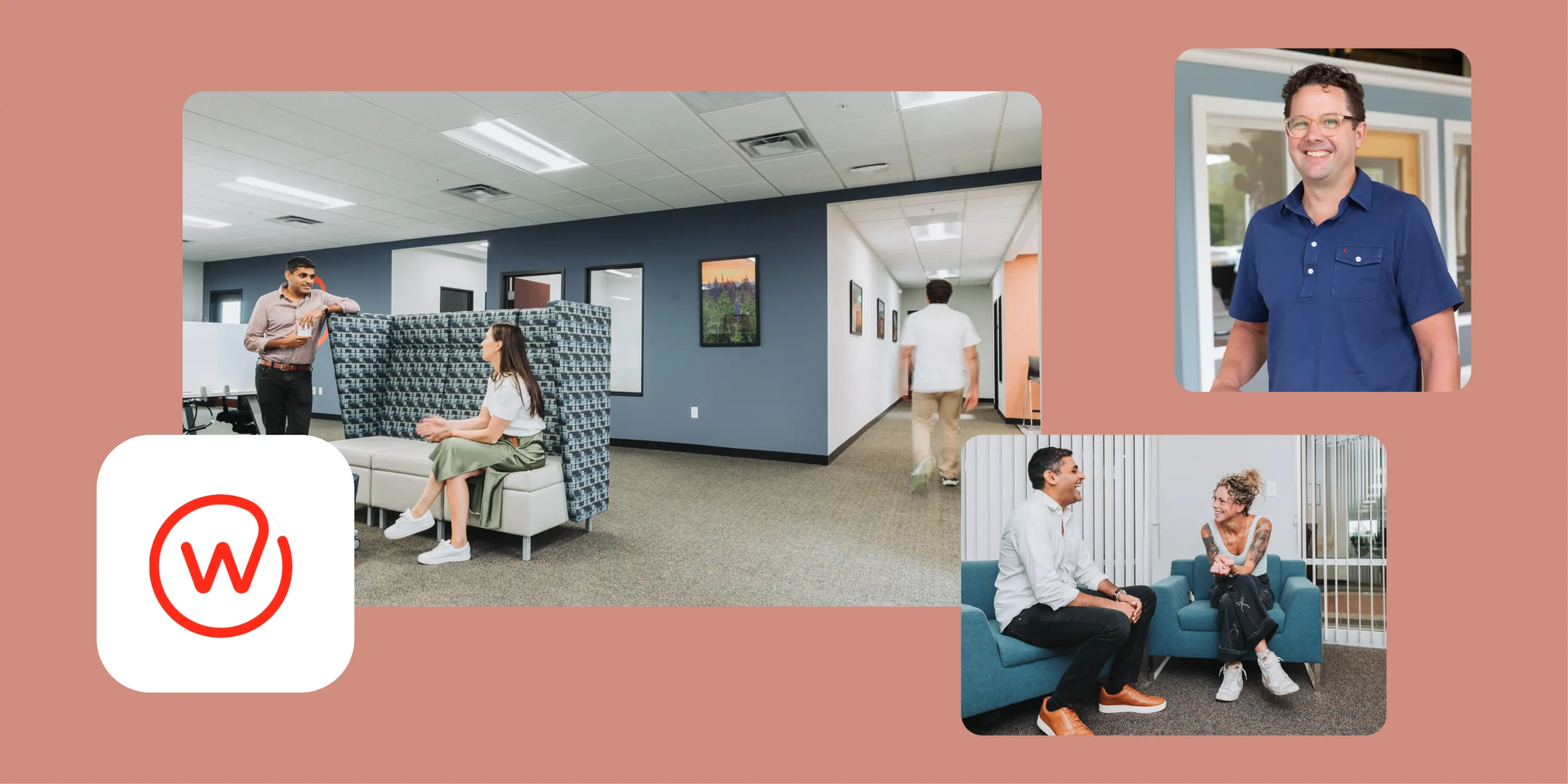
Collage of Workspace office scenes, including people talking in open seating areas, a man smiling in a blue shirt, and the Workspace logo.

Consistency at scale looks like a member’s third location feeling identical to their first, even when they’ve never met the team there. Their access works on day one. Their onboarding email arrives at the right cadence. Their booking confirmations and reminders match the ones from the home location. The operator hasn’t done extra work to make this happen; the platform has.

Justin’s team at Workspace runs this pattern across a five-location network with 26-month average member tenure, with around 70 automations doing the connective work between locations. “Everyone gets the same experience,” Justin says, which is the operator-side version of what members feel when they walk in.

Everyone gets the same experience.
Justin Moran, Workspace

The same logic shows up in smaller portfolios too. Adam Hyman runs three locations as a solo operator at KoWorks with roughly 30 automations handling the touchpoints that would otherwise demand on-site presence. The takeaway isn’t the count. It’s that automations are how a solo operator delivers the same member experience across three buildings without cloning themselves.


How do you decide which member moments to systematise?

You decide by mapping the member journey, finding the moments where variance is most expensive, and starting with those. Onboarding tops most lists because it sets the tone for the entire membership. Booking confirmations and reminders come next because they happen most often. Payment and renewal flows follow because they protect revenue directly.

Here’s how to work through it without overengineering.

Action Checklist. Systematising member moments at scale.

  1. List every member touchpoint in the first 30 days of membership.
  2. Mark the touchpoints that vary depending on who’s on shift.
  3. Rank those by impact on first-month retention.
  4. Encode the top three as automated workflows before anything else.
  5. Audit the workflows quarterly with named owners per location.
  6. Add new automations only when a real member moment is drifting.
  7. Resist automating moments that genuinely need a human.

A useful gut-check sits inside Salesforce’s State of the AI Connected Customer: customers reward consistency and transparency, but withdraw trust quickly when automation feels impersonal. The goal isn’t a fully automated brand. It’s a brand whose repeatable moments are reliably delivered, so your people can show up for the moments that aren’t repeatable.

Consistency is what members are paying for, and automation is the only way to deliver it at every location, every visit, without the experience drifting toward whoever’s on shift. If you’re managing more than one location, book a free demo and we’ll walk you through how operators in your space are encoding their experience into Optix.

Key Takeaways:

  • The product in multi-location coworking is the predictability of the experience.
  • Inconsistency between locations is invisible to operators until it costs a member.
  • Culture and hiring set intention; systems and automation deliver it at scale.
  • Operators feel the cost of manual drift; 54% want to reduce manual workflow errors.
  • Encoding onboarding, booking, and renewal flows turns variance into a fixed standard.
  • Brands whose delivery matches their promise grow faster and churn less.
  • Start by systematising the first 30 days of membership, then expand.

Frequently asked questions

Brand consistency in coworking means a member encounters the same experience, language, and cadence across every visit and every location. It covers onboarding, access, communications, booking flows, billing, and renewal touchpoints. When delivery depends on a specific person being on shift, you don’t have brand consistency. You have a brand that varies by rota.

Brand identity is the visible layer: logo, colour palette, copy voice, signage, fit-out. Brand consistency is the delivery of that identity across every member moment. Two locations can share an identical identity and still feel like different brands if the experience drifts. Members judge consistency, not identity, when they decide to renew or refer.

New members are still forming their mental model of your brand. Every interaction in their first month establishes what they expect for the rest of the membership. A community manager who runs a flawless welcome on Monday and a different one on Wednesday teaches the new member that the experience is variable, which makes the renewal decision harder.

A single-location operator can deprioritise multi-location consistency, but they can’t ignore moment-to-moment consistency. Members at a single location still notice when the welcome feels different depending on who’s on shift, or when booking confirmations arrive sometimes but not always. The same operational discipline scales. Building it early makes the second-location decision easier.

Done well, automation makes the experience feel more personal because it frees your team to focus on moments that genuinely need a human. When the welcome email, access setup, and booking reminders run themselves, your community manager has time to learn member names, run events, and notice when someone hasn’t been in for a few weeks. The system handles repetition. People handle the relationship.

The biggest mistake is automating moments that need a human, or skipping the design step and copying a generic template. Consistency comes from designing the experience you want, then encoding that specific experience. Operators who layer automations on top of an unclear journey end up with consistent delivery of a fuzzy brand, which is its own kind of drift.