
Coworking Recording Studios: The Future of Music Production
This is what happens when coworking meets music
September 11, 2025
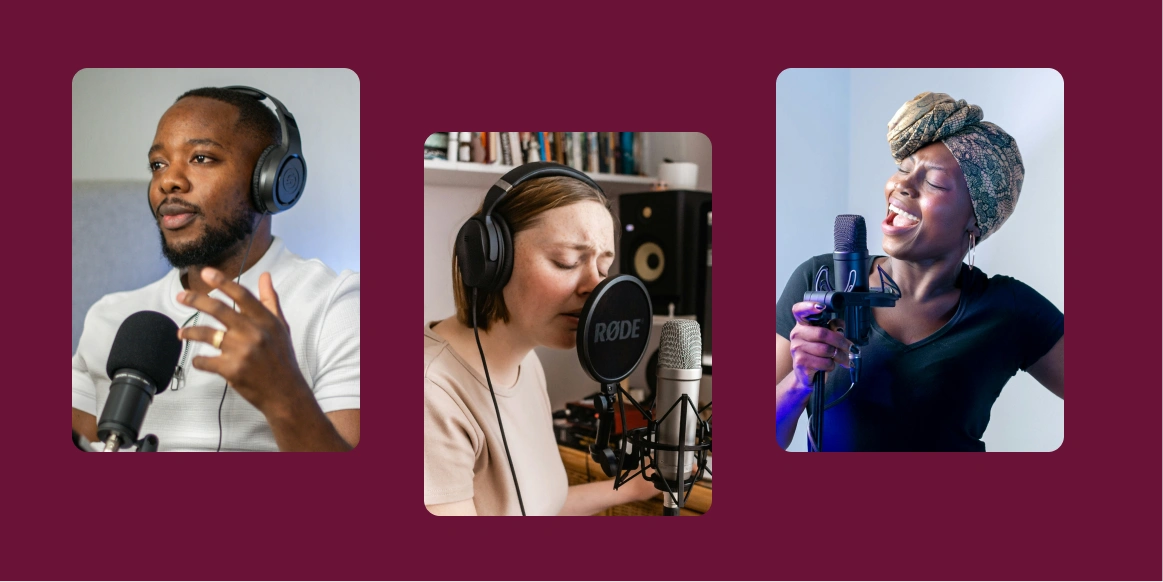
TL;DR
There’s a lot to be excited about in the coworking industry — but one of our favorite trends has to be niche coworking spaces. We’ve written extensively about coworking niches here at Optix, from micro-gyms to medical coworking and everything in between.
In this article, we’ll be diving into one of the lesser-known coworking niches, coworking recording studios.
While still relatively new to the market, this trend is transforming the way artists and independent creators master their craft.
Coworking recording studios, also known as a flex recording studio, shared recording studio, or on-demand recording studio is an artist-oriented shared space outfitted with professional-quality recording studios.
Imagine a coworking space full of private offices, but instead of each room having a desk, chair, and monitor, it’s a turn-key, state-of-the-art recording studio complete with professional-grade audio equipment. That is what a coworking recording studio looks like.
The idea is that anyone could walk in off the street, purchase a few hours of studio time at an affordable price, and create high-quality audio content. This is a radical shift from the way recording studios have traditionally operated.
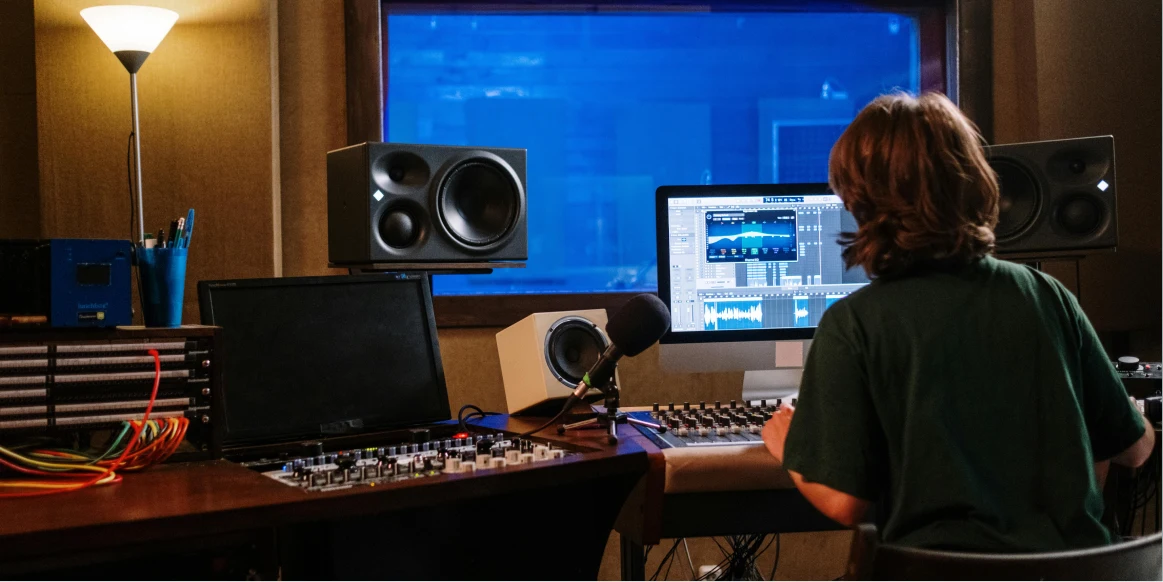
Coworking recording studios were born out of the need for artists, content creators, and podcasters to access high-quality recording studios on-demand. For Jason Jet, Founder at Grindhausuas, the idea came after he struggled to find a recording studio to work out of in New York City, forcing him to make music in his noisy and distracting apartment.
He dreamt of creating a “YMCA for musical artists”, a place where anyone could walk in and start making music with minimal experience. Now, that dream is alive and well with Grindhaus.
“Grindhaus is revolutionizing an age-old problem in the industry and making it simple and easy for artists, engineers, and music professionals to have their resources at their fingertips.”
The timing has never been better for coworking recording studios, with growth in podcasting, independent music, and creator culture fueling demand for flexible, shared recording spaces.
In 2025, there are 4.6 million podcasts worldwide with ~584 million listeners. Projections put this at 651.7 million by 2027. Rising ad revenue shows podcasts are becoming a serious business, with more creators needing professional spaces.
The independent music market earned US$14.3B in 2023, about 46.7% of the global recorded music market. The indie artist segment is valued at US$160.6B in 2025, expected to hit US$220B by 2030 (6.5% annual growth).
Streaming and direct-to-fan tools are lowering barriers, giving more artists the confidence to invest in quality production.
Why this matters for coworking studios
Not every creator has (or wants) a home studio, and private rentals are costly. Coworking recording studios meet the demand for affordable, professional, and flexible space, making them an attractive option as the creator economy continues to expand.
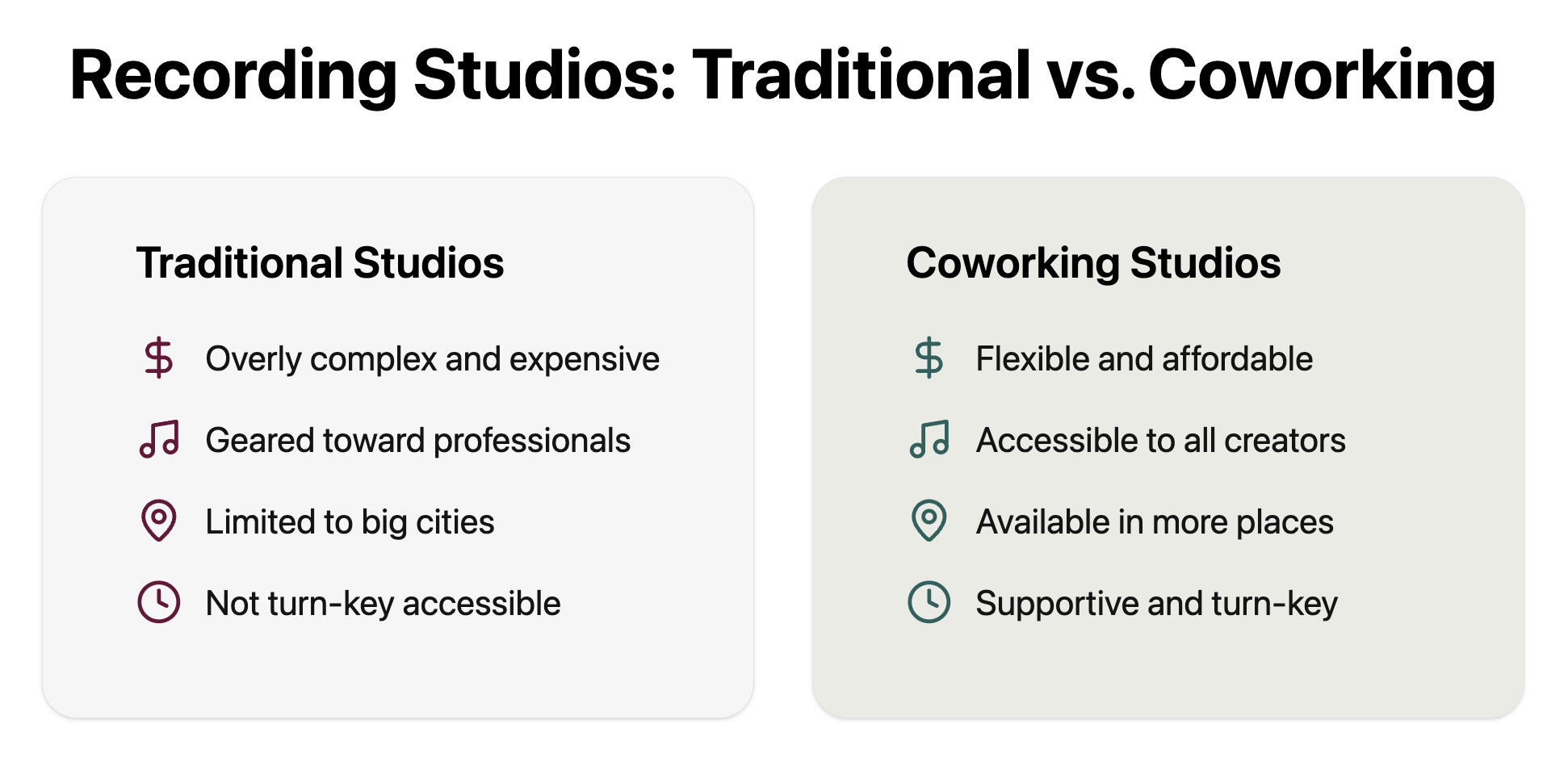
The biggest difference between shared or flex recording studios and traditional recording studios is the flexibility they provide, at an affordable price point.
In the past, if someone wanted to record a song or a podcast episode, they would be faced with recording studios that were:
For the average person, accessing a recording studio was not possible. Even for a professional musician like Jason, the traditional model limited his creativity and access to studio time.
Coworking recording studios aim to make recording audio accessible for the everyday creator by:
With this, coworking recording studios have been able to serve an unmet need in the market, while flipping the traditional recording model on its head.
A coworking recording studio is for anyone who is wanting to create high-quality audio content at an affordable cost. This typically includes:
The last point is an especially interesting one for aspiring operators. As companies look to incorporate more video and audio content into their marketing strategies, they need access to high-quality equipment. However, many lack the knowledge to create audio content successfully.
This creates an opportunity for coworking recording studios to support corporate clients with creating audio content, like voice-over recordings or podcasts.

Coworking recording studios are still a new concept, so no two spaces are the same. However, there are a few amenities that you can expect to find when you visit.
The biggest draw (and most important aspect) of a coworking space for musicians is the studio space. Every space will offer state-of-the-art audio recording equipment available on-demand or as part of a membership plan.
For example, Jason offers four different studios at Grindhaus for members including a podcasting room and a game room.
All studio spaces include professional-quality equipment with additional resources available as an add-on. Each studio has a unique look and feel to serve a variety of members.
True to its coworking roots, many recording studios will offer events and programming to bring the community together, whether that’s online or in-person.
Past events at Grindhaus have included an inspiring summer songwriting session, as well as Sip & Song, an evening of writing, singing, and enjoying some casual drinks with other members.
Coworking recording studios pride themselves on being an all-in-one solution for the average individual. Because of this, it’s very common to see audio engineering and other mentorship resources offered as add-ons or as a part of a membership plan.
Jason designed a Self-Made Engineer course to help teach artists how to take control of the creative process, end-to-end. It’s perfect for aspiring musicians who want to deepen their knowledge of audio engineering, and it’s available to members at an affordable cost.
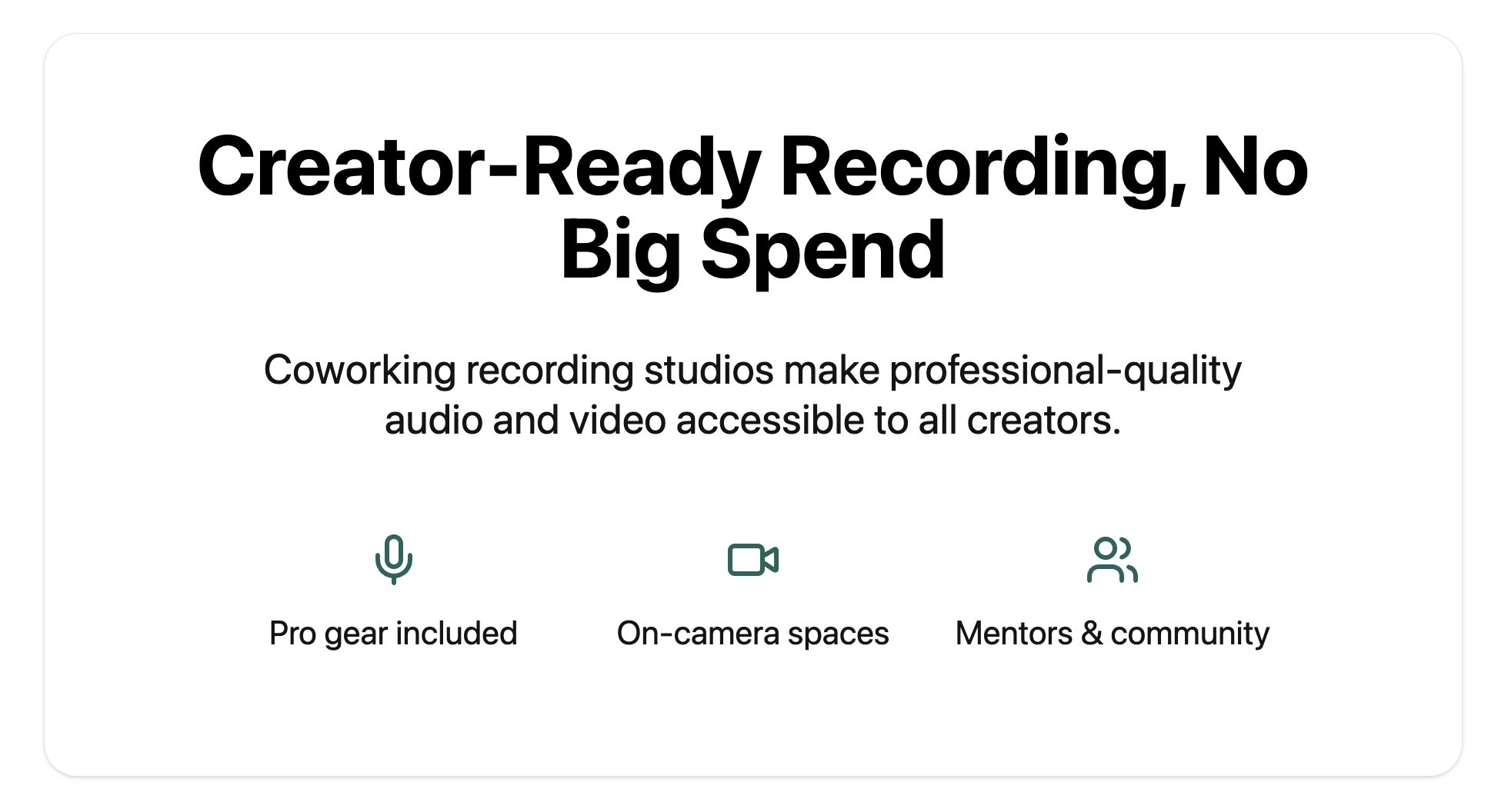
The greatest benefit of coworking spaces for musicians is they make professional-quality audio recording accessible for individuals.
High-end audio and video recording equipment is expensive, easily costing thousands of dollars, if not more. Not to mention, if you want to record yourself for a video podcast, you’ll need to consider where you’re recording and how you look on camera.
Coworking recording studios offer creators the opportunity to record and film in a beautiful space with professional equipment without investing a large sum of money. This access to equipment is invaluable to those just starting out.
Other key benefits include:
At first glance, flexible recording studios and traditional coworking spaces may not seem to have a lot in common. However, much like other coworking space niches, coworking recording studios borrow from the coworking business model.
Coworking recording studios primarily make money by selling space in the form of on-demand bookings and long-term membership plans.
Instead of offering hot desks and private offices, they offer studio space access. But the primary driver of revenue is the space itself and the promise of community – just like with coworking spaces.
Coworking recording studios and coworking spaces have a few other things in common:
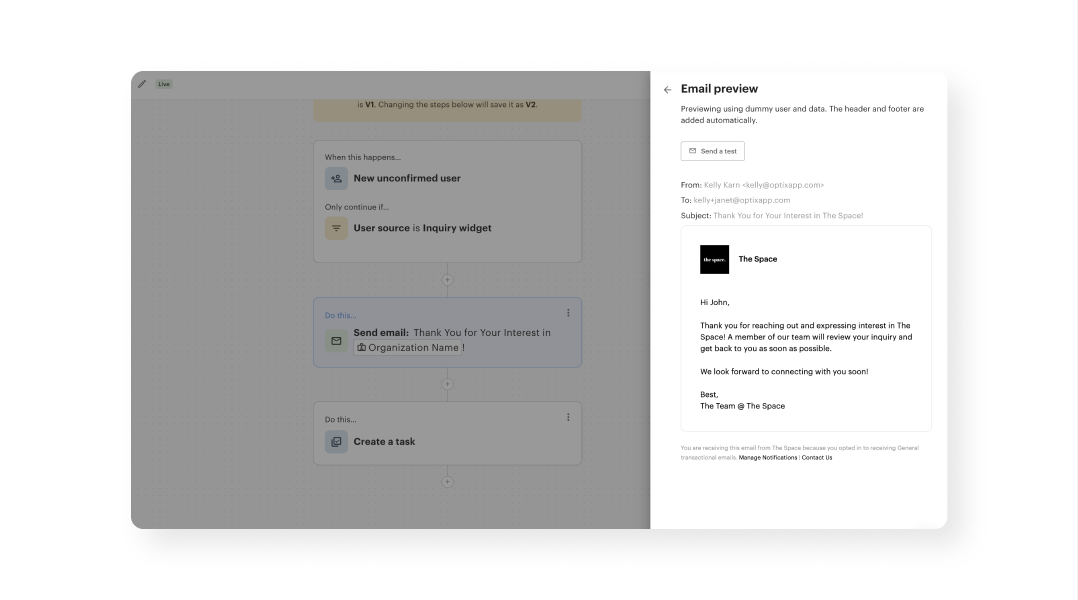
Coworking recording studios juggle memberships, bookings, and client engagement. With automation tools like Optix Automations, operators can save time, reduce manual work, and deliver a better experience through:
See how Optix can bring your vision of a coworking recording studio to life.

Marketing Manager
A coworking recording studio, also known as a flex or shared recording studio, is a coworking-style space that replaces desks and offices with state-of-the-art recording rooms. These studios come fully equipped with professional-grade audio gear and can be booked on-demand or via membership, making them accessible to musicians, podcasters, and creators who need high-quality production space at an affordable price.
Coworking recording studios are becoming more popular because the podcasting industry, independent music market, and broader creator economy are all booming. With more than 4.6 million podcasts and indie music revenues topping $14 billion, demand for flexible, professional, and affordable recording options is higher than ever.
Coworking recording studios differ from traditional studios because they offer affordability, accessibility, and flexibility. Instead of complex, expensive, and hard-to-book spaces geared only toward professionals, coworking recording studios provide easy booking, varied room types, memberships, and even engineering support so everyday creators can produce high-quality content.
Coworking recording studios make money through on-demand studio bookings and long-term membership plans. Like traditional coworking spaces, their revenue is driven by access to space and community, but instead of desks and offices, the product is recording rooms and professional production resources.