
How to Scale a Coworking Brand: Systems for Growth [2025]
Practical systems to scale your coworking brand sustainably in 2025 and beyond
November 1, 2025

TL;DR
There is no greater feeling than watching coworking spaces grow.
We’ve seen our clients like KoWorks go from one to three locations, Workspace go from four to five locations, and Groundswell grow their member base 10x *cue the tears*.
With these great success stories, we’ve noticed distinct patterns that make some coworking spaces scale with ease and others struggle to gain their footing. In this article, we’re going deep into all things scaling a coworking brand from when to do it, why it matters, to how to get it done without falling flat on your face.
Take these insights from our experienced team and capable clients to help you build your own scaling strategy in 2025 and beyond.
Scaling your coworking brand sustainably means growing in a way that does not threaten the viability of your business now or in the future.

Let’s say that Steve recently opened one coworking space in Minneapolis and he wants to scale to four more locations in the next three years. Scaling sustainably would mean doing the following before opening a second location:
This process is almost exactly what Adam Hyman, Founder at KoWorks, did (and is currently doing) to help him grow from one to three to now five coworking space locations in Sydney, Australia.
Scalability contributes to the long-term success of your coworking space because it forces you to consider not just what works right now, but what will work in the long-term. Even if you have no interest in growing to 10+ locations, scalability serves as the foundation for smart decision making.
Tashi Dorjee, Head of Flex Space at JLL, explains in his Flex for Thought video series that success in your coworking space lies in understanding your numbers and how economies of scale contributes to the long-term viability of your flexible workspace.
This is true whether you want to operate a single location coworking business or develop a thriving franchise.
Most independently owned coworking spaces start to think about opening their second location after they have:
While there is no data around the time it takes to open a second location, we do know that 53% of coworking operators operate a single location, while 47% operate multi-location businesses according to the 2025 Coworking Trends Survey by DeskMag.

Therefore, the right time to start scaling your coworking business is after you have generated demand in the market, achieved or shown a path to profitability, and developed repeatable operational processes. Most operators like to see an occupancy rate above 95% to consider opening another location.
Repeatable systems are the foundation for growth, both in coworking and in business. Businesses that focus on improving processes can see up to a 30% increase in efficiency, which translates to more growth potential.
Systems and processes make coworking growth more sustainable by:

Justin Moran, Owner at Workspace, implemented Optix Automations to help him map out and define his processes across his four coworking locations. It was what ultimately helped him open up his fifth location while maintaining the quintessential WorkSpace experience.
“Automations helps us be cohesive and not let things fall through the cracks as much. Everyone gets the same experience.”
There are four primary ways of scaling your coworking space business: multi-brand alliance, franchise model, network model, merger and acquisition.
A multi-brand alliance is the combination and collaboration of two or more brands. It is most often seen in the hotel and hospitality industry, as with Marriott International Inc. For a coworking space, a multi-brand alliance may involve you “teaming-up” with another coworking space and operating independent brands under a single umbrella parent company.
Pros:
Cons:
According to Investopedia, a franchise is “a business model where the owner licenses operations, products, branding, and knowledge for a fee.” You as an owner (franchisor) would license your brand and knowledge to an individual (franchisee) who would operate a location of your brand. They would operate the business and get a share of the revenue in return.

Flexwerk is “the first coworking space for fitness professionals” located in Indianapolis, Indiana. Steve Pirt, Founder at Flexwerk, plans on expanding his micro-gym business using a franchise model because it is one of the most reliable ways to scale without lots of upfront financial investment.
Pros:
Cons:
The network model (also known as a chain) involves opening multiple coworking locations under the same owner and same brand. This is the most common method for scaling coworking spaces as it allows for you as the owner to maintain full control over the operations and the brand.

Pros:
Cons:
The merger and acquisition model involves merging or being acquired by another, usually bigger brand. Most operators go into business knowing that this is the outcome they want, although some are surprised by an opportunity.
Mergers and acquisitions are becoming more common in coworking as the industry matures. Recently we’ve seen Industrious merge with Breather and DeskPass, CBRE acquire Industrious, and WeWork acquire CommonDesk.
Pros:
Cons:

When it comes to scaling your coworking space brand, there are a few common mistakes to be mindful of.
By far, the number one mistake we see ambitious coworking operators make is trying to scale their business too quickly. Usually, this happens if you plan to open your second location soon after opening your first before you’ve tested pricing, proved the model, etc.
We see this most often when operators try to open multiple coworking space locations at the same time. Scaling too quickly was one of the biggest mistakes made by the notorious coworking brand, WeWork.
How to avoid it:
One thing that Justin from Workspace found very quickly is that things don’t always translate from one location to another. That’s because your demographic can shift depending on where you’re located, and different customer profiles (ICPs) require a different approach.
He recommends staying true to the community and being open to their needs and what they tell you rather than assuming you know best.
“It doesn't matter what works here. If you're opening a new space, you need to figure out what works there.”
How to avoid it: take your learnings from your first location to your second, but pivot accordingly. Survey members and adjust your strategy according to feedback.
A lot of first-time coworking space operators piece together their first location with manual processes and work that heavily relies on human intervention. This will not scale.
Consider how you will define your standard operating procedures and automate key operational processes from the beginning, either by using coworking software like Optix and/or a collection of coworking technology pieces. This ensures that operations will translate easily from one location to the next, and you’re not vulnerable to humans coming and leaving.
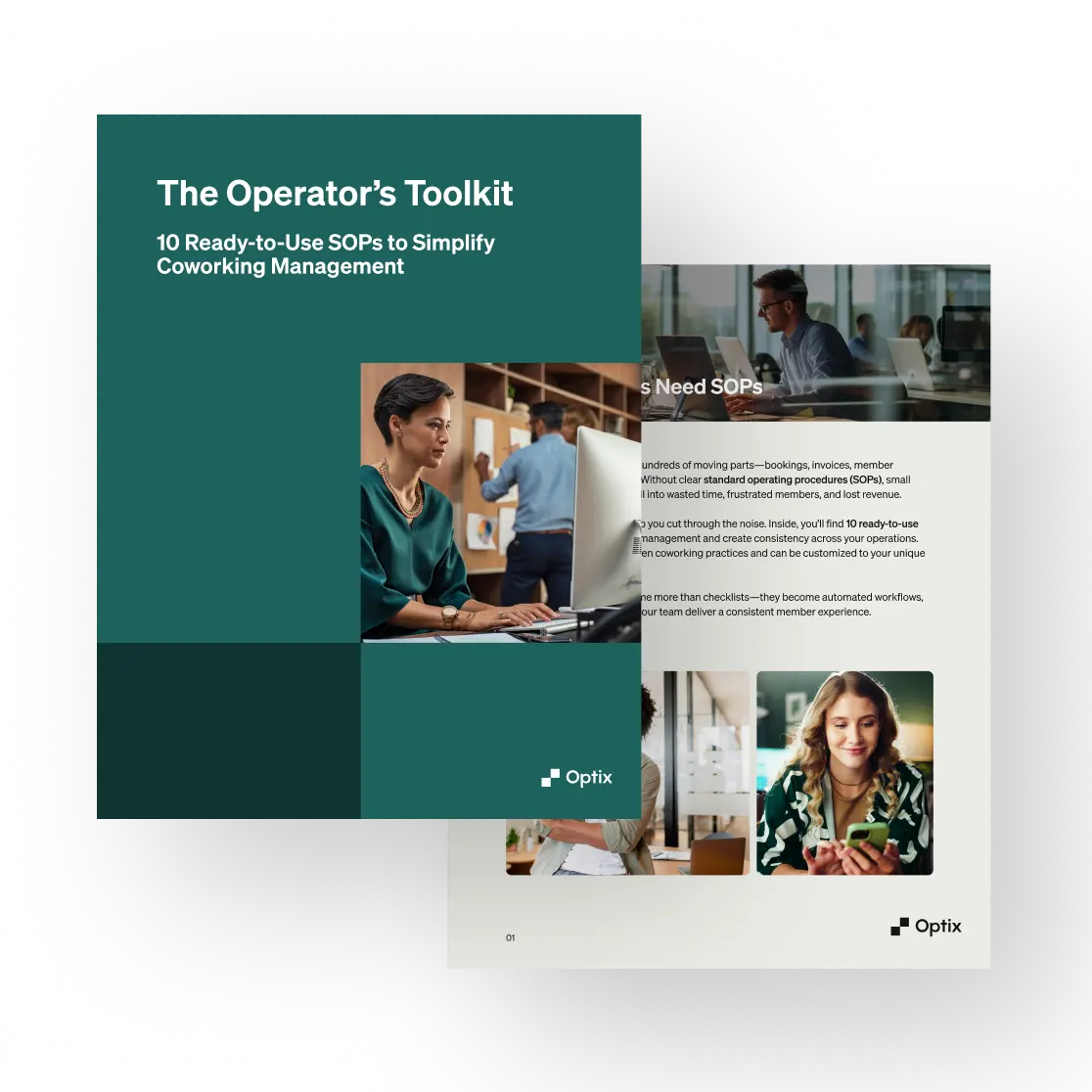
How to avoid it: as you develop your processes, consider how you can automate the work you’re doing. Document processes as you go along to increase your bus factor, or the number of people who could get hit by a bus before your business couldn’t operate.
There are many strategies you can take when it comes to scaling your coworking business, as described above. Choose the right strategy, and you’re off to the races. Choose the wrong strategy however and it could mean the end of your business altogether.
View this post on Instagram
Choosing the right scaling strategy depends on how much upfront capital you have to invest, how many locations you want to have, and how quickly you have to get there.
How to avoid it: figure out your five and 10 year plan. Determine what scaling strategy will help you get there, based on the resources you currently have available to you.
Location is huge when it comes to coworking, no matter what stage you’re at. If you’ve struck gold with your first coworking space, you may not know whether it was because of the brand, the location, or some other factor. You’ll want to think about whether you’re expanding in the same neighborhood, same city, same state, or none of the above.
Maggie, Founder of Elevate Coworking, specifically chose her coworking space location because of the location. It was in a great neighborhood and had plenty of parking available outside for busy women who needed it.
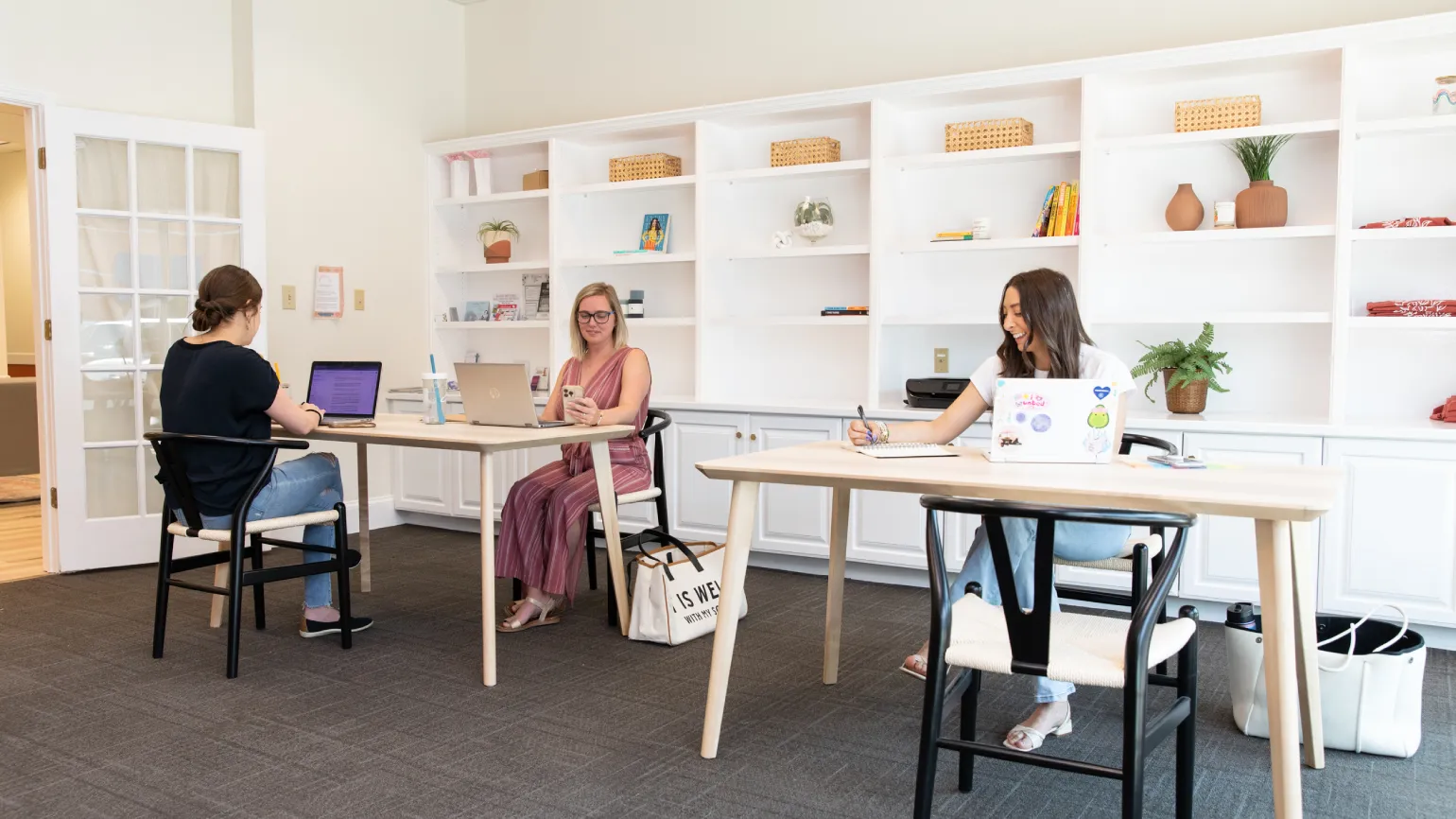
How to avoid it: conduct a thorough audit of potential locations for your next coworking space. Do you due diligence before committing to a location to ensure there is the demographic to match.
The best way to balance growth and community when scaling your coworking space is to establish a strong brand and community values that extend beyond a single location.
Mitchell Purdy is the Founder and CEO of Suite Genius, a three-location coworking space located in Vancouver, British Columbia. Here’s how he’s been able to scale while maintaining a cozy, community vibe.
Community is crucial to maintain across a scaling coworking organization. But another key aspect that cannot be forgotten when scaling? Consistency.
One of the easiest ways to maintain consistency and quality across multiple coworking locations is with defined Standard Operating Procedures (SOPs) and automation.

SOPs are a set of documents that outline how to handle certain situations or complete specific tasks in your coworking space. This could be anything from:
Take some time defining your SOPs and documenting them for internal access. Then, take a look at what you can automate – and automate as much as you can.
When a process is automated, it happens in exactly the same way, every single time. That means a lead is always followed up with, an overdue invoice is always charged, and a member always receives the welcome email at 9:00 am on their first day.
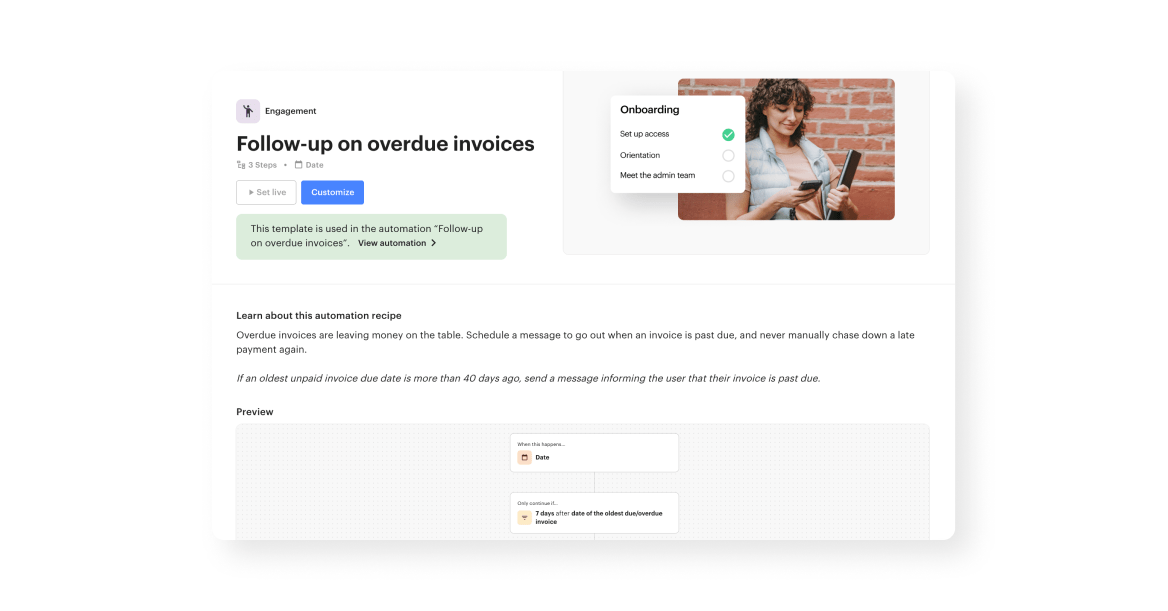
This is how Justin from Workspace is able to create a consistent experience for his members across all five of his coworking space locations. He uses Optix Automations to make sure every member is receiving the same email, in the same voice, at the same time.
He doesn’t have to worry about his community manager doing something in their own way (or worse, not doing it at all).
He can rely on technology to take care of it for him.
“All the stuff that half the time you forget or each time you send it out, it looks a little different…now, it's just going to happen.”
Technology and automation can help you improve efficiency, engage your community, and increase profitability across multiple coworking locations. Here’s why that matters for your success.
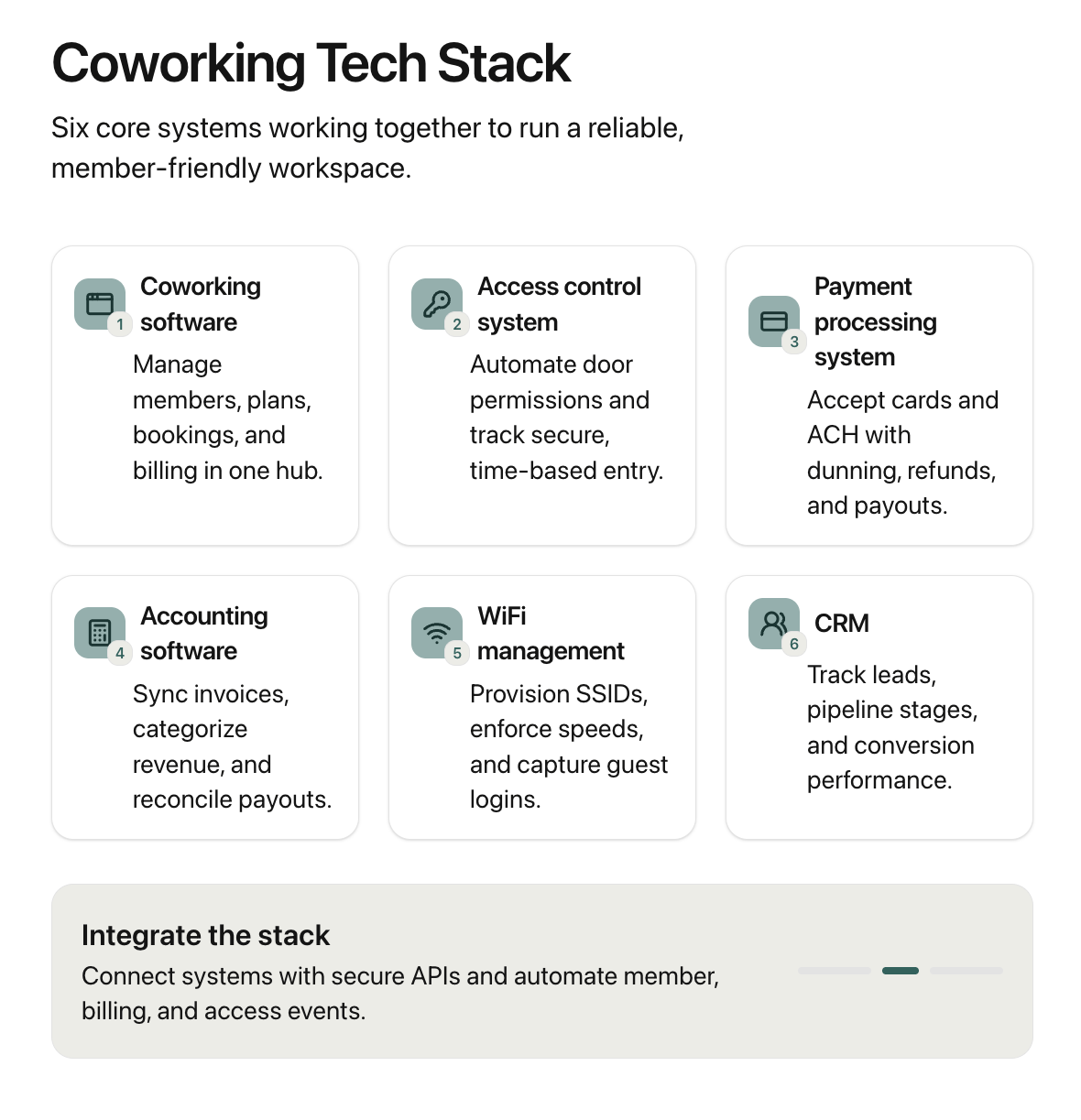
Automation can improve the efficiency by up to 54% according to research done by the Optix team in 2024. Scaling coworking brands can use technology ecosystems to improve efficiency and run their operations with less effort. Most scaling operators will use:
Integrating these systems together and ensuring easy multi-location management will help your operations run efficiently so you can scale quickly.
Technology has the ability to connect your community anywhere in the world, whether in different cities, states, or countries. Coworking operators number one goal is to build community according to the DeskMag Coworking Trends 2025 survey, so this is something all operators need to consider.
Think about where you will build and host your digital community be it on Slack, Facebook, Whatsapp, or your coworking software like Optix. Using technology helps develop a central place for people to connect.
Profitability is a big component of being able to scale a coworking space successfully, and automation is one of the best ways to get there.
Automation helps to increase profitability in your coworking space by:
It’s no surprise then that over 90% of operators see automation as being important to their business. It’s one of the underlying reasons why spaces are able to scale their business over time.
Key performance indicators (KPIs) can help you understand how your coworking business is performing over time. When scaling a coworking business, pay attention to KPIs like:
A sign that you are ready to open up more locations of your coworking space could be if you have high new member sign-ups (lots of people are interested in your community), high occupancy rate (your space is occupied most of the time), low member retention rate (members are staying for a long time), and high member LTV (members are spending money in a way that indicates profitability.
Scaling a coworking space isn’t always easy, but Optix can help make it a lot easier. Optix coworking software offers multi-location management to easily automate coworking spaces across multiple locations.
Don’t take our word for it. Just look at Justin running five coworking locations at Workspace, Adam running three coworking locations at KoWorks, and Harry running nearly 10 locations at The Wheelhouse.
Want to see how Optix helps scale coworking spaces?


Marketing Manager
For flex growth, management agreements or percentage-rent deals reduce fixed risk versus a full lease on every coworking location. What lease structure you choose should match cash position and speed to market, with capex-light models enabling faster expansion.
As flex scales, centralize finance and marketing while keeping community roles on-site; layer in a regional ops lead over 3–5 coworking locations. This org model answers what structure maintains brand consistency without losing local community touch.
Create a 30-60-90 playbook with SOP checklists, shadow shifts, and scenario drills, then certify before solo coverage. How you onboard in coworking directly affects churn and reviews; using Optix Automations to guide daily tasks keeps execution consistent.