10 Lessons in Coworking from 10 Years of Workspace
Lesson 1: Coworking is a hyper-local business
August 15, 2025
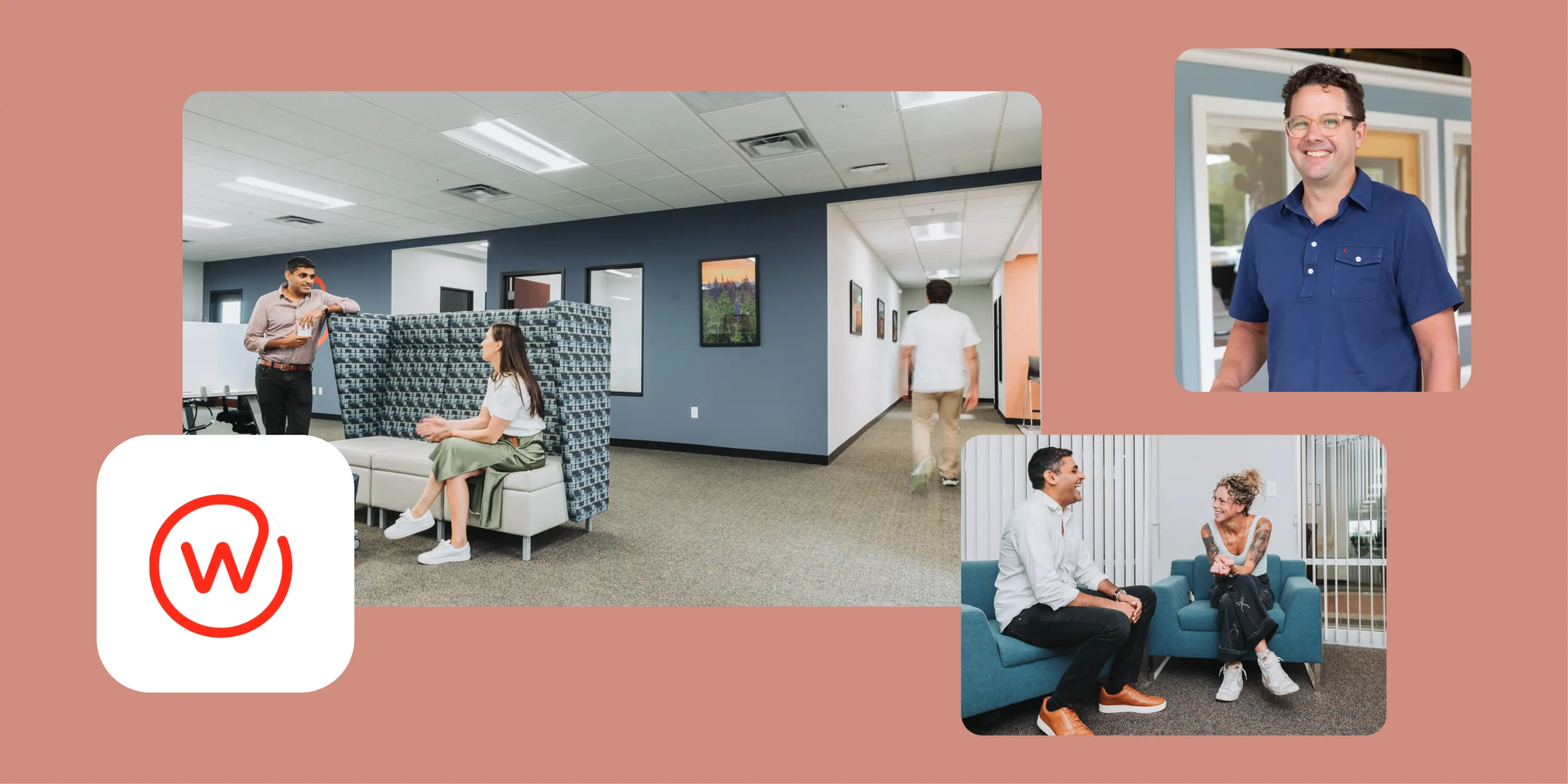
Justin Moran’s coworking story is nothing short of remarkable.
He started out as a member at Workspace many years ago before moving into the operator side. Ten years later, he is a testament to how listening to your members can lead to greater success than you could possibly imagine.
With over 600 active members and an average tenure of 26 months (including their newest location that’s been open for under a year!), Workspace has become a model for operational excellence and leading with hospitality and intention.
Justin has spent the last decade scaling Workspace into a thriving five-location coworking brand across the suburbs of Boston, Massachusetts, with more growth to come. Here are 10 lessons he and his extraordinary community manager, Kerry, have learned along the way.
In one of the best quotes of conversation, Justin shared that “coworking is like pizza” — you’re only willing to go so far for a slice of pizza, like how you’re only willing to go so far for a coworking space.
This creates a hyper-local community element to coworking. You’re serving people within the community you’re located in, people who likely live a defined number of miles away from you (and not much further, unless you’re in a transient area).
With hyper-local businesses comes the opportunity to really be a part of the community, to connect with businesses next door and to be an active participant in improving the broader community.
“Hyper-local business is driven by a good experience in a small community, because if someone has a bad experience, it's gonna spread. If your pizza sucks, you're not gonna be around long. We just try to make good pizza.”
Once a week, the Workspace team meets to discuss infrastructure in the space. They run through what’s working, what needs fixing, and what will be attended to first, whether it’s a squeaky chair or room temperature control.
It doesn’t matter how small the issue is. Justin and Kerry know that if people are comfortable in the space, they’re more likely to stay. Having a standing meeting dedicated just to physical infrastructure helps them stay proactive and get ahead of potential problems.
This has helped contribute to their exceptional retention, a whopping 26-months across all locations including their new location that is just a year old. In fact, Justin still has dozens of members who have been there since day one!
“We have a team meeting every Monday, and the last thing we talk about each week is infrastructure, so light bulbs, furniture, carpet, paint, whatever. Each community manager has the opportunity to say this or that needs attention.”

At first, Justin thought his team was too small to benefit from something like coworking software or Automations. Now with over 70 automations in Optix running across all five locations, Justin knows automation is his best tool to save time and reduce human error.
His team has used automation to simplify member onboarding, streamline Google review collection, and help keep their team on track. Not only does this help make the community manager role a lot more strategic, it also gives Justin more time back in his day to focus on growth.
“When Automations came out, I thought, ‘we're not big enough to need this type of thing.’ But it's really been impactful.”
Workspace consists of five locations, some of which are only a 20-minute drive from one another. And yet, the neighborhoods couldn’t be more different.
Even in close proximity to one another, each location attracts a slightly different crowd and therefore requires a unique approach to marketing and growth. While you can certainly apply learnings from one to another, Justin says blindly copying and pasting one location’s strategy to another may not give you the success you’re looking for.
The trick is ensuring you stay true to the community you’re a part of, while still maintaining a consistent brand voice across all five locations (hint: that’s where Automations is helping their operations really shine!)
“It doesn't matter what works here. If you're opening a new space, you need to figure out what works there.”

Private offices were one of our top predicted coworking trends of 2025, and survey says, they’re here to stay. Workspace operates nearly 200 private offices across five locations, with about 85% of their revenue coming from private offices alone.
This product mix is largely informed by their customer base of high-income professionals looking for a quiet place to work. By focusing on this demographic and serving them well, Workspace is able to secure consistent revenue with a predictable income stream.
In a recent webinar, Tessa McLoughlin, Optix client and Founder at KWENCH, also talked about the popularity of private offices in coworking. Check out the full webinar replay on YouTube.
“I've always found it easier to rent private offices, because if people are being kicked out of their house for one reason or another, they want their own space.”
Despite his background in sales, Justin found that long-term success in the coworking business requires focusing on the member experience, not just selling offices.
His belief is that if you create an experience people love in a space where they want to be in, the community will sell itself. It’s why now, Justin focuses on being hospitality-first and listening to his members, making them as happy as they possibly can be over anything else.
This means putting up blackout blinds if an office is too hot, ordering a whiteboard if someone needs one, and providing a bowl of candy for members to munch on throughout the day (which they love).
“It took me a while to understand that this business is more about hospitality and marketing than real estate and sales.”

Credit card fees are a big pain for small businesses. It was one of the reasons why Justin was hesitant to leave the tech tools he was using before Optix, as he was locked in with ultra-low credit card fees.
When he switched to Optix, Justin now had the option of accepting ACH payments in lieu of credit cards. By incentivizing his community to use ACH payments through Optix, Workspace was able to keep rates low for members while improving their bottom line to the tune of roughly $25,000 a year.
This just goes to show that sometimes profit is hiding in the places you’d least expect.
“One of the reasons why I chose Optix was you had a super elegant way of dealing with fees. ‘If you're going to use a credit card, you’ll get charged two point nine percent. If you want to pay any other way, it's free.’”
Justin wasn’t using a dedicated coworking software until just a year ago. But with the shift towards Optix and more automation capabilities, Justin’s team has been able to completely change how they work.
With technology handling more of the admin work, Justin and Kerry can focus on being present with members, greeting them by name, and anticipating their needs.
This is the work that Kerry loves to do the most. She takes pride in taking care of members, and it’s something she truly thrives at. Why not use technology to make more of what’s possible, possible? Learn more about Justin’s journey with technology.
“I always try to meet people's needs, to go above and beyond…I kind of spoil the members a little bit probably. But they love it!”

Sometimes Kerry says she doesn’t connect with the buzzword “community” that is put forward in coworking. That’s because their members don’t necessarily want elaborate events and kombucha on tap. What they do want is a comfortable place to work, where things are taken care of and where they can be productive for a few hours a day.
Kerry and Justin provide just that.
By making people feel happy, safe, included, and cared for, Workspace is able to create a space where people feel like they belong. At the end of the day, that’s what community is really all about anyways.
“I try to make the space inviting and make people feel comfortable here and that they want to come back and they want to work here.”
When you’re scaling a business across multiple locations, consistency helps build brand. Justin has invested a lot of time and energy into building systems and processes that can scale across all locations to ensure everyone gets the same Workspace experience.
Community managers uphold brand standards. Emails are automated with the same template and messaging. SOPs are set.
By standardizing how they operate and using technology to automate as much as they can, Justin and the team are crafting a long-standing brand that will work to serve them better over time. Read all about how Justin and Kerry are using Optix Automations to deliver a consistent experience, every time.

But over the course of 10 years, Justin has worked hard to create a space where people enjoy coming to and working in each day. By committing to be hospitality-first and going above and beyond for their members, Justin proves that you don’t need fancy events and large-scale marketing campaigns to find success.
Success in coworking comes from knowing who your members are, anticipating their needs before they do, and trying to deliver the best, most reliable, and memorable experience you possibly can.
Congratulations on 10 years of Workspace, Justin and Kerry!