
How to Start a Golf Simulator Business in 2025
Costs, models, and pricing, to open an indoor golf simulator business with tips from real operators
September 26, 2025
TL;DR
A golf simulator business is an indoor venue renting high tech bays that replicate course play year round.
Profit hinges on smart equipment choices, realistic pricing, and multiple revenue streams like lessons and events.
Automation of bookings, payments, access, and analytics enables lean teams to run 24/7 and scale efficiently.
Last updated: September 26, 2025
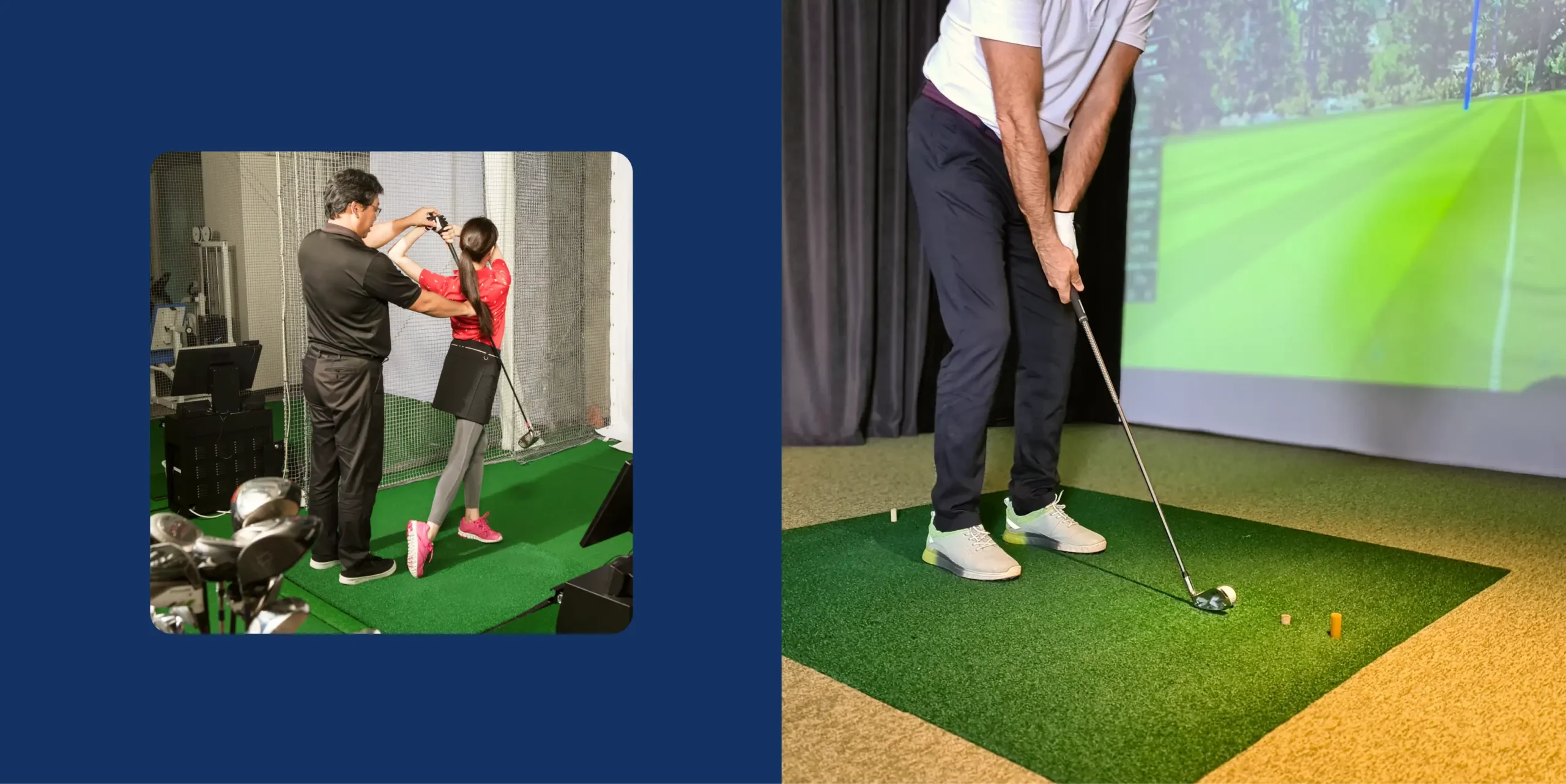
Gone are the days of 6-month golf seasons and traveling to find the perfect golfing weather. Golf simulator businesses and indoor golf facilities are popping up all over the world to help enthusiasts advance their skills and enjoy the sport year-round.
The golf simulator business model seems simple at first. But what exactly is involved in creating a successful and profitable golf simulator business?
Here at Optix, we’ve helped a number of golf simulator businesses open their doors in the last five years. Now, we’re bringing you all of the insights and lessons we’ve learned along the way.
A golf simulator business is an indoor space outfitted with several bays (sectioned-off areas or rooms) that simulate a golfing experience using sophisticated golf simulator software.
According to Golfstead, this computerized setup mimics a real game of golf, complete with life-like golf course rendering and unique data and insights to help you analyze your swing and improve your overall performance.

If it feels like there are more indoor golf facilities today than there were five years ago, you’re not wrong. Modern golf businesses have exploded in recent years, with the golf simulator market expected to grow by 9.2% over the coming years. So why are golf simulators taking over?
Golf became the game of choice during the pandemic due to its ability to be played safely outdoors. In 2020, there were 24.8 million golfers in the US, a 2% increase from 2019 and the largest net increase in nearly 20 years.
More than three years later, the game continues its meteoric rise in popularity.
The first golf simulator was invented in the 1970s. Since then, the technology has advanced considerably with the modern simulator looking far different than those before. Now, a golf simulator provides you with:
The technology is now so advanced that you can easily spend a few hours on a golf simulator in lieu of an outdoor golf course while still getting much of the golfing experience.
As every golfer knows, the season is limited, especially for those living in northern environments. Golf simulator businesses bring an exceptional golfing experience to those living in colder climates and makes year-round golfing possible.
This is exactly what inspired Jessie and Harry to co-found Le Birdie, an indoor golf simulator in the heart of Montreal, Quebec. The short outdoor golf season has worked in their favor in the cold climate of Canada, with plans to expand just six months after opening.
While some golf simulators operate like a gym, others operate like a country club. This creates opportunities for social interaction and networking with other golfers and golf enthusiasts that is appealing to the modern golfer.

In our coworking niche series, we break down all of the ways that different industries are borrowing from the coworking model. Turns out, golf simulators are doing this, too.
Both coworking spaces and golf simulator businesses make money by renting access to space. They also:
Let’s take a closer look at the indoor golf business model and how it resembles coworking.

Similar to the coworking space business model, golf simulators make money by selling space in the form of access to golf simulators.
Typically, entrepreneurs will lease or buy a commercial space. They will then create one or several separate golfing areas in the space and outfit them with golf simulator software. They then rent these spaces on-demand and/or offer recurring memberships.
Apart from selling space, golf simulator businesses also make money by offering:
Together, these revenue streams cover the cost of running the facility including rent, electricity, and staff.
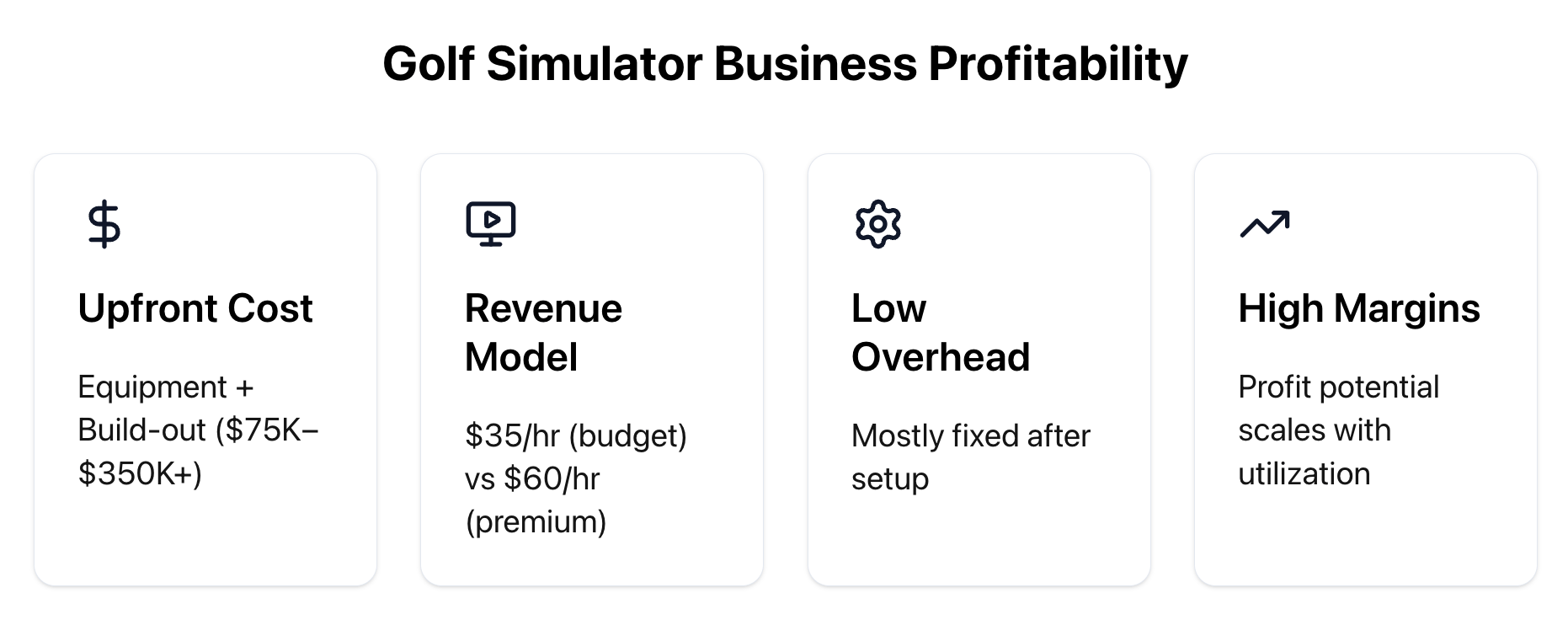
Profitability is a hot topic in the coworking world, as in the indoor golf world. Golf simulator businesses can be very profitable. However, starting a golf simulator business requires a high upfront cost.
Consider this –
In order to properly outfit an indoor facility for a golf simulator business, you’ll need a number of golf simulators. These golf simulators consist of hardware and software.
The cost of golf simulators varies widely depending on the quality of the technology. One popular golf simulator on the market for commercial spaces is the Uneekor Eye XO. The Simkit, which comes complete with everything you would need for one bay, costs between $17,000 and $19,000 depending on the customization options. This includes the one-time software cost of $1,000.
More advanced simulators can easily cost up to $60,000 a piece. If you want your business to have three or four simulators, you’re looking at an upfront investment of anywhere between $75,000 and $240,000 on equipment alone.
Add in the cost of renting and building out a space, starting a golf simulator business can be well over $350,000.
One strategy that some successful facilities use to keep costs low is outfitting their space with a few different golf simulators and pricing them accordingly. For example, you could offer one or two budget-friendly simulators available at $35/hr and one or two high-end simulators at $60/hr.
The good news is, there is relatively little overhead with a golf simulator business and the margins can be very high. Once the equipment is purchased, you can open a space and begin making that money back immediately.
One important piece to keep in mind when it comes to the profitability of a golf simulator is attendance fluctuations. Attendance in this industry can be highly dependent on day of the week, time of day, and of course, weather. Indoor golf facilities tend to be slower during the summer and when the weather is nice, which can impact revenue predictability.
Weekday mornings and afternoons also tend to be slower times, as golf simulators typically attract weekend and post-work crowds. Consider these factors when building out realistic financial projections and keep in mind a marketing strategy you can use to bring more people in during the off-season (such as discounts during the summer).
Jessie from Le Birdie ran a campaign this summer where she offered members a free two-hour pass in exchange for a google review. Not only did it bring people into the space during a slow time, it also helped generate some word-of-mouth marketing and positive reviews.
“I thought, if this is going to happen with seasonality, that's when I'm going to use this strategy to reengage. With the app, I can message them and then it pops up on their phone. Yes, it's summer, but if they see we're doing a tournament, maybe they’ll pop in.”
Did you know? You can use software like Optix to set different prices for your golf bays at different times of the day or times of year. If you want to automatically offer cheaper rates in the summer or mid-afternoon, you can do this in Optix. Learn more.
The most important part of a golf simulator business is the technology itself.
Having a high-quality simulated golf experience that resembles a traditional golf course is absolutely necessary to attract people to your space. These costs are non-negotiable and are an integral part of attracting avid golfers and a loyal customer base.
Golf simulator technology can be purchased in a bundle which includes the launch monitor, custom enclosure, hitting mat, landing turf, and projector. You could also purchase all of these pieces separately depending on what your needs are.
For example, you may choose to have a custom enclosure, or you may choose to have an open set-up resembling a driving range.
Apart from the equipment itself, here are some other common needs for a golf simulator business:
Here at Optix, our technology supports a variety of business models, from coworking spaces to golf simulators. Here are four examples of golf simulator businesses (and Optix clients!) that are bringing fantastic indoor golf facilities to their communities.
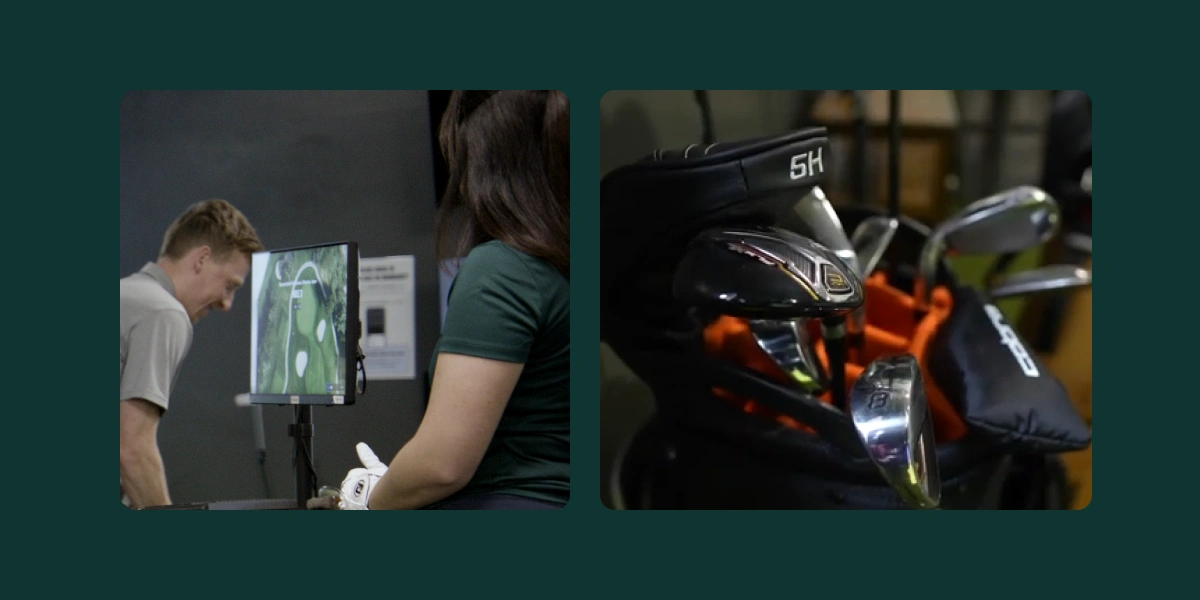
Le Birdie is a 24/7, fully automated indoor golf facility in Montreal, Quebec. Founders Jessie and Harry created Le Birdie after not being able to find a local golf sim that fit their needs. In just six months, they’ve had over 1,500 customers come through their doors and automated over 4,000 bookings with the help of Optix.
“We're going to double our capacity this fall. Optix is making it simple for us to be able to scale.”
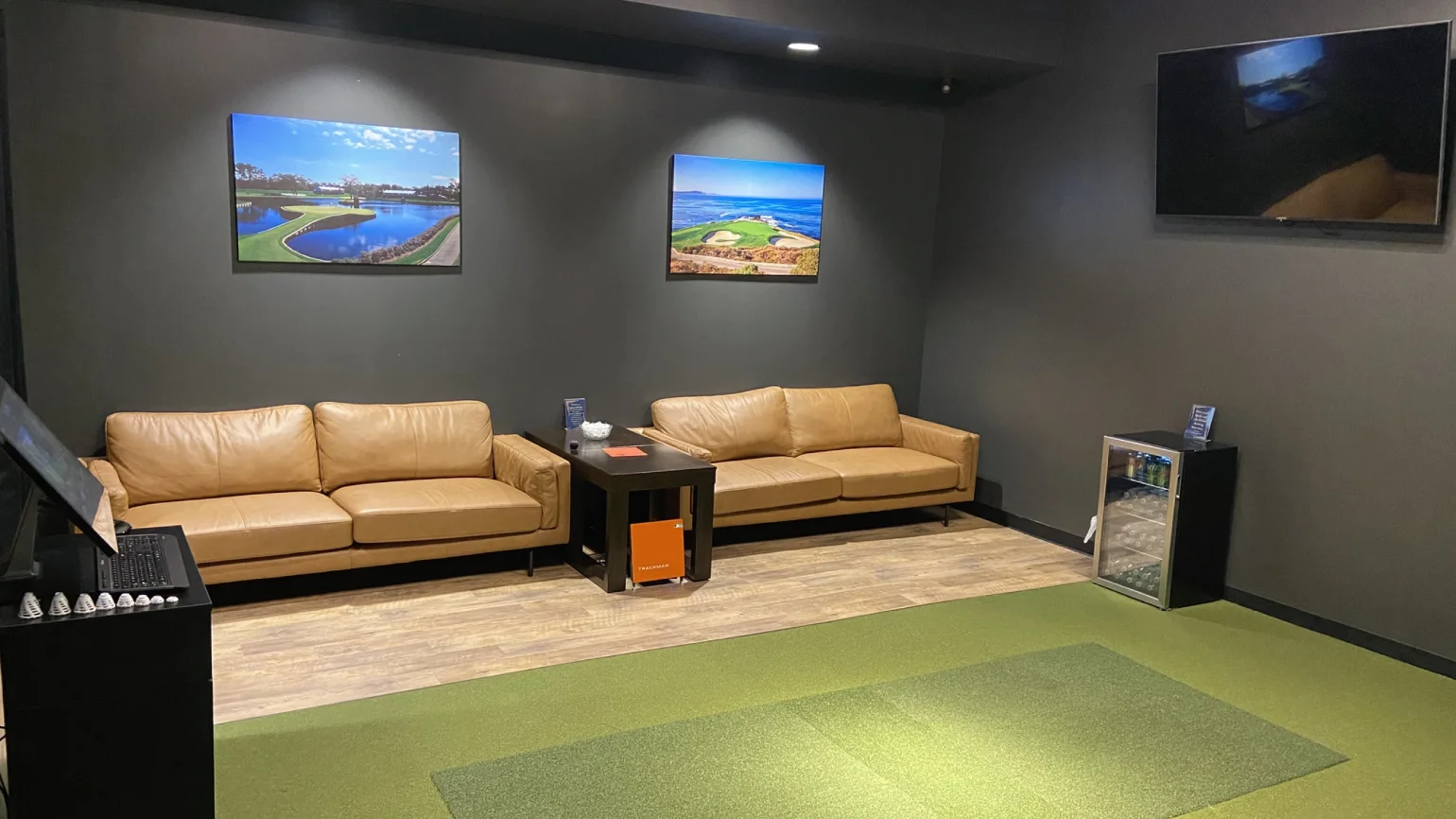
Lighten Golf Club is a luxury indoor golf facility located in Riverton, Utah. They’ve created an exceptional golf simulator experience, complete with high-end technology and an outstanding customer experience.
Here, they offer beautifully designed spaces, crisp refreshments, and private lessons along with a wide variety of membership options at an affordable price to meet the needs of their members.
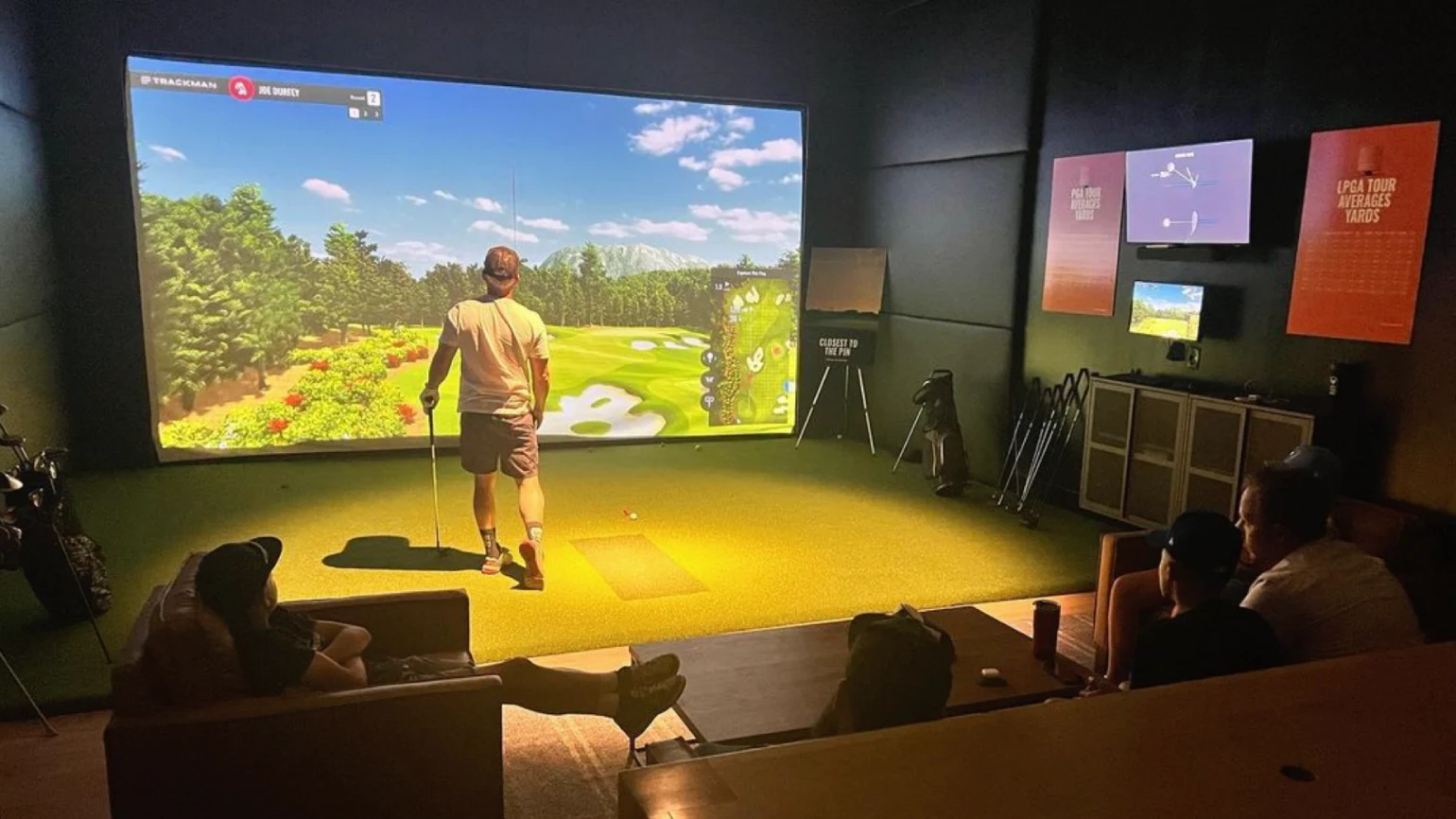
Scratch Golf Lab is a 24/7 golf simulator experience with five locations in the US. They’re committed to supporting those at all levels of golfing experience, from beginners looking to build fundamentals to professionals looking for an enhanced golfing experience.
At Scratch Golf Lab, their simulators are equipped with Trackman 4 technology to provide an elite golfing experience to their members and give them data-driven insights to improve performance.
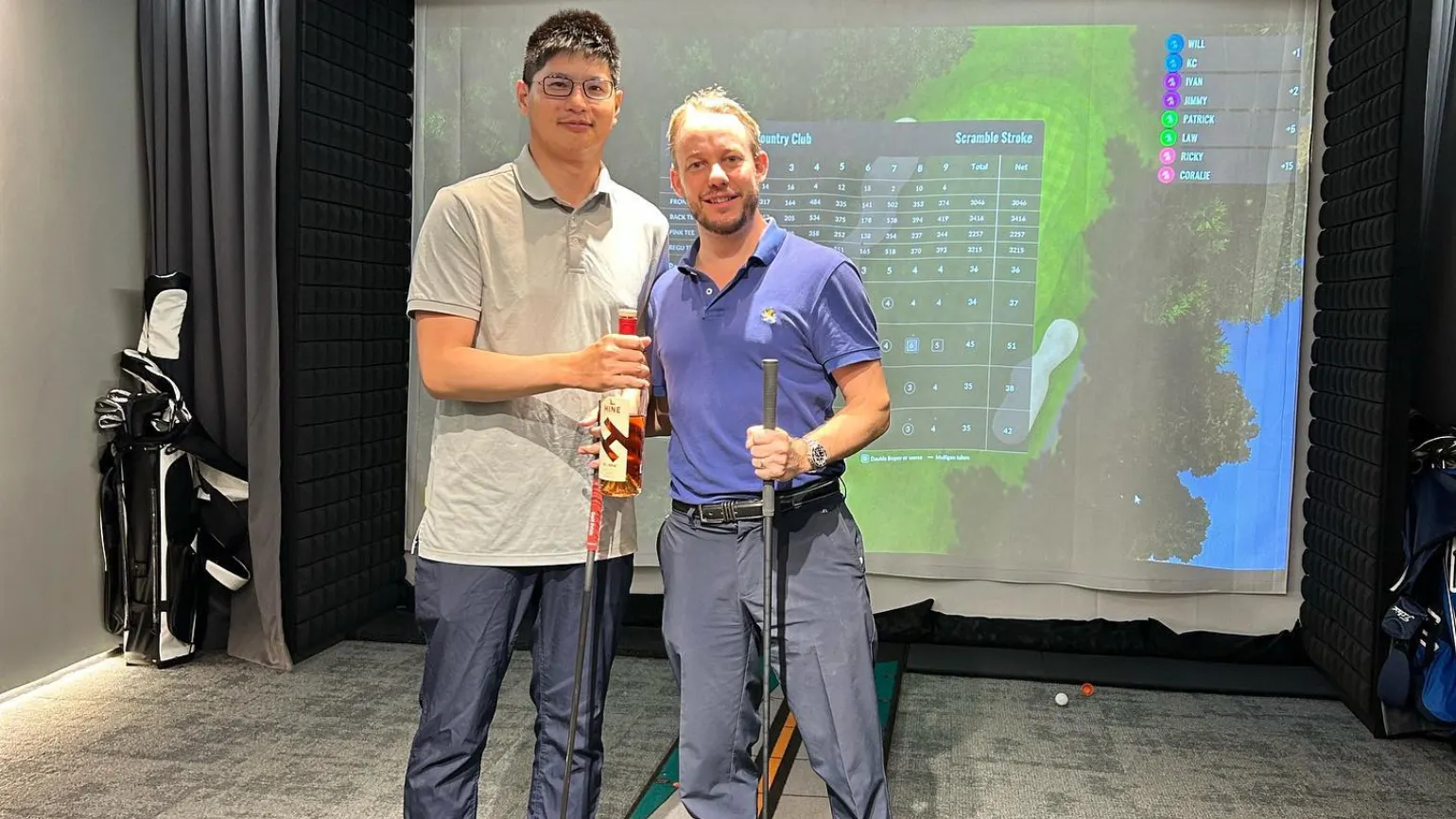
Shots Factory is an indoor golf practice facility located in Hong Kong. Their impeccably designed 24/7 facility makes golf accessible to a wide variety of members at any time of the day, complete with simple and affordable pricing plans.
At Shots Factory, members can access the unparalleled advantages of TrackMan technology, private lessons from a PGA golfer, elite level golf equipment, and so much more, making it the ultimate hub for golfers in Hong Kong.
“Shots Factory is an indoor golf practice facility for beginners and experienced players alike. We offer golfers in Hong Kong an unparalleled level of access and convenience to golf, with simple and affordable pricing plans, and 24/7 access.”
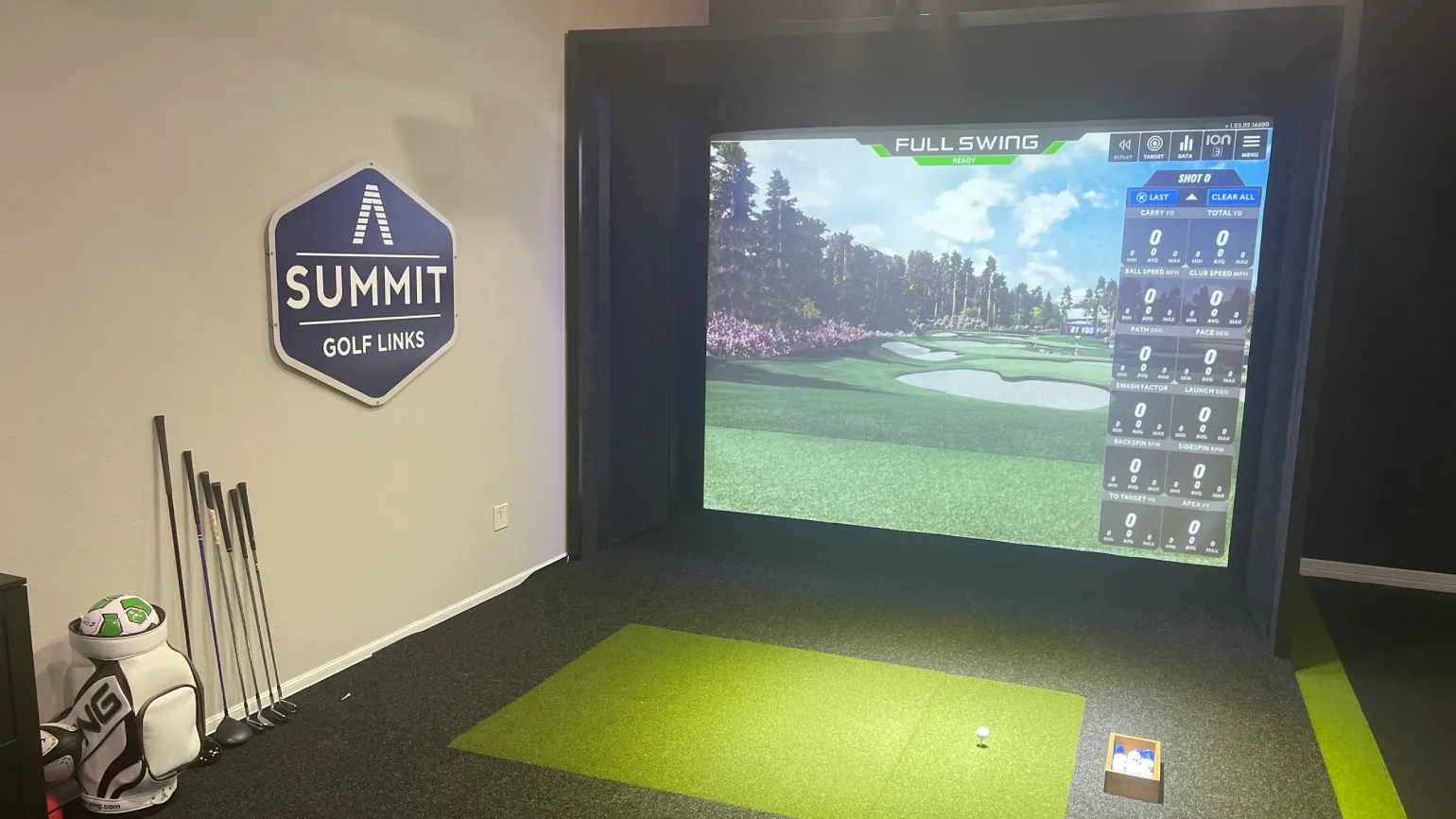
Summit Golf School is a golf school offering golf lessons, club fitting, and a Full Swing Simulator experience. Their golf simulator includes over 20 championship golf courses, target practice, range practice, and multiple sports beyond just golf.
Members can book the simulator room using Optix and utilize remote door access to access the space, making it an easy and convenient way for members to access a high quality golf experience at a fraction of the cost.
“The process of playing the best golf of your life is our passion. We are committed to helping you develop your golf game at every level.”
If you’re a golf enthusiast with an entrepreneurial itch to scratch, then starting a golf simulator business may be just what you need. Here is a step-by-step guide to opening your first (or most successful) indoor golf facility.
Every good business starts with who you’re serving and why. This is particularly important for those looking to start a golf simulator business, because the offering can vary dramatically depending on your audience.
Here’s what we mean.
Determining who you’re serving informs all future decisions you make for your business. In this case, it’s not a bad idea to create a business plan that helps you summarize your findings.
Business models change frequently, but you’ll need an understanding of your finances before moving forward with any plans.
One of the major reasons why indoor golf simulators fail is because they don’t properly manage their start-up costs. It’s a common issue, considering the high upfront cost of starting a facility.
Map out your ideal business model to ensure financial viability. Here’s what that could look like.
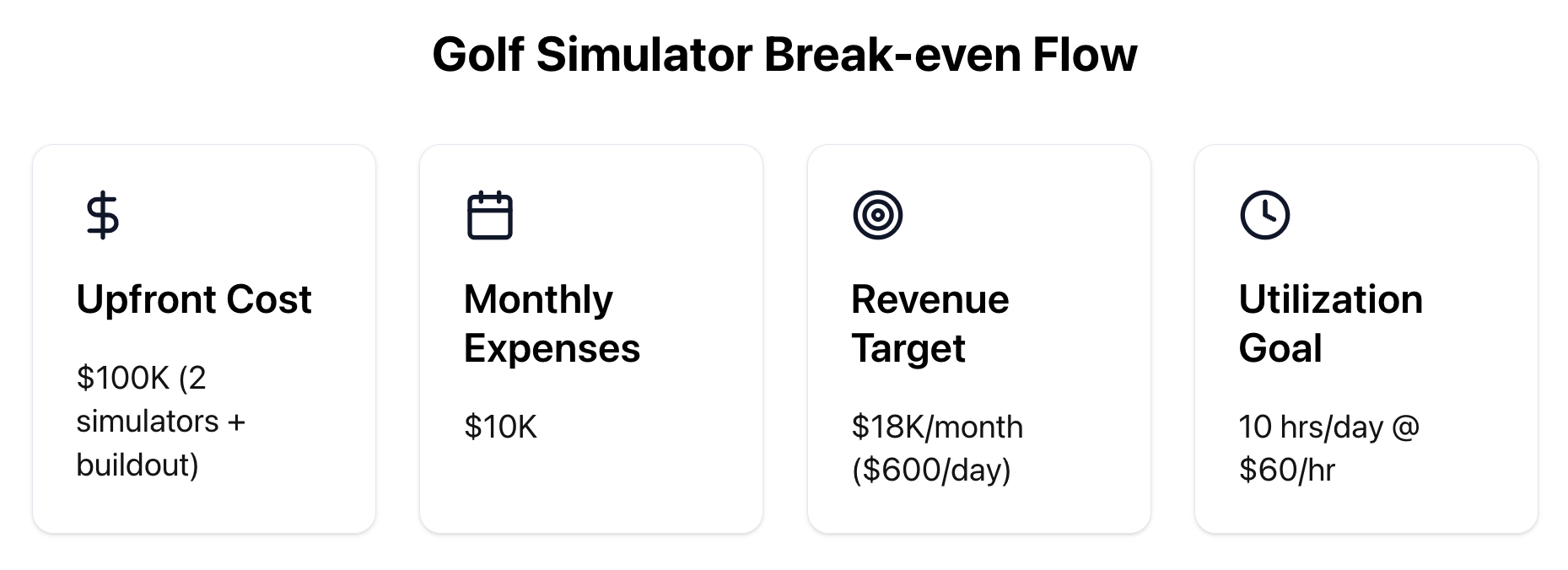
Let’s say your monthly operating expenses are $10,000 and your upfront investment cost is $100,000 for a small business with two simulators.
You’ll need to price your memberships in a way that generates $18,000/mo to get paid back in full and break even in one year of operation. That is equivalent to about $600 a day. If your bays are rented at $60/hr, you’ll need bays booked for a minimum of 10 hours a day.
Much like a coworking space, getting the right location is an extremely important part of starting a golf simulator business. You’ll want to choose a place where your target market is, where golf is popular, and where people may not be able to golf year-round.
The northern part of the United States and Canada, as well as other areas with extreme climates, tend to be most popular for golf simulator businesses because the golfing season there is limited by weather conditions.
Another important element to consider here is how big of a space you will need. Because it can be difficult to determine demand in the beginning, many operators choose a space that they can expand into as needed.
You’ll need a big enough space to generate enough revenue to cover your operating costs, but too much space means higher rent and the potential for bays to be sitting empty. One Reddit user was able to fit two bays, an office, and a kitchen into a 1,250 square foot space.
Once the space is secured and the buildout is complete, you’ll need to purchase the equipment for the space. As discussed earlier, this is the biggest and most important expense.
NOTE: You may want to know what equipment you want before you secure the location to ensure the space is able to support your technology choice.
There are lots of resources available to help you find the best golf simulator for your business. Here are some tips to keep in mind when considering your options.
After the physical space is in order, you can turn your attention to the operations.
Operating a successful golf simulator business involves welcoming people into the space, processing invoices and payments, managing bookings of the simulator bays themselves, and giving access to the space.
Managing all of these tasks manually can quickly eat up valuable time and resources of your staff, especially as your member base grows. To avoid disruptions and ensure efficiency, consider using a space management software like Optix to run your business.
Indoor golf enthusiasts like Le Birdie use Optix to run their business because Optix can automate your most manual, time-consuming tasks. With Optix, you can:
Jesse McLean, Founder at Scratch Golf Labs, uses Optix to automate several aspects of his business, including automating communication every time someone makes a drop-in booking. As a small team, it’s saved him a lot of time while making it easier to connect with his members.
Interested in learning how to automate your golf sim with Optix? Let’s connect.
Depending on the business model, we most commonly see memberships offered as tiers in a golf simulator business. Examples of membership tiers could be:
As with coworking, memberships are the best way to generate reliable, predictable revenue. However, if you are located in a region or you have a demographic where you can rely fully on drop-in and hourly bookings, it will be much more profitable for your golf simulator business.
In coworking, we often say the best time to build community is before you ever open your doors. The same can be said for marketing your golf simulator.
The best time to begin building a presence in the community is before your business is open.
Social media promotion can also begin for potential new customers long before you open your doors. Everyone loves watching a business being built from the ground up. Consider starting an Instagram account or YouTube channel to document your journey of building your business. This will help educate others about how to start a golf simulator business while bringing more visibility to you.
Some other marketing strategies could be:
If you’re looking for inspiration on how to be successful in starting your business, Starter Story profiled seven case studies of golf simulator businesses that achieved success (upwards of $500,000/mo in revenue!).
There is a world of opportunity in creating a golf simulator, especially for those in cooler climates unsuitable to outdoor golf.
As you get started on your golfing journey, consider Optix to help you automate key operations, engage your community, and grow your business over time. By taking care of redundant, manual tasks, Optix can help make your journey to starting a golf simulator or indoor golf facility a smoother experience.
Want to learn more about how we’ve supported other golf simulators to expand their operations and streamline their day-to-day management of the space? Connect with a member of our team today.

Marketing Manager
To forecast bay utilization for a golf simulator business without historical data, start by framing the question around hours you must sell per bay, per day, to hit breakeven, then layer in seasonality and daypart demand. Set a baseline target like “10 paid hours per day at $60/hour” and then discount weekday daytime by 40–60% and summer months by 20–40% while building promotional levers to fill gaps.
The most effective pricing tactics to offset seasonality in a golf simulator space are yield management and perks that reward reviews, referrals, and off-peak visits. Combine off-season rates, midday “practice blocks,” and shoulder-season bundles with review-for-credit promotions and corporate team packages that anchor weekday volume.
The operational automations that matter most for a partially or fully unattended golf simulator are self-serve bookings, payments, access control, and proactive communications that trigger on events like a drop-in reservation. All of this can be automated easily using automation software like Optix.
You should size your first location so you can expand as demand becomes clearer, because the answer to uncertainty is flexibility. Start with a footprint that supports a minimum viable set of bays plus storage and circulation, and negotiate a lease that allows phased build-outs or adjacent expansion.
By automating bay bookings, recurring membership payments, access control, and member communications, Optix can help you free up time to refine pricing, expand hours, and even scale to multiple locations without adding heavy headcount.
First-time operators should avoid underestimating upfront equipment and build-out costs, over-leasing square footage, and ignoring seasonal demand patterns that leave weekday daytime hours underused.