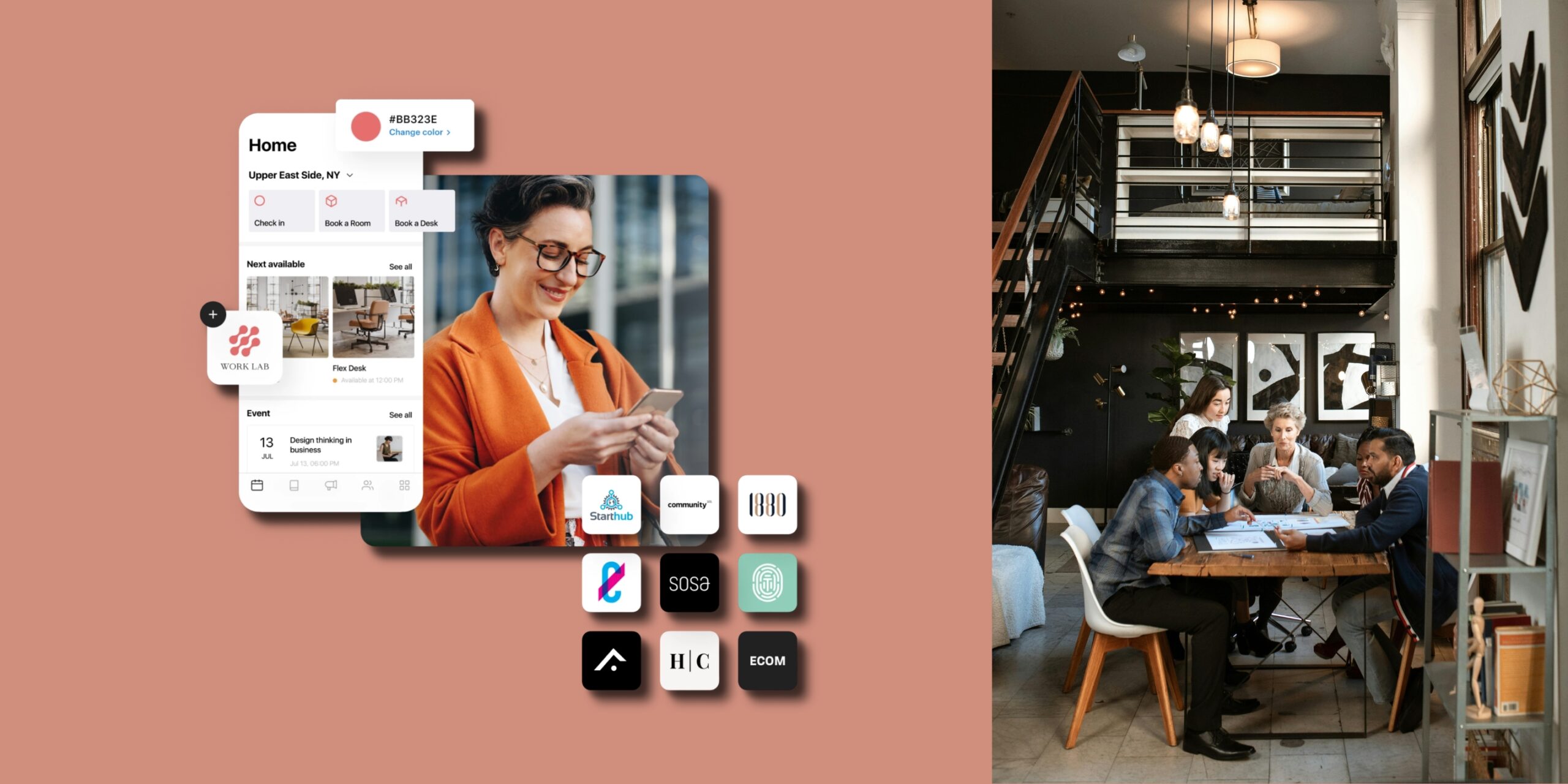
Coworking apps get adopted when operators design the first week as a guided sequence, not when they hope members find their own way. App retention is largely decided in the first session: apps that get a user to a meaningful first action retain at two to three times the rate of apps that don’t. A booking nudge, a first event invite, and app-based door access turn opening the app into a daily habit.
Why do most coworking members never open the app?
Most coworking apps go unopened because the app is launched and then left to compete, unaided, with every other icon on a member’s phone. The operator pushes a download link in the welcome email and treats whether the member ever taps it as the member’s decision. Without a designed reason to return, the app loses the same way most apps lose.
The drop-off is steep and well documented. A typical app keeps only around a quarter to a third of its users one day after install, and that number falls to single digits by day 30, according to mobile app retention research from UXCam. An app that nobody returns to in week one is an app nobody uses in month two.
Apps that get a user to a meaningful first action retain at two to three times the rate of apps that don’t, regardless of category (UXCam mobile app retention benchmarks, 2024 to 2026).
This is not a sign that demand for apps is fading. App installs rose roughly 10% year over year in 2025 and sessions climbed alongside them, according to Adjust’s Mobile App Trends 2026. People open the apps that earn a place in their day. A member app stays closed when nothing in the first week gives it one.
Is poor app adoption a member problem or a design problem?
Low app adoption is a design outcome, not a member preference. The familiar explanation, “members just don’t want apps,” puts the cause on the member and ends the conversation. The more accurate read is that members will use an app that makes their day easier, and they need a designed path to discover that it does.
Nielsen Norman Group’s research on first-time user experiences found that people won’t read a long list of instructions before they try something out, and that guidance works best when it arrives in the moment a feature is needed. A welcome email with a download link is exactly the instruction dump people skip. It asks the member to do the work of figuring out why the app matters.
The fix is to move the value into the first session instead of explaining it upfront. When the first thing a member does in the app is book the room they walked in to use, the app has already proven its worth. That is design, and it sits with the operator.
What does product-led growth teach coworking operators about adoption?
Software companies settled this question years ago through a discipline called product-led growth, and the core lesson is that the first session decides retention. Product-led growth treats the product itself as the thing that activates and retains users, which forces teams to obsess over how fast someone reaches value.
The metric that captures this is time to value: the gap between signing up and experiencing a real benefit, not just finishing a setup step. Shorten that gap and retention follows. Amplitude’s analysis of time to value found that 69% of products with strong early activation were also strong three-month retention performers. Early value and long-term use are the same story told at two points in time.
Coworking has most of the ingredients product teams wish they had. The member is physically in your space, with a concrete job to do, on the day they first open the app. That is the easiest activation moment any product could ask for, and it’s wasted when the app is left to chance.
How do you design the first seven days of app adoption?
The first seven days should be a planned sequence of small, useful actions, each one pulling the member back into the app for a reason they care about. Day one is a welcome and a first-booking prompt. The days that follow add a meeting-room invitation, an event the member would actually attend, and a nudge toward the social hour. Each touch is a fresh reason to open the app, not a reminder to.
Running that sequence by hand for every new member is where it breaks down. It only stays consistent when it runs on automation for coworking spaces, which is where Optix, the automation-first coworking platform, fits. A designed onboarding sequence fires the same way for every member at every location, without anyone remembering to send it.
How does app-based access make adoption structural?
App-based door access makes adoption structural by turning opening the app into the way members enter the building. When the phone is the key, using the app stops being a choice and becomes part of arriving. Adoption is no longer something you hope for after the fact. It’s built into the physical experience of the space.
How Suite Genius runs three Vancouver locations on one app shows the model in practice. Mitchell Purdy, the founder, set out to make every part of the member experience easy and on the phone, so members tap to unlock Kisi-enabled doors directly from a single white-labeled app that also handles bookings and events. That one surface has carried more than 6,500 automated bookings, 4,000 messages, and 700 community engagements.
Mitchell layers access on top of membership tier, so longer-term members unlock more of the space. Adoption there isn’t a download-link gamble. The model makes the app the front door, and members walk through it every day.
Which onboarding workflows should operators automate first?
New member onboarding is the workflow to automate first, because it’s both the highest-frequency moment and the one most often left manual. More than one in four operators come to Optix specifically to automate new member onboarding, from the welcome message and app-download prompt to key-code delivery and plan activation. It’s the sequence that decides whether the first seven days actually happen.
Start with the steps that repeat for every single member: the welcome, the first-booking nudge, the event invite, and access delivery. These are the touches that build the early habit, and they’re the ones a small team can’t reliably hand-craft at volume. Automating them protects the experience precisely when the member is forming an opinion.
There’s a second payoff that operators feel quickly. In our Coworking Automation Survey, 63% of operators said they wish they had more time to build community. A self-running onboarding sequence gives that time back, because the app is doing the repetitive welcome work while the team does the human part.
How do you know if your app adoption is working?

You know app adoption is working when first-week activation and monthly active members climb together, not when downloads do. A download is a vanity number. The signal that matters is whether new members complete a meaningful first action in week one and keep returning after it.
Track three things: the share of new members who book or check in within seven days, the percentage of members active each month, and how those numbers move as you tighten the onboarding sequence. Retention has become the metric the wider app industry now optimizes for over raw installs, a shift Adjust’s Mobile App Trends 2026 documents across the market. The same logic applies to your space.
When the sequence is designed and automated, those numbers stop being a mystery and start being a lever you can pull. If you want to see how a designed onboarding sequence runs end to end, you can book a free demo and walk through it with the team.
Key Takeaways:
- Coworking app adoption is a design outcome, not a member preference.
- App retention is largely decided in the first session, so the first week matters most.
- A designed day 1 to day 7 sequence gives members a reason to keep returning.
- Automation keeps that sequence consistent for every member at every location.
- App-based door access makes opening the app part of entering the building.
- New member onboarding is the first workflow operators should automate.
- Measure first-week activation and monthly active members, not downloads.
Frequently asked questions
Members stop using an app when nothing in the first week gives them a reason to return. A download link in a welcome email leaves the app to compete with every other icon on the phone. Designing a first booking, an event invite, and app-based access into the first session gives the app a daily job.
The first session and first week carry most of the weight. Research on app retention shows that users who reach a meaningful first action early retain at two to three times the rate of those who don’t, and that retention falls to single digits within a month for apps people don’t return to. Designing the first seven days is the highest-leverage window.
Product-led growth is the discipline of letting the product itself activate and retain users by getting them to value fast. It matters for coworking because a member app is a product, and the same rule applies: the first session decides whether the member comes back. Coworking has an advantage, since the member is in the space with a real task on day one.
The repetitive steps should be automated so they happen reliably for every member, which frees the team for the personal moments that actually need a human. Welcome messages, first-booking nudges, event invites, and access delivery run the same way every time when automated. That consistency is what a busy team can’t hand-craft at volume.
Yes, because it makes opening the app the way members enter the building rather than an optional extra. When the phone is the key, app usage becomes part of arriving instead of a habit you hope members build. Operators who tie access to the app see it become the primary way members interact with their space.
Track first-week activation and monthly active members rather than download counts. The share of new members who book or check in within seven days, and the percentage active each month, tell you whether the app is becoming part of how members use the space. Downloads alone say nothing about whether the app gets used.