TL;DR
- Flexible workspaces are booming beyond major cities, but increased competition means operators need efficient, member-focused software to stay profitable.
- The best platforms handle complex sales tax rules, integrate with tools like Stripe and QuickBooks, scale across multiple states, automate repetitive tasks to offset high labor costs, and provide local, responsive support.
- Optix helps US operators save time by streamlining billing, onboarding, and daily workflows, while delivering a modern, mobile-first experience for members.
The coworking industry in the United States has grown well beyond major cities like New York, San Francisco, and Chicago. Today, flexible workspaces are thriving in suburbs, secondary markets, and even rural towns, fueled by the rise of remote and hybrid work.
For operators, this growth also brings more competition — which means running an efficient, member-focused business is critical. That’s where coworking software comes in.
The right platform helps operators automate time-consuming tasks, streamline billing and payments, manage meeting rooms and offices, and create a seamless experience for members.
In this guide, we’ll break down what makes great coworking software, highlight the unique needs of US-based operators, and review the top platforms to consider.
- Key considerations for US operators when purchasing coworking software
- The best coworking software for US operators
- Comparison table summary: best coworking software for US operators
- How does the US coworking market influence what software you choose for your coworking space?
- Choosing the best software for your US-based coworking space
- FAQs
Key considerations for US operators when purchasing coworking software
For US operators, the right coworking software is about how well the platform aligns with the realities of running a space in the United States. Here are the attributes that set the best solutions apart.
1. Built for financial accuracy
With sales tax rules varying by state (and sometimes by city), US operators need software that makes compliance simple. The best tools apply the correct tax rates automatically, handle ACH and credit card payments seamlessly, and integrate directly with accounting platforms like QuickBooks or Xero.
Justin Moran, Owner at Workspace, saved ~$25,000 when he switched from credit card fees to ACH payments in Optix. Though he offers both at his Boston, MA based coworking network, the flexibility and cost-savings of ACH payments has been huge.
“One of the reasons why I chose Optix was you had a super elegant way of dealing with fees. If you're going to use a credit card, you charge two point nine percent. If you want to pay any other way, it's free.”Justin Moran, Owner at Workspace
2. Flexible enough to scale across states
Many US coworking brands expand into new markets quickly. A platform should make it easy to manage multiple locations across different states, each with unique pricing, tax rules, and member mixes. Strong multi-location reporting is essential for keeping investors and landlords happy.
3. Automation to offset high labor costs
Hiring coworking staff in the US is expensive, especially in large metro areas. Great software reduces reliance on staff by automating repetitive tasks like payment reminders, membership renewals, and meeting room credits. This not only saves money but frees up community managers to focus on member experience.
4. Integrated with the US business ecosystem
From Stripe for payments to QuickBooks for accounting, US operators need tools that “play nice” with the systems they already use. The best software offers deep integrations rather than forcing workarounds.
5. Responsive, local support
When something goes wrong, waiting until the next day for an overseas support team isn’t an option. Platforms that provide support aligned with US time zones are far more valuable to operators juggling day-to-day issues.
6. Member-first design
American members expect modern, mobile-first experiences. Whether booking a room, paying an invoice, or signing up for a day pass, the software should feel intuitive and frictionless. In a competitive market, clunky software can be the difference between winning and losing a member.
The best coworking software for US operators
1. Optix
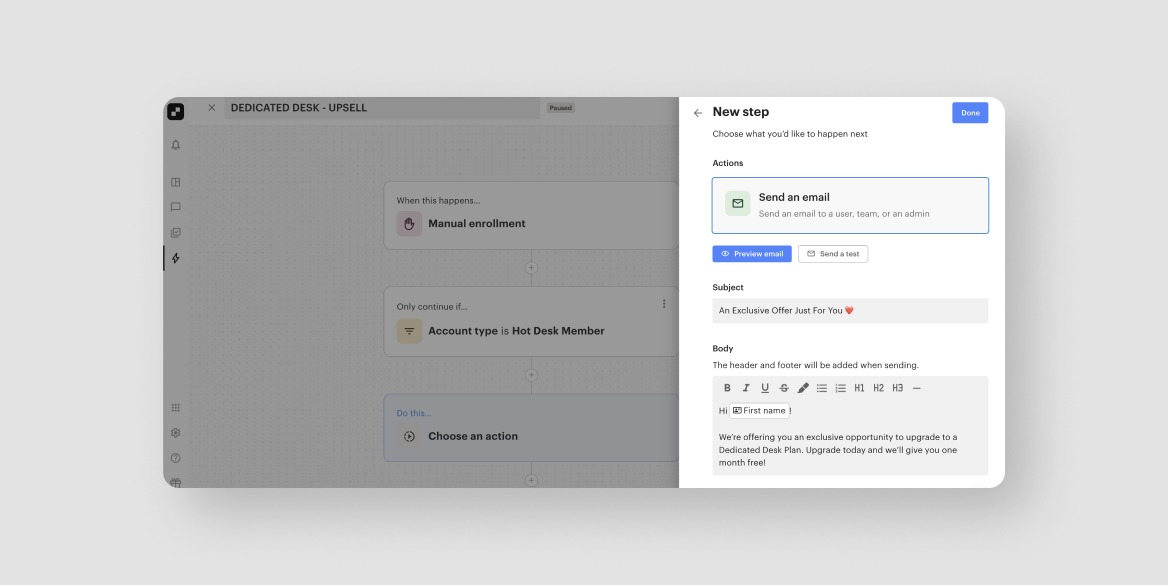
Optix stands out for its automation-first approach, helping US operators save time on billing, onboarding, and member communication. With reports of reclaiming up to half of their admin hours, the platform is ideal for teams looking to reduce labor costs and focus on community.
It also offers a white-labeled mobile app that delivers a polished, member-first experience, plus integrations with tools like Stripe, QuickBooks, and Kisi — making it easy to connect with the US business ecosystem. For multi-location operators, Optix provides centralized dashboards with flexible, state-specific settings.
US operators also benefit from responsive support aligned to their time zones, and pricing that scales with growth, starting under $200/month for smaller spaces.
The key advantage: operators can automate more of their workflows while still delivering a modern, seamless member experience.
See why US coworking operators trust Optix.
2. Proximity
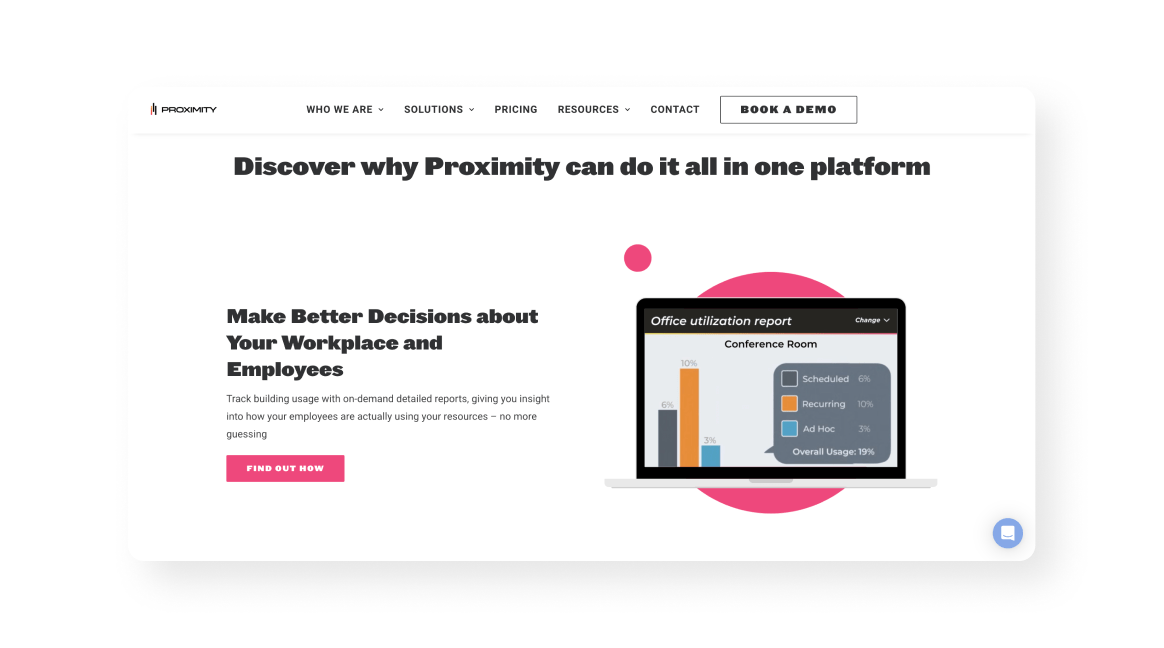
Proximity is a US-based coworking platform that’s especially strong in access control and space management. Originally designed for operators who wanted an easy way to handle door access and resource booking, it’s grown into a full management system used by hundreds of American coworking spaces.
Its appeal for US operators lies in its native access control system. Proximity is often adopted by larger, multi-site operators serving corporate clients who need reliable infrastructure management. While it doesn’t innovate as quickly as some newer entrants, it remains a trusted solution for US spaces that prioritize security, door access, and reliability.
3. Deskworks
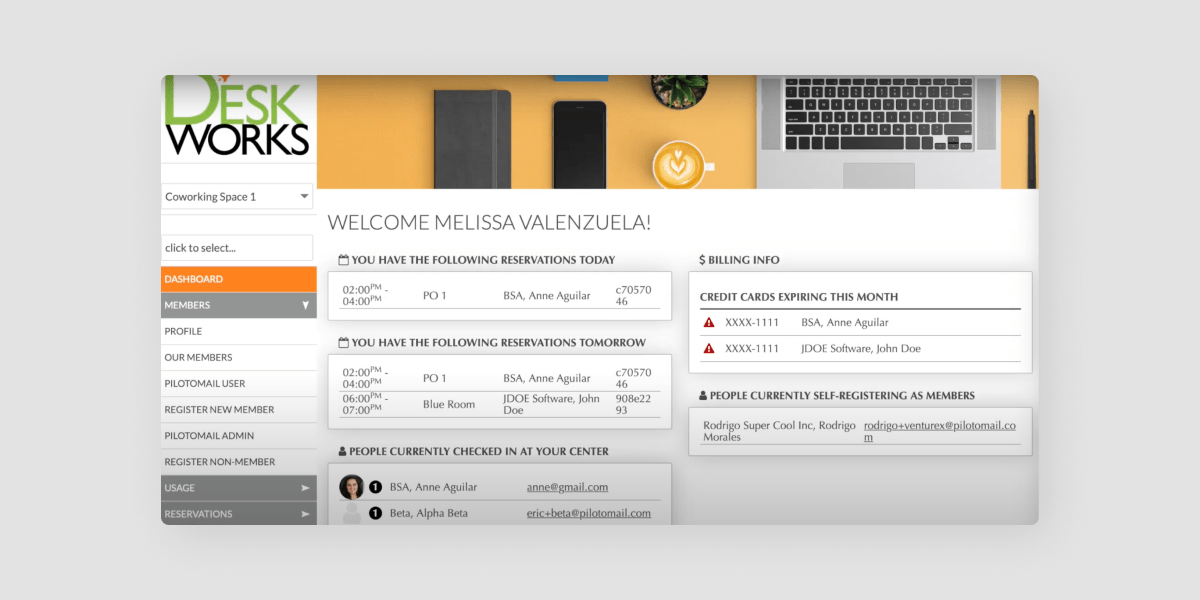
Deskworks is a US-based coworking software company, which makes it especially appealing for operators who value local support and a platform built with American spaces in mind. It offers straightforward tools for invoicing, door access, and resource booking, without the steep learning curve of more complex platforms.
Because it’s designed around the needs of US operators, it handles booking, invoicing, and member engagement smoothly. Deskworks is best suited for independent spaces and small operators who want a practical, reliable system with strong local backing.
4. Coworks
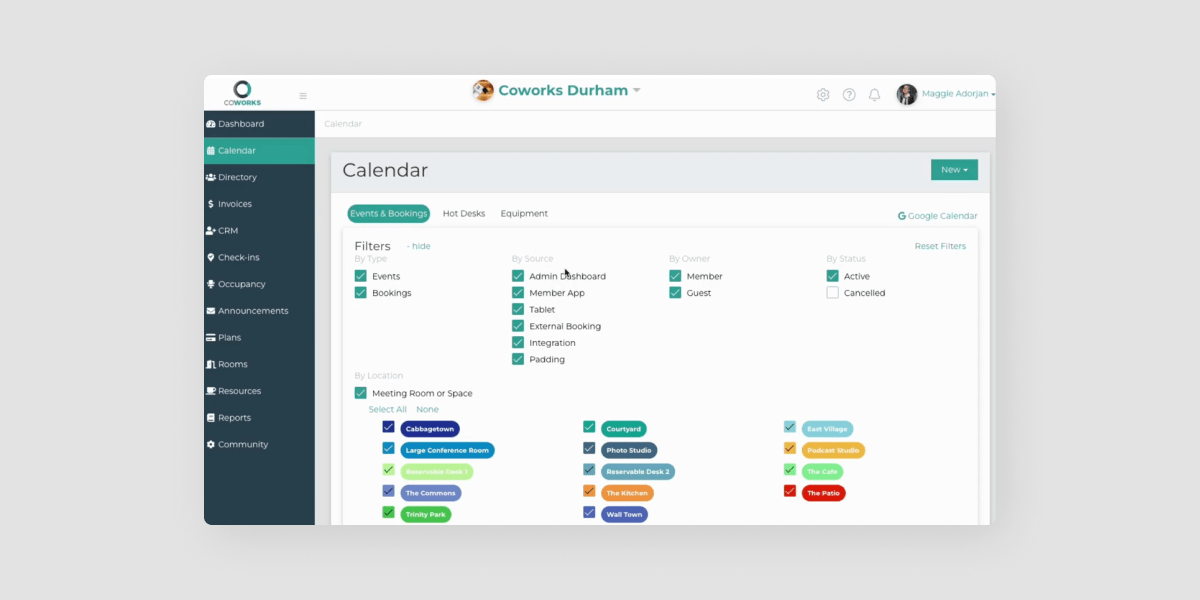
Coworks is a US-built platform designed with independent and community-focused coworking operators in mind. Its standout strength is ease of use — the system emphasizes simple onboarding, straightforward billing, and mobile-first member engagement without overwhelming operators with complexity.
Because it’s developed and supported in the US, CoWorks integrates naturally with tools like Stripe and QuickBooks, and provides responsive support in US time zones. It’s especially popular with niche or lifestyle coworking spaces that prioritize community building alongside operations. For operators who want reliable core functionality paired with a user-friendly interface, CoWorks is a strong fit.
5. Cowello
Cowello is a newer entrant in the coworking software market with a focus on streamlined operations and affordability. It’s designed to be lightweight and easy to adopt, which makes it appealing to smaller US operators or those just opening their first space.
For US users, Cowello emphasizes simple billing and payments, with integrations for PayPal, and offers basic tools for memberships and room reservations. While it doesn’t yet match the depth of automation or reporting found in larger platforms, its low cost and straightforward setup make it attractive for smaller operators in suburban or emerging coworking markets.
6. Yardi Kube
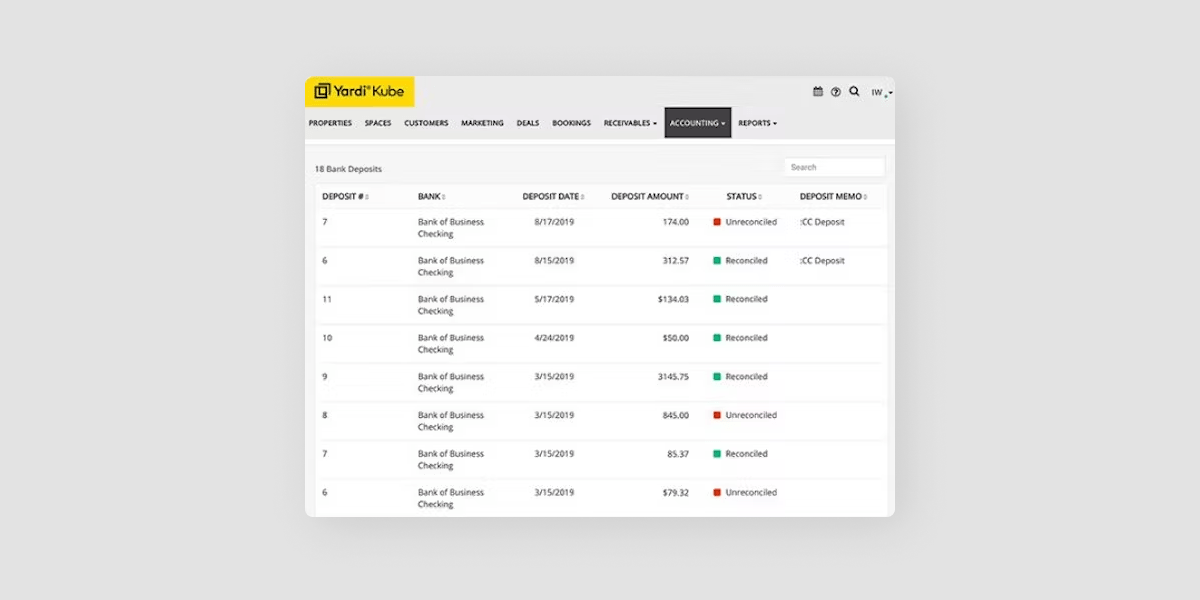
Yardi Kube, developed by California-based Yardi Systems, is an enterprise-grade platform built for large coworking and flex office operators. Backed by a global real estate software leader, it goes beyond basic coworking management by offering advanced lease administration, building management, and real estate reporting.
For US operators, the strengths are clear: Yardi Kube integrates tightly with Yardi’s property management ecosystem, making it a strong choice for landlords or operators running coworking as part of a broader portfolio. It also handles sales tax, ACH, and credit card billing while supporting compliance across multiple states.
The tradeoff is complexity — smaller independent operators may find Yardi Kube too heavy for their needs. But for enterprise-level US brands, it delivers the scalability and institutional-grade reporting that investors expect.
7. Archie
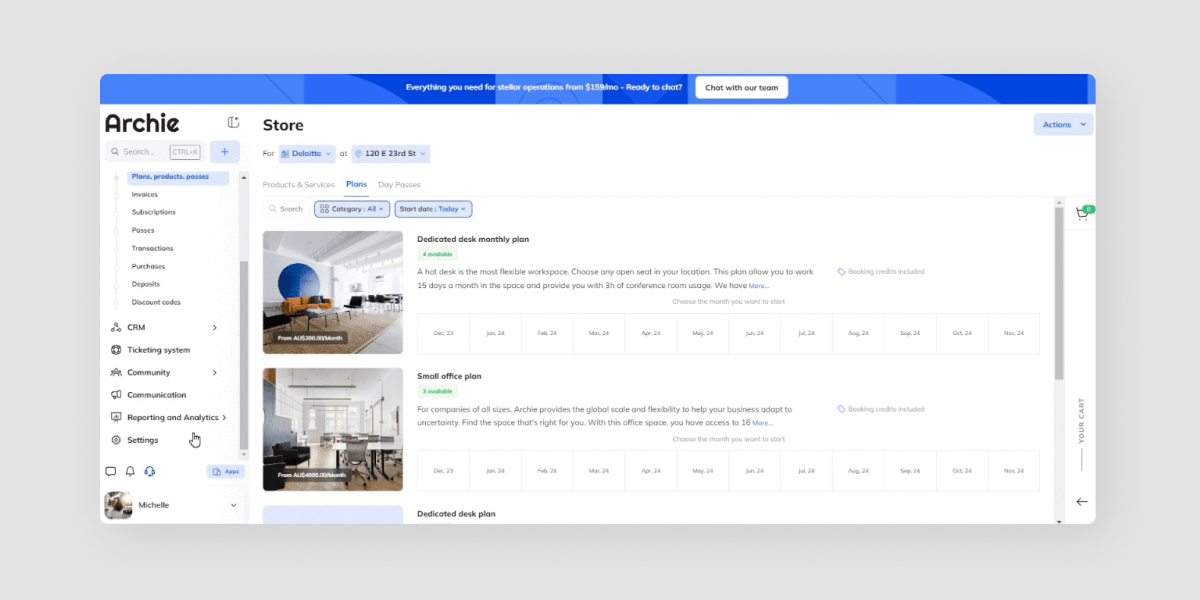
Archie is a Canadian-based coworking management platform that’s gained traction for being modern, flexible, and affordable. It’s designed to serve independent operators and mid-sized coworking brands that want a clean interface without sacrificing functionality.
For US operators, Archie offers smooth integrations with essentials like Stripe and QuickBooks. Its white-label mobile app provides a polished member experience, while its reporting features help operators stay on top of occupancy and revenue.
Archie is best suited for growing US spaces that want a balance of ease-of-use, member engagement, and automation — without the enterprise complexity of larger platforms.
Comparison table summary: best coworking software for US operators
| Platform | Best For | US-Specific Strengths | Considerations |
| Optix | Small to mid-sized US operators scaling across states | Powerful automations, Stripe & QuickBooks integrations, strong mobile app | Requires setup to fully leverage automation |
| Proximity | Multi-site spaces prioritizing access control | Native US platform, strong Kisi/Brivo integrations, reliable Stripe billing | Innovation pace slower vs. newer entrants |
| Satellite Deskworks | Independent or regional US operators | US-based support, simple invoicing, ACH + sales tax handling | Less advanced automation and reporting |
| CoWorks | Community-focused or niche/lifestyle spaces | US-built, easy-to-use, Stripe/QuickBooks integrations, responsive local support | Lighter feature set compared to enterprise tools |
| Cowello | Smaller or first-time operators in suburban markets | Affordable, lightweight setup, Stripe/PayPal billing | Limited automation and advanced reporting |
| Yardi Kube | Enterprise-level coworking and flex office brands | Backed by Yardi (CA-based), strong compliance, multi-state lease + property management | Complex and heavy for smaller operators |
| Archie | Growing US operators wanting flexibility without enterprise complexity | Modern UX, automation, sales tax handling, Stripe + QuickBooks integrations | Newer entrant; ecosystem still expanding |
How does the US coworking market influence what software you choose for your coworking space?
The coworking market in the United States is unique, and that shapes the kind of software operators need. Unlike other countries with more uniform tax codes and smaller geographic footprints, the US has a highly fragmented regulatory and competitive landscape.
This means the right coworking platform needs to fit for the US business environment. This includes:
- Fragmented tax and compliance rules
- Competitive member expectations
- Cost of labor and staffing
- Growth across diverse markets
- Integration with the US business ecosystem
Choosing the best software for your US-based coworking space
Coworking software is a strategic investment in the success of your space. For US operators, the stakes are even higher.
The fragmented tax environment, competitive member expectations, and high labor costs mean that your platform needs to do more than manage bookings and billing. It needs to simplify compliance, reduce staffing demands through automation, and deliver a member experience that stands out in a crowded market.
The good news is that US operators have a wide range of strong options.The best next step is to demo a few platforms. With the right software in place, you’ll spend less time buried in admin and more time focusing on what really drives growth: building community, delighting members, and expanding your coworking brand.
Why don’t you start with Optix?

See why US coworking operators trust Optix.
Frequently asked questions
Yes. Sales tax rules for coworking services vary widely across US states and even cities. Choosing software that can apply the correct tax rates automatically and generate compliant reports is essential for avoiding costly errors.
Most platforms start at around $150–$200/month for small spaces, with pricing increasing based on the number of members, locations, and advanced features. Enterprise platforms like Yardi Kube may use custom pricing models for multi-location operators.
Labor costs in the US are among the highest in the world, so automation is key for profitability. Automating billing, renewals, and member communications reduces admin hours and lets staff focus on community and growth.
Most US-focused platforms, including Optix, integrate with QuickBooks for accounting and Stripe for payments. This makes it easier to manage finances and accept both credit card and ACH payments.