
Coworking Space Sales: A Guide for Operators [2025]
Build a high-converting sales engine with funnels, tours, and automation that scales
October 3, 2025

TL;DR
Coworking space operators who’ve nailed their sales motion are more successful than those who haven’t.
That’s because sales is the key to turning interested bystanders into paying enthusiasts. If you’re not blessed with hundreds of member referrals and an elite retention rate, chances are, you need sales to support your growth goals.
In this article, we’ll walk you through everything you need to know about sales in a coworking space, including how to build your very own (and very effective) sales playbook, based on our 10+ years of experience in the coworking industry.
Most coworking space operators consider “sales” to be the act of selling membership plans to net new members.
However, “sales” can mean a lot of different things to a lot of different operators, depending on their business model. Some operators consider any purchase, whether it’s for a $10 day pass or a $900/mo private office, to be a sale, while others focus solely on long-term membership plans.
This article focuses on how to build out and optimize your sales process for long-term, recurring coworking membership plans (ie. dedicated desk plan), because that is the best way to profitability for most coworking spaces.
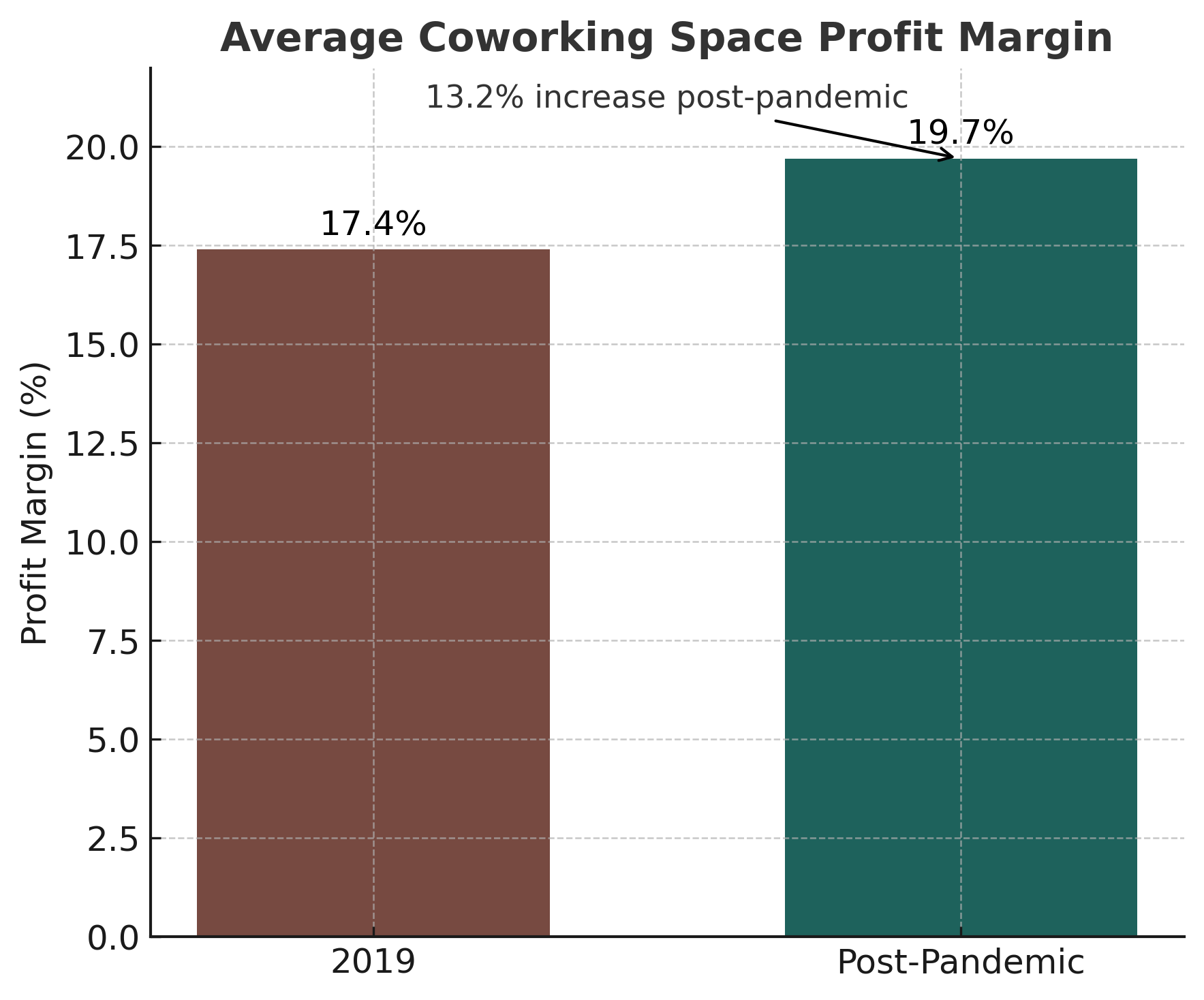
If you’re a small coworking space wondering if a sales process is necessary, let us answer that for you with a simple and resounding yes.
A sales process increases the likelihood of effectively converting leads and acquiring more members, both of which significantly increase your chances of success.
It’s worth noting that formal doesn’t have to mean complicated. As you’ll see later on in this article, automation is your best friend when it comes to setting up an effective sales process – and it’s a lot easier than you think.

If you are operating a small coworking space (ie. less then 250 members), then chances are, you will not need to hire a sales representative. In our experience, smaller spaces can make do without specialized sales support. There are a few options for you in the meantime:
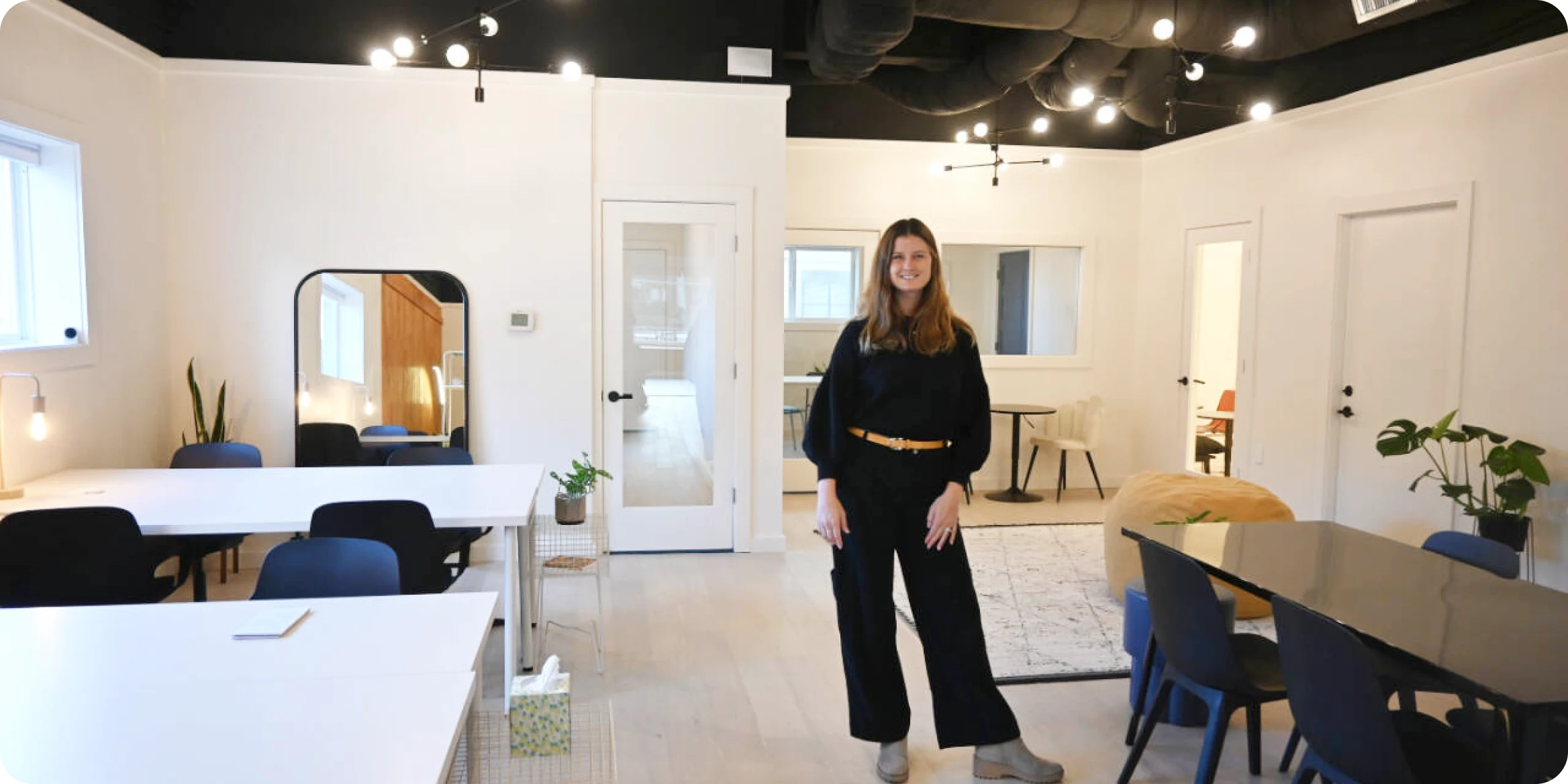
Many solo operators start as their own sales person. Megan Cyphers, Founder at Locally Known Cowork for example, has a background in marketing and was quite successful in generating sales on her own – 50% of sign-ups came directly through her website.
Even if you don’t have a dedicated sales representative, everything in this article still applies and will be useful for you in thinking about and developing sales best practices.
Marketing a coworking space is about building awareness and affinity for your brand, while sales is about turning interest into paying members. Typically the role of marketing is to bring customers in towards the top of the funnel while sales can focus on converting them at the bottom of the funnel.
If you are on a small team, your marketing and sales person may be the same person. Or it may be yourself! Either way, it’s helpful to have an understanding of how sales operates separate from marketing.

The coworking sales funnel consists of four key phases: awareness, interest, decision, and action.
The sales funnel is designed to move barely-aware prospects to the stage where they’re ready to complete an action and (hopefully) make a purchase.
Most coworking sales leads come from third-party websites and aggregators, word-of-mouth referrals, social media, events, and SEO. The best sources of leads are different for every operator depending on your ideal customer profile (ICP) and market.
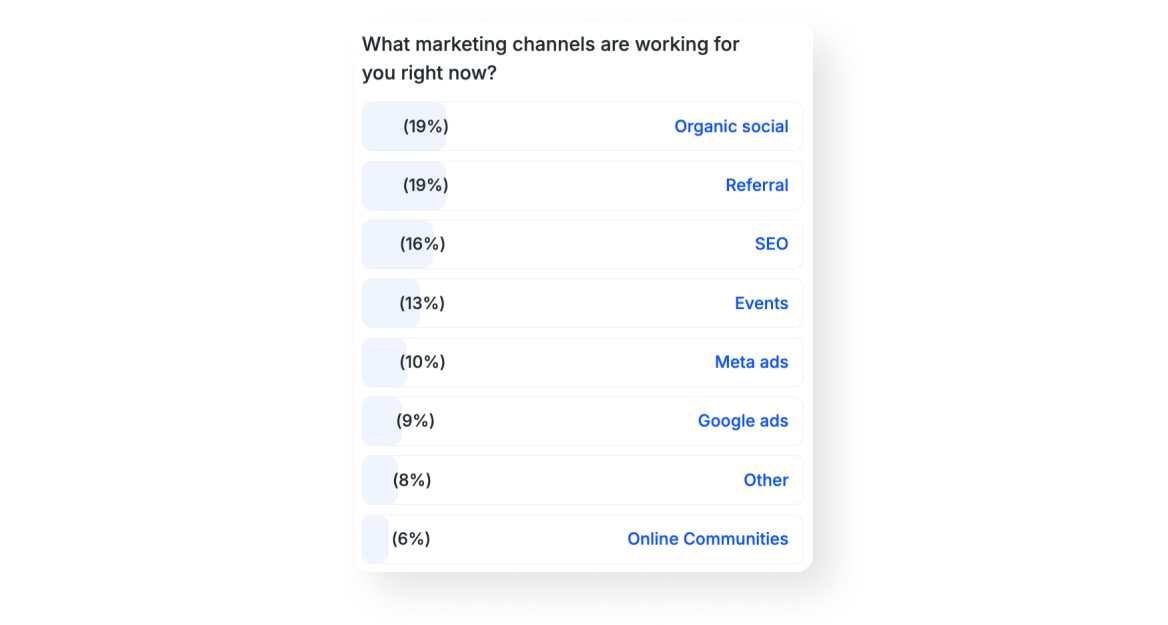
Jerome Chang, Founder at BLANKspaces, has operated coworking spaces in Los Angeles for over 15 years. He has consistently found that SEO outperforms all other channels when it comes to generating leads.
Jackie Latragna, CMO at Pacific Workplaces, shares that SEO is not a big channel for them. Rather, they’ve found success through paid LinkedIn ads and creative partnerships with local businesses.
The takeaway? It’s up to you to find the best performing channel to generate leads for your sales team.
Track sales inquiries for your coworking space with a dedicated CRM or through coworking software like Optix. Here’s how it works in Optix:
Whether you’re using Optix or not however, automation will be the key to keeping sales prospects engaged without overwhelming your team. Adam Hyman, Founder at KoWorks, uses Optix Automations like an SDR, automatically following up with leads as soon as any interest is expressed.
It’s tactics like these that help him run three coworking locations with just one person.
“We’re using Automations as our SDR… a lead comes in, hasn’t closed, and we use automations to get them to the point where they sign up to a subscription."
AI sales agents support the coworking sales process by automatically following up with leads and fielding inquiries as soon as someone lands on your website. This increases speed-to-lead and can improve conversion rates.
Earlier this year, we sat down with Francesco Decamili, CEO at Uniti AI, the first-ever AI sales agent for coworking spaces. According to Francesco, many coworking spaces are understaffed relative to the member engagement needed to support their members.
This Week in Coworking covered AI sales agents in a comprehensive edition of Undercurrents where in it Hector Kolonas explored the pros and cons of implementing these agents in your coworking space. Needless to say, they can be greatly beneficial for enterprise coworking spaces who are fielding a lot of leads, but are generally not recommended for coworking spaces less than five locations.
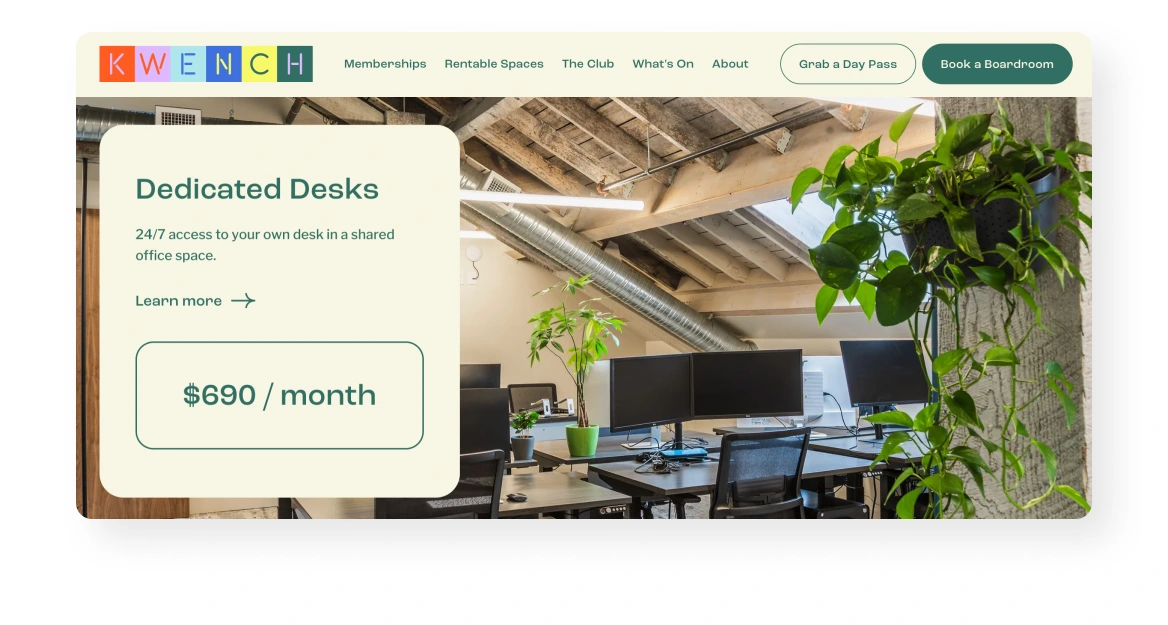
To show or not to show pricing publicly on your website is a big debate across all industries, including coworking. Consider this however: 72% of buyers report “ no pricing” as their greatest frustration in the buying process.
For that reason, we recommend coworking spaces show pricing on their website. Take a look at some of the best websites of coworking spaces and you’ll notice pricing is commonly found across all of them.
At Optix, we show our pricing completely and transparently on our website because we believe it helps buyers make a better informed decision – and we think you should do the same.
After a lead submits any kind of inquiry into your coworking space, the best first response is an email. This is because emails can be easily automated and don’t rely on human intervention – they can be triggered and sent out 24 hours a day, 365 days a year.
After an automated email, the format of the response doesn’t matter. A text, follow-up email, or phone call will all do the trick.
What does matter however is how long it takes to send that response.
According to Chili Piper, a lead that is followed up within 1 to 5 minutes of submitting a form has the greatest chance of converting. This rings true across the board, but may be particularly relevant for a coworking space where people are often looking for an immediate solution to their problem of workspace availability.

It is not unusual for coworkers to need a place to work that day and to reach out as soon as they realize it. Speed to lead in coworking is therefore absolutely essential to converting, and could be the difference between a customer (and not).
“ We've done some experimentation, and coworking tends to be one of those markets that’s really around driving an inbound funnel. When people are looking for an office, you need to have a brand that captures them at that moment in time.”
Congrats, your lead booked a tour! Let’s see what comes next.
A tour of your coworking space is your best sales opportunity and a key step in the coworking sales process. This is often the deciding factor in whether or not a lead will become a member.
To host an effective tour of your space:
Don’t want to (or can’t) give in-person tours? Consider putting a virtual tour on your website or a tour video on YouTube to help sell your space. These can also serve as great supplementary assets to include in a nurture sequence or follow-up email.
This one of the HiVE in Vancouver has a whopping 104,000 views!
Members can be an incredible asset in your coworking tour because of the power of peer-to-peer referrals.
Adam from KoWorks lets community champions facilitate his tours. Not only does it help keep headcount low in his autonomous coworking space, it’s often more compelling to have a fellow member give a tour than a community manager or someone whose sole intention is to sell.

Consider creating incentives for your best members to get them excited about facilitating a tour and creating a great experience. You could offer a $10 credit every time they give a tour or complementary high-end coffee (the fancy kind you usually charge for) in exchange for giving tours.
The best promotions and incentives for coworking members are ones that make people feel like they are getting a deal they can’t say no to. Consider your audience, your budget, and your regular pricing to craft something that feels irresistible.
Experiment with a few different promotions to see what converts best without hurting your profitability too much. Considering 93% of shoppers have used a discount code at least once this year, it’s something they’ll likely be receptive to.

According to Gong, one of the top sales tools in the world, the best sales cadence involves 6-12 touchpoints across 3 to 4 weeks. If this sounds overwhelming to your small coworking space, consider halving that to about 3-6 touch points across 3 to 4 weeks. This is equivalent to one or two touchpoints a week.
This shorter cadence tends to work because coworking spaces have a much shorter sales cycle than other industries. Be consistent with your automated emails and quick phone calls, but don’t bombard your prospect.
Chances are, they’ll let you know fairly quickly if they’re interested or not.
Automate your sales process by mapping out all of the touchpoints your team has with a prospect and thinking about how to introduce automation to support each one. For example, if your members are sending manual email follow-ups, consider using an automation-first coworking software like Optix to automate email follow-ups.
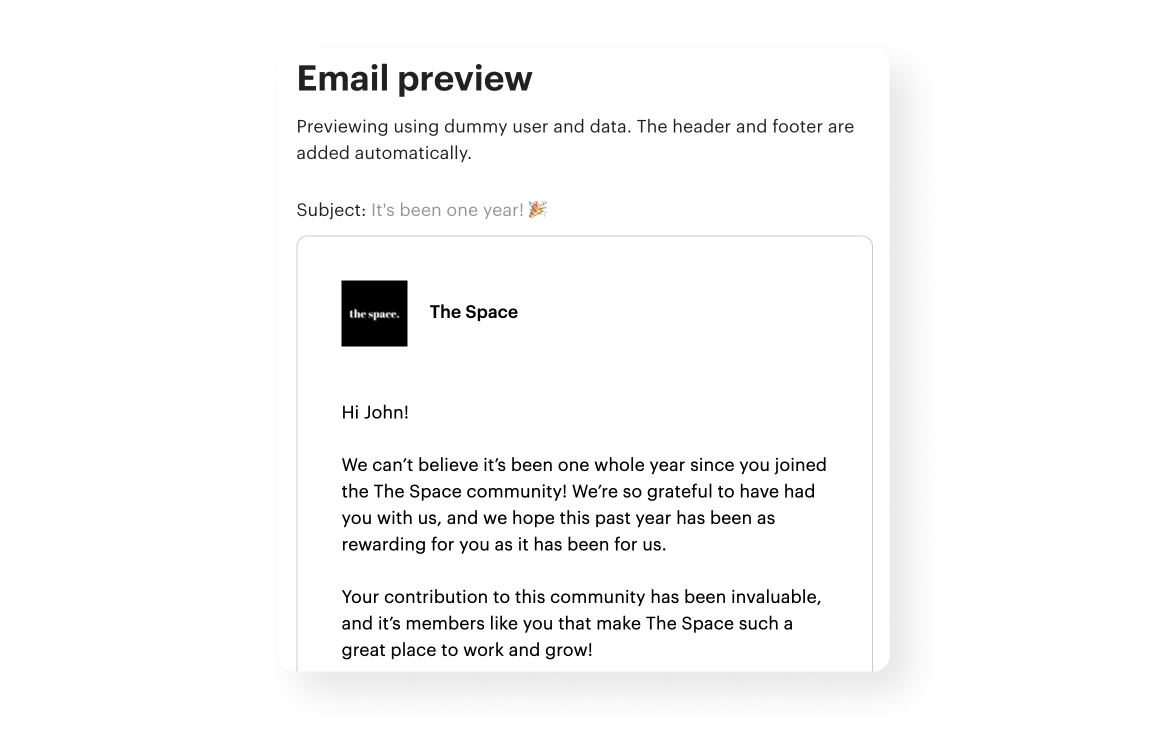
That’s not all you can automate however. Optix can help you automate your sales process by:
Deanna Hoy, Community Manager at Q Space uses Optix to manage over 160 members by herself. Her greatest accomplishment is the 30-step automated sales funnel she’s created in Optix that converts a whopping 33% of leads into members.
“I've found so many ways to create automations and make it work for me, which is really cool. It saves me so so much time.”
If you’re like most coworking space operators, then you probably have some lost leads hanging out in your coworking software or CRM that are ripe for re-engagement. Here are a few best practices for re-engaging lost leads for your coworking space.
An easy way of keeping lost leads engaged is to subscribe them to your monthly email newsletter. This keeps them a part of your digital community without any kind of commitment and ensures, at the very least, you’re reaching out once a month.
If you opt for an automated email nurture sequence, focus on providing value through content, whether it’s a new social media post featuring tips for staying focused while working from home or a blog post on the benefits of coworking on your mental health.
Did your space just re-open a renovated fitness center? This is a great excuse to reach out to lost leads and share the news with them. Bonus points if it’s specifically related to why they opted not to sign up for your community.
The summer slow-down is a real thing in coworking spaces. Take advantage of these slower months to plan a “lost-lead” campaign with heavily discounted access to your coworking space. Not only can it re-engage lost leads, it can also help people get in the doors during an otherwise slow time.

To understand what sales strategies will help you stand out from other nearby coworking spaces, start with doing some secret shopping of your competitors. Understand what their sales process is, how they’re positioning their space, what their tour is like, and what kinds of discounts they’re offering members (if any at all).
Use this information to help you create a competitive advantage, whether it’s undercutting their promotional discounts or positioning your community in a completely different way.

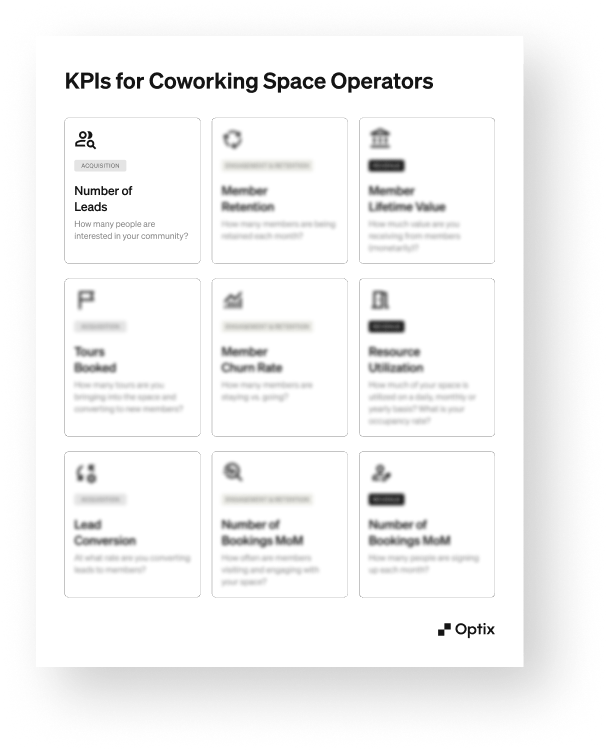
When it comes to sales KPIs, we recommend tracking key performance indicators across each key stage of the funnel, whatever that is for you. For example, let’s say your sales funnel looks like Inquiry submitted → Tour booked → Tour completed → Membership plan purchased.
In this case, the KPIs we would track are:
Tracking these KPIs allows you to look at not only the absolute number of inquiries, tours, and membership plans, but also the conversion rate between each stage of the funnel.
This helps you figure out if you have a leaky funnel or not or if there is a certain part of your funnel that is underperforming compared to the rest.
| Average conversion rate | Elite coworking spaces | |
| Website visitor to lead | 1-3% | 5% |
| Lead to tour | 20-30% | 50% |
| Tour to member | 25-40% | 60% |
With this funnel, 1,000 website visitors in a month would yield you 2-3 new members.
A sales playbook is a how-to sales guide for your coworking space that covers everything from who your ideal customer is to how to handle objections to completing competitive intelligence. It is often a comprehensive, multi-page guide that lives in your CRM or in an internally accessible Google Doc.
Here’s how to craft a compelling sales playbook for your coworking space with information from best-in-class CRM, Salesforce, adapted to the coworking audience.
Decide what your sales goals are. Are you trying to:
There’s no right or wrong answer, but having clearly outlined goals will help your sales process and your playbook be more effective overall.
If you haven’t taken the time to define your ideal member or ideal customer profile then now is the time. Think about who they are, what they value, and what they enjoy most about your space, and document this in your playbook.
Having a really good understanding of your customer will help your messaging and overall sales tactics be far more effective.
You may not have a formal sales process yet, and that’s okay. Document what you do have, whether it’s a simple email follow-up or giving a tour. Think about what steps have to be done manually by a human (ie. a phone call) and what steps can be automated.
Email templates and phone call scripts help simplify the sales process while helping every member of your team provide a consistent, on-brand experience. Even if you only have one community manager right now, if that person left, would the knowledge be leaving with them?
Prevent this from happening by creating templates and scripts that can be easily shared and distributed internally.
Justin Moran, Owner at Workspace, uses Optix Automations to provide a consistent experience across all five of his coworking space locations. With automations running, he doesn’t need to worry about each of his community managers writing their own emails – everything is done automatically.
Finally, if you need any enablement materials for your team to be successful, now is the time to whip those up. This could be anything from sales battlecards to flowcharts of objection handling. The level of complexity required will depend on the size and scale of your coworking space.
Hopefully this guide was helpful and didn’t leave you too overwhelmed. The biggest takeaway to remember is that sales is a system and automation is your greatest asset.
With automation, you can make sure every lead is followed-up quickly, every person who takes a tour receives a “thank you”, and promotions are tracked without you needing to think about it.
Trust us, it’s easier than you think.
Interested in learning how Optix can help you automate your sales process, end-to-end? Connect with a member of our team to learn more.


Marketing Manager
The best way to prevent tour no-shows for a coworking space is to treat “tour booked” like a micro-conversion with its own confirmations, reminders, and a clear promise of value. Using a platform that can automatically trigger confirmations and follow-ups ensures consistency while protecting team bandwidth.
Brokers and referral partners fit into a coworking sales process as accelerators for certain inventory—especially larger suites—when your direct funnel is strong but capacity fluctuates. That way you can model real CAC and use partners strategically only where the channel’s conversion rate and time-to-close justify the commission.
A pre-opening sales plan should include a clear launch date, a preview tour calendar, and a staged offer ladder that rewards early commitments. Because tours are decisive, invite prospects to hard-hat walk-throughs, release a virtual tour early, and begin an email cadence that mirrors the guide’s emphasis on timely follow-ups.