How to Get Your Coworking Space to Show Up in ChatGPT
A practical playbook for coworking operators to turn LLM visibility into new members
September 11, 2025
TL;DR
Welcome to 2025, the year where every coworking operator needs to be thinking about how their brand is represented in AI large language models (LLMs) like ChatGPT, Claude, and Perplexity.
Just as SEO (search engine optimization) became essential a decade ago, LLM visibility is rapidly becoming a must-have for operators who want to stay competitive.
In this guide, we’ll walk through why LLM visibility matters, how these systems gather information, and the practical steps you can take to be the go-to space when someone asks ChatGPT what the best coworking spaces in their city are.
52% of adults now use LLMs like ChatGPT, Claude, and Perplexity on a regular basis, which means the likelihood that your ideal member (ICP) is using these tools to search for a coworking space is extremely high.
Coworking spaces have always relied on visibility to attract new members, first through word of mouth, then through Google search. In the late 2000s, businesses learned to master SEO to land on Google’s first page, and those who moved early gained a big advantage.
Today, the same shift is happening with AI. LLM visibility is the new SEO, and this shift represents both a challenge and an opportunity. The challenge being many operators are going into uncharted territory. The opportunity, however, is that if you can figure out how to appear in these AI-tools, you can unlock a whole new marketing channel.
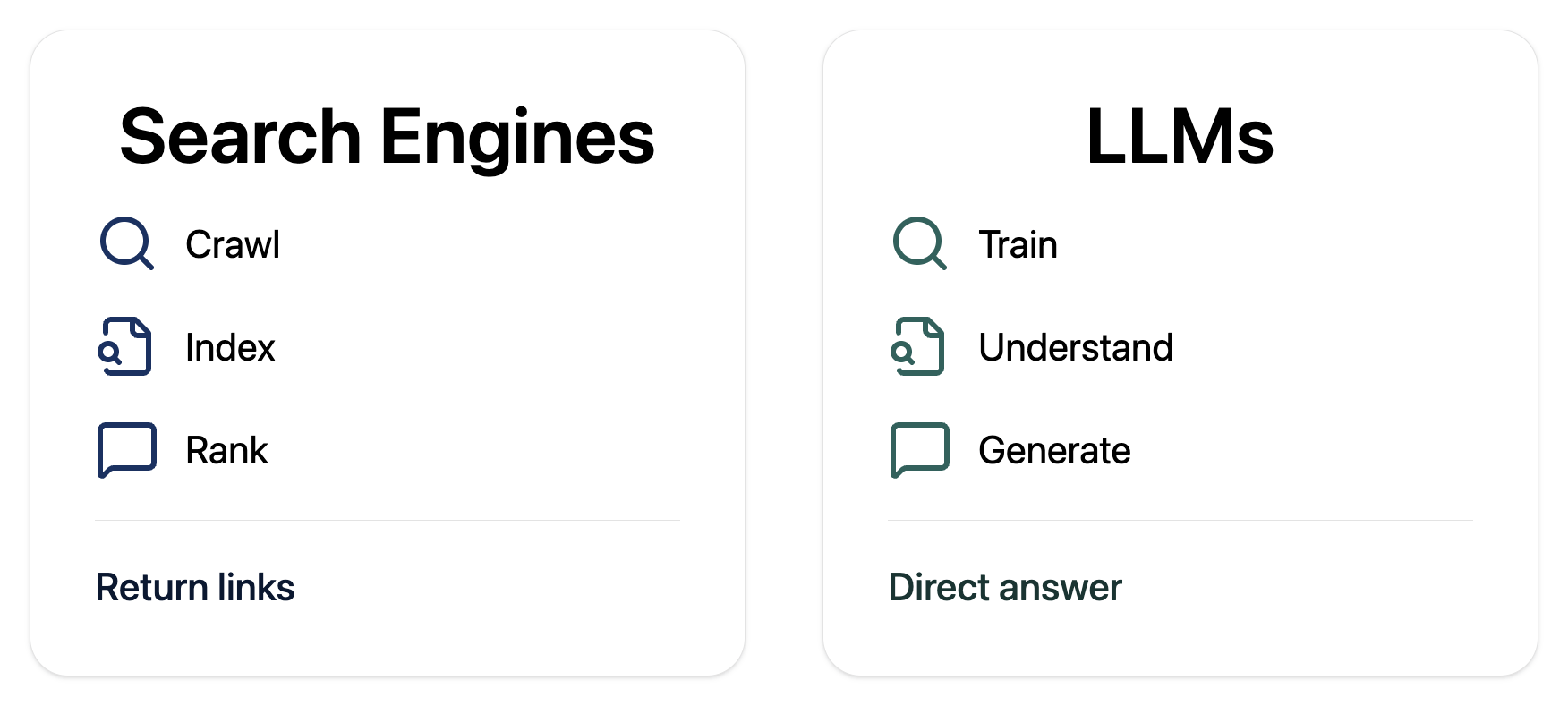
Traditional search engines like Google crawl the web, index content, and rank it based on algorithms (backlinks, keywords, site authority). When you search, you get a list of links to explore.
LLMs, on the other hand, are trained on vast amounts of text, everything from websites and books to reviews, forums, and open datasets. Instead of pointing you to links, they generate a direct answer in natural language. This makes them feel more like a trusted advisor than a search directory.
The practical implication: if your coworking space isn’t represented in the data LLMs have access to, you won’t appear in their answers.
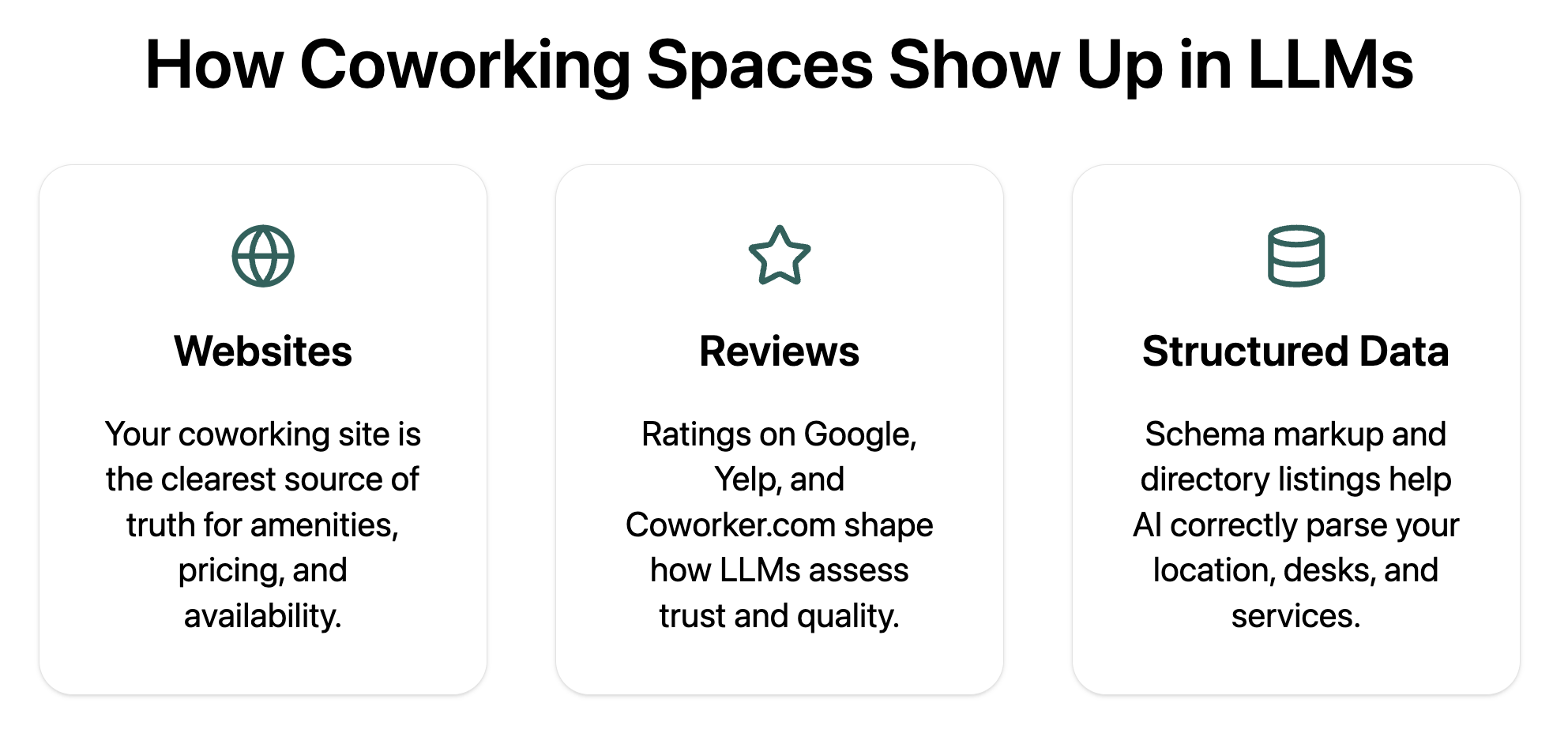
LLMs learn from a mix of structured and unstructured sources:
Think of this as building multiple “on-ramps” into the AI ecosystem. The more structured, public, and consistent your information, the more likely it is to be included.
Why multiple mentions matter
One of the biggest differences between LLMs and Google is that LLMs don’t just rely on your website. They look for patterns across multiple sources. If your coworking space is described consistently across your own site, third-party directories, and customer reviews, that reinforces its credibility.
For example, if “pet-friendly coworking in Toronto” shows up on your website, in your Google reviews, and in a local news article, an LLM is far more likely to recommend your space when asked.
To increase the chances of your coworking space showing up in AI-generated answers, your coworking website should be both technically accessible and written in a way that mirrors how people actually search and ask questions.
Here are some tips to ensure your website has the highest possible chance of showing up in LLMs.
Once your website foundation is solid, the next step is building a content strategy to encourage LLMs to recommend your coworking space.
Content is what expands your digital footprint beyond basic business information, helping AI tools connect your brand with the questions people are asking. Coworking spaces can use blog posts, listicle-style content, and community stories to make their space more discoverable.
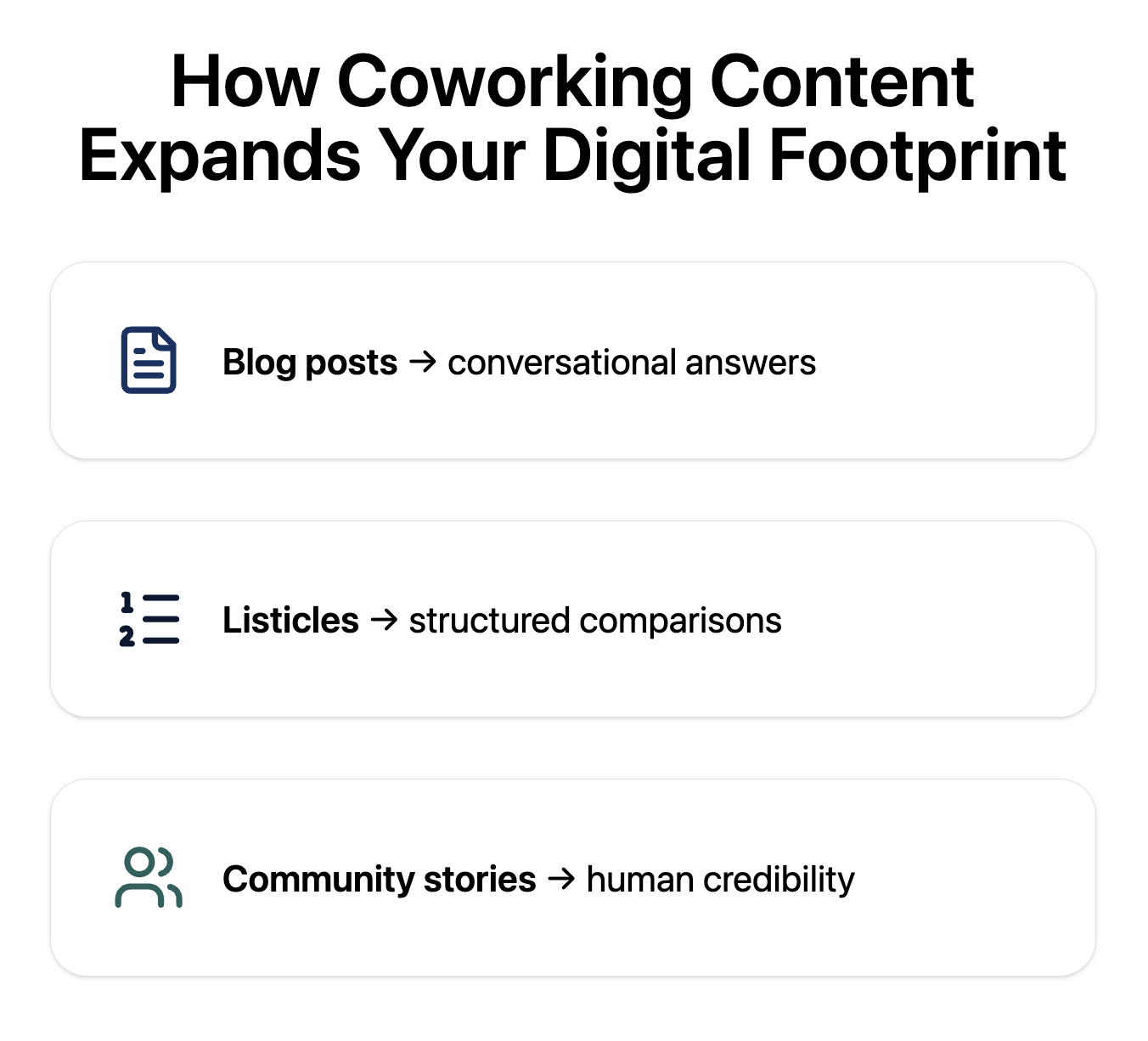
Blogging isn’t just about SEO anymore — it’s about feeding conversational answers into AI systems. Writing articles like “Best coworking spaces in [city] for freelancers” or “How to choose a coworking space for corporate employees” creates content that directly aligns with the way prospective members ask questions.
Just keep posts educational and solution-focused (rather than overly-promotional) and aim to cover specific scenarios, such as coworking for startups, parents, or remote workers in your blogs.
LLMs thrive on content that compares options or organizes information. By publishing your own comparison articles or lists, you increase the likelihood of your space being referenced in AI answers. For example:
Including your competitors may feel counterintuitive, but it positions your website as a trusted resource, and ensures your space is at least in the mix when someone asks an LLM for recommendations.
People don’t just choose coworking spaces for the desks — they choose them for the community. Publishing member stories, testimonials, and event recaps helps in two ways:
Bonus: These stories are also powerful for traditional marketing and social media, creating a feedback loop between visibility and engagement.
Large language models (LLMs) build their knowledge by cross-referencing information from multiple trusted sources, including third-party platforms, reviews, and mentions in the media. So while your website is important, it’s only one piece of the puzzle.
You need to be mindful of how your space is being represented and spoken about on other platforms, too, like your Google Business Profile, Google reviews, directories, and even other websites.
When it comes to showing up in LLMs, you need to be consistent across all profiles, while keeping them constantly up-to-date.
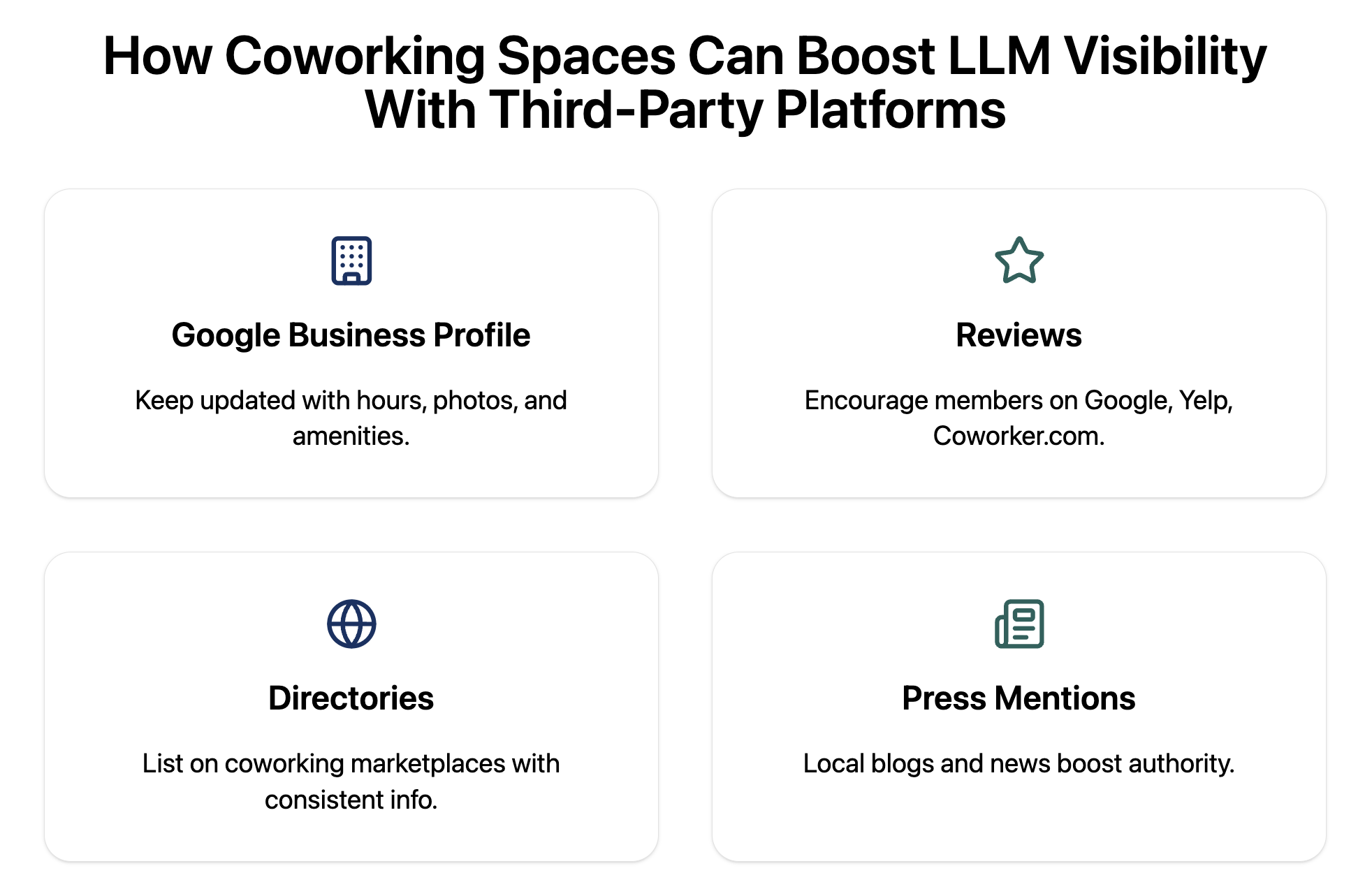
Your Google Business Profile (GBP) is one of the most influential sources for both traditional search engines and AI models. Keeping it updated with accurate information (hours, photos, amenities, address) means LLMs can pull reliable details when generating answers.
Reviews act as social proof, and LLMs use them as signals of quality and trustworthiness. Encourage members to leave reviews on:
A steady flow of authentic, detailed reviews helps your space stand out and increases the chance that LLMs describe your amenities accurately.
Directories and booking platforms often have strong domain authority and structured data that LLMs use when pulling recommendations.
By listing your space on these platforms, you’re creating additional “on-ramps” for AI systems to find and reference you. Make sure your listings are consistent with your website and Google profile to avoid confusion.
LLMs also pick up signals from editorial content, not just listings. If your space is featured in a “Best coworking spaces in [city]” roundup from a local newspaper or business blog, that increases your authority.
Even small local mentions add up — they confirm to AI systems that your space is an established, relevant business in your community.
Since reviews are one of the strongest signals that large language models (LLMs) rely on when recommending coworking spaces, collecting them consistently should be a top priority.
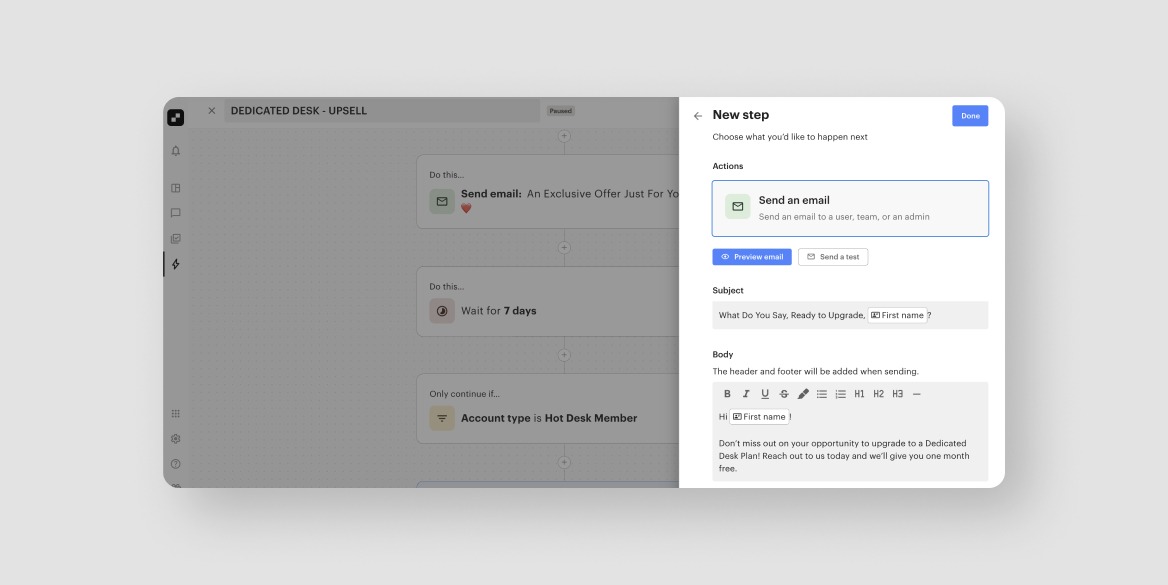
With Optix Automations, you can set up simple workflows that trigger review requests at exactly the right time. For example:
This is exactly what Justin, Owner at Workspace, does. He shared that Automations have helped his team collect a steady stream of authentic reviews without adding work for staff. Every time members have a positive interaction, they receive a gentle nudge to share their experience online.
The result? More reviews, more trust signals, and a stronger presence across platforms that LLMs pull from when recommending coworking spaces.
“Automations allows us to continuously improve certain things even if they're the tiniest thing. As an owner, as we increase automations or add another one, I'm making everyone else's job easier.”
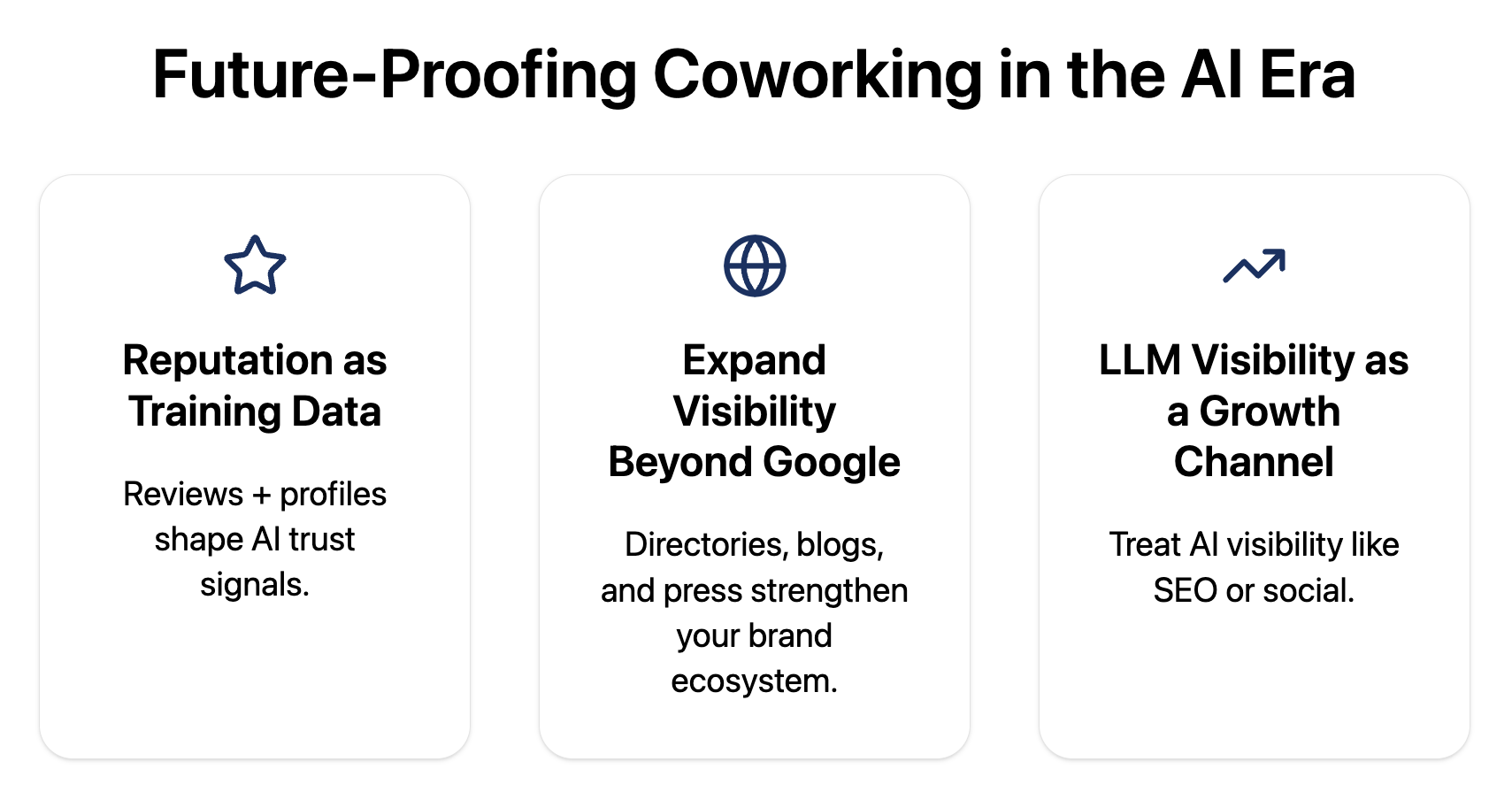
Large language models (LLMs) represent the next big shift in how people discover and choose workspaces. To stay competitive, operators need to think about future-proofing their brand for an AI-first world.
What’s written about your space today will likely inform tomorrow’s AI responses. That makes reputation management more important than ever. Encourage satisfied members to share reviews, keep your online profiles updated, and respond professionally to feedback.
These digital breadcrumbs become the “training data” LLMs use to decide whether your space is trustworthy enough to recommend.
Relying only on Google rankings is no longer enough. AI assistants draw from a wider range of sources, including directories, local news, and industry blogs. By diversifying your visibility, you reduce the risk of being overlooked in AI-generated answers. Think of your brand presence as an ecosystem: website, reviews, directories, press, and member stories all reinforce each other.
Most importantly, operators should stop thinking of LLM visibility as a “nice to have” and start treating it as a core marketing channel — just like SEO or social media.
The businesses that adapt early will dominate future AI-driven recommendations, while late adopters risk being invisible to an entire generation of prospective members who rely on AI as their primary discovery tool.
For coworking operators, the rise of AI-driven discovery doesn’t mean abandoning traditional search engine optimization (SEO). In fact, local SEO and LLM visibility go hand in hand.
When people ask ChatGPT or Perplexity about coworking spaces, the models don’t invent answers out of thin air, they lean heavily on trusted online sources, including Google search results and Google Business Profiles. That means strong local SEO directly increases your chances of being mentioned by AI tools.
You can’t manage what you don’t measure, and the same principle applies to visibility in large language models (LLMs). Just as businesses track their Google search rankings, coworking operators should start auditing how AI assistants describe their space.
The simplest method is also the most effective: ask the AI tools yourself. Every month, run queries in ChatGPT, Claude, or Perplexity such as:
This gives you a baseline view of whether your space appears and in what context.
Don’t just check if your space shows up — pay close attention to how it’s being described. Are the amenities accurate? Is your branding reflected?
If an LLM highlights “pet-friendly” coworking spaces and yours doesn’t appear (despite allowing pets), that’s a sign you need to update your website, reviews, and directories to emphasize that feature.
Notice which competitors consistently show up in AI-generated answers. This gives you insight into what signals they may be doing better — such as more frequent reviews, stronger directory presence, or more media mentions. Think of it as competitor intelligence for the AI era.
To keep visibility top of mind, treat this process like rank tracking in SEO. Decide on a schedule (monthly or quarterly), run the same set of AI queries, and document the results. Over time, you’ll be able to see if your visibility is improving, stagnating, or declining — and adjust your strategy accordingly.
Coworking operators don’t need to be AI experts, but they do need to ensure their spaces are visible, accurate, and well-represented across the platforms that LLMs rely on. The formula is simple: keep your website updated, encourage reviews, publish authentic content, and audit your presence in AI tools regularly.
The earlier you act, the more likely your space will be included in the AI-driven answers of tomorrow.

To get your coworking space to show up in ChatGPT and other LLMs, keep your website clear, current, and fast, then reinforce it with consistent listings, reviews, and schema markup so models have multiple reliable signals to reference.
LLM visibility matters for coworking spaces in 2025 because more than half of adults use AI tools regularly, making it a core growth channel alongside SEO and social.
A coworking website should include content that is LLM-friendly, such as hours, pricing, amenities, and address, along with local cues, natural language FAQs, and schema markup to ensure accurate parsing.
The third-party platforms that most influence LLM recommendations for coworking are Google Business Profile, Yelp, and coworking directories like Coworker.com, Deskpass, and LiquidSpace.
Yes, reviews really help your coworking space rank in AI answers because authentic, detailed, and frequent reviews serve as quality signals LLMs rely on when recommending local options.
Optix Automations can help you get more reviews for LLM visibility by creating workflows that nudge members after positive moments like room usage, day-pass checkout, or onboarding.