Scaling From 4 to 5 Locations with Workspace
Learn how Justin went from fragmented tools to a unified software solution with Optix


Justin Moran was a member at Workspace long before he stepped into ownership. It was his passion for the community that inspired him to take over Workspace and modernize the space. Now that same passion has fueled the growth of Workspace to four additional locations over the past decade, all while maintaining an impressive average member tenure of 26 months, and remaining home to some of the same members when he started.
When opening his fifth location, Justin knew it was time to evolve their “cute little business” into a scalable company. For the first time in Workspace’s 10-year history, he introduced software to support their growth. Now, he’s a champion for making the most of the tools in your tech stack. Here’s how Justin uses Optix to automate his operations and scale his business.
“Automations allows us to continuously improve certain things even if they're the tiniest thing. As an owner, as we increase automations or add another one, I'm making everyone else's job easier.”
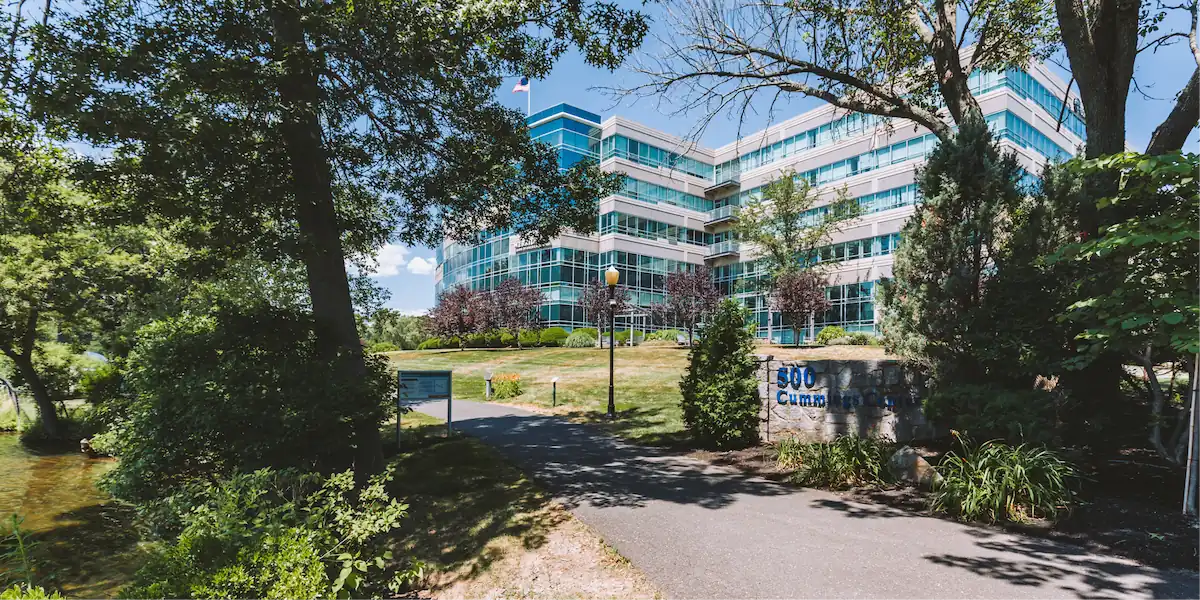
Workspace is a five-location coworking network located in the suburbs, just outside of Boston, Massachusetts. Due to their proximity to the city, they attract a lot of hybrid or remote employees looking for a quiet space to work, away from the business of their home. To best serve this demographic, Workspace has nearly 200 private offices, with 85% of their revenue being from private offices alone.
Justin describes Workspace as a “quiet, comfortable place to work”. He’s leaned into the hyper-local nature of the coworking business, prioritizing a hospitality-driven approach and ensuring the needs of their members are met, no matter what those needs are.
“We're here to provide a clean, quiet, comfortable place for people to be productive. Part of the mission has been listening to the clients and providing the types of services that they gravitate towards.”

For a long time, Justin didn’t think he needed dedicated coworking software to manage his business. He got by with a number of standalone tools including a booking system, an accounting system, and a CRM, paying separate subscription fees for each.
When it came time to open his fifth location, Justin realized he needed better systems to help scale his business. Leveling up his tech stack could help him not only create a better experience for his members and team, it could also help him create scalable infrastructure.What made him choose Optix out of all of the other tools out there? He saw investing in Optix as an investment in his business that would pay dividends down the road.
“I've got a background in technology, and I know you only get out of it what you put into it. So when we finally found the platform that was right for us, it was my mission to make sure that we were getting the most out of it.”

Since implementing Optix, Workspace has seen incredible member engagement with over 7,000 messages sent through their app and over 1,200 bookings made. Here are some of the ways Justin and his team are making the most of Optix.
“I chose Optix because the UI was just super simple.”
Justin has built a whopping 70 automations to streamline onboarding, offboarding, bookings, document signing, community engagement, and so much more across all five of their locations. Now that these key touchpoints are automated, members receive a consistent experience with no member touchpoint forgotten.
While the member experience improves, so does that of community manager, Kerry, who is able to focus more of her time on hospitality and “spoiling members” vs. sending emails and managing manual tasks all day.
Learn how Workspace uses Automations to deliver consistent brand experiences →
With an older demographic of professionals at most of their locations, Kerry and Justin were a bit nervous about introducing their community to a mobile app. Despite their initial skepticism however, Workspace saw strong engagement with their branded White-labeled App, with over 7,000 messages sent in the app between members.
Today, members use the app to book meeting rooms, message staff, manage their memberships, or connect with other members. It’s easy to use and creates a branded experience members (and Justin!) love.
“The amount of new people coming off the street that are downloading the app initially is way higher than I ever thought.”
Before getting started with Optix, Zoho was Justin’s CRM of choice. While it worked for him, it was an additional cost for his business and an additional system to manage. His preference was to bring everything into one place—and Optix allowed him to do just that.
With Optix, Justin can now manage his sales funnel, collect custom user data, internally communicate with other admin, and more directly in Optix. This has enabled him to stop using Zoho as his CRM entirely.
A big reason why Justin was hesitant to switch software was the low credit card fees he had locked in with Quickbooks. As a small business owner, even a difference of 0.5% in fees can have a big impact on your bottom line.
When he discovered Optix offered ACH payments and the option to automate adding credit card transaction fees to users, he decided to transition his community away from credit cards towards ACH. And with that switch, he has saved himself upwards of $25,000 in credit card fees this year alone. That’s money that goes directly towards profit and growing his business.
“One of the reasons why I chose Optix was you had a super elegant way of dealing with fees. If you're going to use a credit card, you charge two point nine percent. If you want to pay any other way, it's free.”
One unique feature of Optix that Justin and his team are making quality use of is Tasks. Tasks is a task management system in Optix that makes it easy to manage one-off or recurring tasks for your team, similar to a system like Monday or Asana. Automations also helps ensure tasks are assigned automatically and don’t get forgotten!
Community Manager Kerry uses tasks to make sure everything is taken care of when it comes to different internal processes, like the human touchpoints during the member onboarding experience.
Although a majority of Justin’s revenue is from private offices, he’s been able to see big growth in the number of drop-in bookings since starting with Optix — over 1,200 in the last year alone.
That’s all thanks to the Drop-in booking Web Widget, a high-converting form by Optix that goes directly onto your website. Once someone submits through the widget, their information is shared directly with Optix so they’re in your CRM. Now that it’s quick and easy for someone to make a booking, they’ve seen their conversion skyrocket.
“I think what has driven the increase in bookings and day passes has just been the ease with which someone could get on the website or download the app and just get it done.”

Justin’s big project this year was mastering his tech stack so that he could scale his business. Now he’s all in on getting the most out of Optix, and the results speak for themselves.
As he continues on the path of intentional growth and incremental improvements, one thing stays true — their members are and will always be the core of what Workspace is all about. For Justin’s greatest superpower is not just implementing the right technology, but doing so in a way that puts his members first.
We’re proud to power Justin and the Workspace team in scaling their business and supporting their community, and are so excited to see how much their community loves their new app, too!
Congratulations on 10 years of Workspace – we can’t wait to see where you take it next.